ROOK: The VC Vibe Check
About this episode
 Spotify
 Apple Podcasts
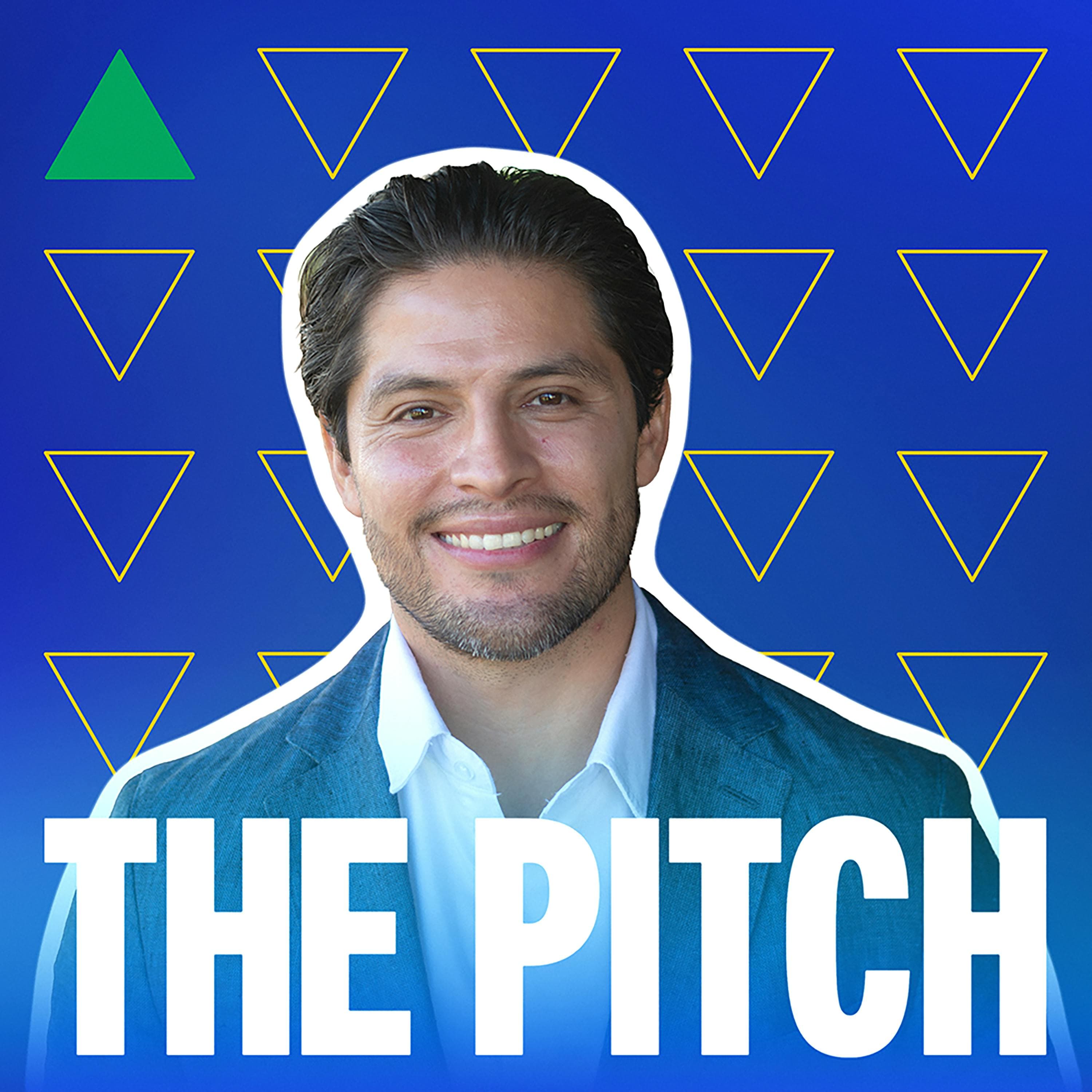
Marco Benitez moved his family to the US to build Rook, an API for wearables. But when a familiar face shows up in The Pitch Room, he learns just how much vibes matter in venture.
This is The Pitch for ROOK. Featuring investors Elizabeth Yin, Jesse Middleton, Laura Lucas, and Mike Ma.
Watch Marco’s pitch uncut on Patreon (@ThePitch)
Join us for the Season 16 taping and founder happy hour in Tampa
Subscribe to our email newsletter: insider.pitch.show
Learn more about The Pitch Fund: thepitch.fund
*Disclaimer: No offer to invest in ROOK is being made to or solicited from the listening audience on today’s show. The information provided on this show is not intended to be investment advice and should not be relied upon as such. The investors on today’s episode are providing their opinions based on their own assessment of the business presented. Those opinions should not be considered professional investment advice.
The Panel



Josh: Welcome to The Pitch, where startup founders raise millions and listeners can invest. I’m Josh Muccio.
Lisa: And I’m Lisa Muccio. On the show today we have Marco with Rook. He’s raising 1.5 million.
Josh: On this show. We hear investors ask the same questions over and over again. Every pitch, they want to hear about the market. They want to hear if you've got revenue, traction, what you've done in the past.
Lisa: Yep.
Josh: But under the hood, something else is happening entirely and we don't talk about it 'cause it's under the hood. It's a vibe check.
Lisa: It's vibes. If you're not vibing with an investor, you're not getting money from them.
Josh: It's true.
Lisa: Internally, we've called it the beer test.
Josh: I've never heard us call it the beer test.
Lisa: It's in our Airtable in a column called Beer Test.
Josh: Oh, well I never go in Airtable. I always just call it the Lisa test
Lisa: But obviously a lot of people pass the Lisa test 'cause I like everyone that comes on the show.
Josh: Well, today's founder passed the Lisa Test, the Vibe Check, the Beer Test and the product test. Rook is an API for wearables and we love wearables.
Lisa: The question is. Will Marco pass the vibe check in The Pitch Room? Because sometimes venture can get a little messy.
Josh: The Pitch for Rook is coming up after this. But first… drumroll please, Lisa. We’re hosting a founder happy hour on 4/20 in Tampa. If you’re a founder, if you’re a listener, or you’re just a good human. You should come hang out with us in Tampa. RSVP at pitch.show/party
BREAK
Welcome back to the pitch for Rook. Let’s meet the investors.
Elizabeth Yin with Hustle Fund
Can I ask you a very direct question?
Jesse Middleton with Flybridge
I am so sick of people that are building stuff for building stuff's sake.
Laura Lucas with L’attitude Ventures
You are everything I am looking for in a founder
And Mike Ma with Sidecut Ventures
Cmon guys, like, what kind of risk are you looking for? You don’t want to overthink a deal.
Josh: Rook. [clap]
Jesse: You did a great job.
Josh: Thank you
Lisa: Go get ‘em.
Marco: Hola, como estan?
Laura: Hola
Marco: How are you?
Elizabeth: Good.
Marco: It's great to see you again.
Mike: It's good to see you.
Marco: Alright, well nice to meet you. I am Marco Benitez. I can see you have some wearables and I love that. So you have a Garmin, maybe?
Mike: I do.
Marco: So you do running ?
Mike: We've met, you know I do this, don't play this, yes, I run, I run
Marco: No, no, no, no, no. You're running. Yes.
Mike: I went for, I went for an eight mile run this morning.
Elizabeth: Oh, wow.
Marco: Perfect.
Marco: Elizabeth, you're using your Apple Watch. Apple Watch.
Elizabeth: Yes.
Marco: And it's a very good extension for you
Elizabeth: I ran, I ran eight seconds to the door here.
Marco: Exactly. So you use it like an extension for your phone. Right?
Elizabeth: Well, I used to run.
Marco: Okay. You used to run.
Elizabeth: I used to run.
Marco: Are you using any wearable?
Jesse: No, I, I ran for eight seconds less than Elizabeth did.
Marco: That's cool. That's cool.
Laura: I'm more of a jewelry person.
Marco: That's cool.
Mike: Get out
Marco: No, that's cool. That's cool. Well, I have always been a fan of wearables, I have like four right now and it just started because, I really want to learn more about my body. In fact, at the very beginning I was, competing in TaeKwonDo.
Elizabeth: Oh, wow.
Marco: So I became a national champion of TaeKwonDo in Mexico. that really helped me to understand my nutrition, my sleep, and my recovery, everything. So for me, wearables are really important, but That's not the only thing for me. Something that changed my life in terms of wearables, it's what happened with my dad. And he's a doctor, so he was very skeptical about wearables because at the end of the day, on those days in the early 2000s, the wearables were not so accurate. So I hand him one of my wearables and he told me, there's no way I'm going to use it. Immediately, he told me, and I told him like, please dad, use my wearable, I want to track you. Well, two weeks after, he was like, Marco, why this thing is always beeping and making all this noise
Elizabeth: Uhoh.
Marco: And I was like, okay, let me see it. Next step, We were running to the hospital and he's under medication. The wearable identified an anomaly in his heart. So it was a big thing. So for me, I mean, wearables are saving lives. and just recently the US Government Authority said every American should be wearing a wearable. there is a full blown campaign starting right now, and honestly, this is great for the public health. it's a huge opportunity, except if you are running a hospital, an insurance company, a wellness app, or a longevity app, this box with all of these devices are a nightmare. Every single device speaks a different language, and if you are trying to use all this information, all this data without cleaning it, you don't have data, you have noise. Here at Rook, we solve it.
Mike: The only thing I'll say is that you said we would have this conversation over a bottle of Mezcal, and then that box came in, I thought, well-
Marco: And you're right.
Mike: We’re a little early but let’s go
Marco: Yes, we were, the last time we talked, I told him that we are going to chat with one Mezcal. Um-
Laura: Where are you from?
Jesse: One bottle
Marco: I'm from Mexico.
Laura: Okay.
Marco: But living in Florida. In Naples.
Laura: Oh, fantastic.
Jesse: Beautiful
Marco: Yes, it’s beautiful
Mike: So. That is an emphatic yes. I'd, I'd love to learn more and hear you too.
Marco: Yeah, yeah. Well, what we do is exactly this. We are something called an API. We have 300 wearables integrated. So we have the Apple Watch, the Polar, Garmin, Suunto, Huawei, Withings, all the wearables that are outside, plus medical devices. like CGMs, for example. Dexcom and all of them. and then, we clean the data. So we standardize everything because each one speaks a different language. we have our own cloud with algorithms, and we analyze everything and we deliver clean and very structured information. So now our clients can use it for AI purposes, graphics, correlations between all, everything. And we serve the insurance companies. We serve the hospitals for remote patient monitoring. The best way to do it is through these devices. And now the FDA approved to use some of them as medical devices, which is wonderful. The way you are going to track them is via my API. It's very simple. So I'm not, never in the front of anyone. I'm always behind doing all the analytics, all the structure, and then we deliver the information.
Jesse: And is it exposed as a developer platform? You mentioned you serve the hospitals, but is it their developers building on it, or you, you have other people building software?
Marco: We connect directly with developers and product team. They know the troubles because they went to integrate the wearables and they saw the mess. In fact, those are the best clients for us. The ones who already tried to integrate wearables. And it's very easy because it's like a fast sale, honestly.
Laura: So are you an engineer? Did you build it?
Marco: I am biomedical engineer. I have a second degree in biomedics. my team also, I know them the last 20 years, so we were running different business together. and everyone is engineer. Everyone except one German guy. Oh, I love this guy. He's one of my co-founders. But, he is more focused on the operations part.
Elizabeth: And so you try to sell into hospitals or who is your customer?
Marco: Yes. At the very beginning, the low hanging fruit was the fitness, wellness, space because that's where we start to create the traction and also to improve our technology. So at the very beginning we were working with Commercial apps that wanted to, customize the experience with the end users. So let's say that you sleep very bad, the last night. Or you are very stressful. Immediately the app will customize the experience. So instead of doing a hard workout, you probably are going to do brief exercises So that type of things at the very beginning. And then we move towards the insurance companies, the long game is gonna be with the health industry. Still we have clients in each vertical that was very inbound. Everyone was very organic, how they started to connect with us
Elizabeth: And do you charge based on API usage or how does that-
Marco: Yeah, it's like a B2B SaaS API. It's per tiers, depending on how many end users they have And we charge a monthly fee.
Laura: When did you start the company?
Marco: Well, originally we started eight years ago, but was with a very different company. we were building this.
Laura: Okay
Marco: So we create, before, hardware for the fitness industry. That happened in Mexico, eight years ago. And then, when pandemic hits, change everything.
Laura: Mm-hmm.
Marco: And we started to integrate, the wearables on our own platform. And that's when we saw the huge opportunity because when we started to integrate, we saw the mess over there. And secondly, also an insurance company, blue Cross Blue Shield, they connect with us and they say like, hey, what you have, I really want to try it in one of my programs. Is there any way I can integrate that part of your component of wearables in my own platform? And as a very good entrepreneur, I said, yes, obviously it is gonna be very easy. Of course not, And then on 2023, that's when we shift the business model. and started with a new one here in the US because this one we started in Mexico.
Laura: Are most of your clients in Mexico or
Marco: No, no, no, no. All of our clients are based here in the US. we have clients in Asia, we have clients in Europe, in Latin America, unfortunately, we don't have too many, from the 50 clients that we have, at least seven are from Latin America.
Mike: This builds off- and so, we have some history together.
Marco: Yes.
Mike: And, and I'm aware of this pivot. How'd you capitalize the company and what does the cap table look like?
Marco: Yes. let me do one step back. this is my fourth company. My first company, I get an exit in 2006. So we were very young. We were in the college together, with one of my co-founders. And then, with that money, was not too much money, we create an algorithm for hospitals in Mexico and we sold it to a big, enterprise. then we started two business in the medical device industry. we sell medical devices over there in Mexico and we, it's huge. Right now, they are still running. They have their own CEO, very profitable. That company was the first one who invest on our first, company named Rook Motion, which is this one. then when we pivot, the first investor we had was Techstars, was the first time that I was in touch with investment from US. One investor told me, if you want to do something bigger, you have to move to the US.
Laura: Yeah.
Marco: And I did, I have two kids. I have my wife and I move completely from one day to another. Literally, my wife, she's crazy as, as, she's crazy. She's crazy.
Laura: But you love her, right?
Marco: Oh my goodness. I love her so much.
Jesse: Good crazy, good crazy
Marco: Believe me.
Laura: Is she Latina?
Marco: Very Latina.
Laura: That's why she's crazy.
Marco: Very Latina, very Mexican. But yeah, we moved from Mexico to, to the US, so basically, the capitalization of the first one was, Techstars, and then we, raised two millions. And then right now, what we are, raising is 1.5 million, which we already have 1.3 millions already wired.
Elizabeth: Sorry. You, you raised 2 million after Techstars?
Marco: During Techstars on the demo day, we raised almost 2 million.
Elizabeth: And now you're raising another-
Marco: another 1.5 million
Mike: And so lemme just ask a straightforward question is
Marco: Yes
Mike: at the end of this round how much you and your co-founders have left
Marco: Yes
Mike: Is there enough equity left?
Marco: Today we have 69% of the company.
Elizabeth: is that before or after accounting for the conversion of safes or-
Marco: Right now at the point where we are today.
Elizabeth: Okay.
Marco: Yes.
Elizabeth: I assume the 2 million was raised probably on safe or convertible notes.
Marco: Yes. Everything is on SAFEs.
Elizabeth: If those converted, how much equity would you have in your-
Marco: Exactly that. 69%. Right now, at the point that we are today
Elizabeth: Oh, I see
Marco: if today we convert with the 1.3 that we have already.
Jesse: Oh. Including the 1.3.
Elizabeth: Including the 1.3
Marco: Including the 1.3. Yeah.
Jesse: Well that’s not, I mean, that’s not bad
Elizabeth: That’s not bad at all
Marco: It wasn't, it wasn't before. And you know that.
Mike: Yeah. And so this is an update because this was our feedback.
Marco: Yes, yes
Mike: So you, you you worked with your investors to, to re-
Marco: Yes.
Mike: Okay. That, I think that's a big note because when we talked
Marco: Yes.
Mike: I think you had it was some number that was non-conforming to whatever we would
Marco: Yes, yes, yes.
Jesse: Yeah.
Marco: I agree.
Mike: Okay. how'd you rework terms?
Marco: Yes. We work with our counsel, We renegotiate with the advisors. one of the biggest thing, honestly, when you are the first time raising here in the US, you hear a lot of advisors, and you said everything, yes. Because it's an opportunity because you don't have network. And crazy, percentage they are looking for and they tell you that they are going to help you, like to raise whatever and opens, I don't know how, million of doors.
Jesse: A lot of promises.
Laura: Yeah
Elizabeth: Of course. Of course.
Laura: Yeah.
Marco: We renegotiated with them. So they returned the equity
Mike: This is big, I mean, we, it was just, we talked, what, two months ago? I don't even remember.
Marco: Uh, two months. We move very fast.
Mike: That's a big move.
Marco: We move very fast.
Elizabeth: What did you have before this restructuring?
Marco: More or less, like 10%.
Elizabeth: You went from 10% to 69.
Laura: Wow.
Elizabeth: Wow.
Marco: No, no, no, no, no, no, no, no, no, no. I mean before. We have 57%. That's what I meant.
Elizabeth: Okay. So you got back about 12%.
Mike: I remember-
Elizabeth:. But that's still really good.
Marco: Yes
Elizabeth: May I ask you what your revenue is with these 50 clients?
Marco: Yes. Today we are doing, all of them are paying and we are doing 400,000 in ARR and we are towards the 1 million. at the beginning of the next year, we are an API. Right? So take time to integrate our API
Laura: What's the time frame?
Marco: At the very beginning, it took like, 190 days Right now between 30 to 60 days.
Jesse: What's the distribution of the 400,000 ARR across the 50 clients? It's pretty evenly spread out? You mentioned the big clients. Sort of, what, roughly is the distribution
Marco: Yeah, roughly it's, it's in the spread, more or less. Everyone is, around the 2000, it's like the average.
Elizabeth: Per?
Marco: $2,000 per month.
Elizabeth: Per month.
Marco: Per month
Elizabeth: Got it.
Jesse: And, with the current 50 clients, what do you guys calculate as the potential revenue? 'cause they're still ramping up their users.
Marco: Yeah
Jesse: But that 400,000 is 4 million? or 400,000 can be
Marco: No, no, no. I think that with only these 50 we are going to be around the 1 million in ARR, the beginning of the next quarter. and we continue, every single month, we are closing between two and three new clients.
Jesse: Okay.
Marco: It's a real need.
Elizabeth: So, may I ask you what your valuation expectations are for this round?
Marco: Yes. 7 million pre-money.
Elizabeth: And what is your burn rate?
Marco: Right now, we, we are around the $40,000. We are, 27 people working, 80% are developers.
Elizabeth: Sorry, 27?
Marco: Yeah. Yeah.
Jesse: They're all-
Mike: Go ahead, ask the next question.
Jesse: They're all, they're all in Latin America.
Elizabeth: Well, I-
Laura: Love it.
Elizabeth: I can believe that. I think what I'm trying to understand is, you raised 2 million
Marco: mm-hmm.
Elizabeth: Before
Marco: Yes.
Elizabeth: And this was in 2023.
Marco: In 2023, the beginning of 2023, to create the API, because we didn't have anything. We raised it with a presentation
Elizabeth: Mm-hmm. But I guess what I'm trying to understand here is like, was your burn rate a lot higher? Because I'm guessing the reason that you're raising this other tranche is that you were perhaps running out of money. 2 million across two years is a million burn each year.
Marco: Mm-hmm.
Elizabeth: Which is a lot higher than this 40k. It's actually double that.
Marco: Yeah.
Elizabeth: Where did all this money go? Did you have to make significant cuts?
Marco: Yeah.
Elizabeth: Uh, tell me a little bit about
Marco: Yes.
Elizabeth: Your cash flow
Marco: Where we are today. Yes. at the very beginning, you are 100% right. we were burning like $80,000 more or less.
Elizabeth: Mm-hmm.
Marco: Today it's like, it's the difference between what we receive
Elizabeth: Yes.
Marco: And what we burn.
Elizabeth: Yes.
Marco: Mm-hmm.
Elizabeth: Understood.
Marco: But, in terms of the team, it's less team. And we understood how to restructure the team that we have. Because we were in a transition between this one and the other company
Elizabeth: Uhhuh.
Marco: And that also took time to us, honestly. Um
Laura: So is this one free and clear of the other one, or is there still
Marco: No, no, no. It's not anymore, working. Not anymore.
Laura: Oh, okay. So it's-
Marco: But that was on those, on those years.
Laura: Got it
Elizabeth: Yep.
Jesse: Can you describe a little bit, top down how you view the opportunity? So, so when Twilio came out, for instance
Marco: Yeah.
Jesse: They went after developers and they said, everybody who has an app, is gonna wanna be able to send text messages, make phone calls, there's a million apps.
Marco: Mm-hmm.
Jesse: We can sell to all of them, blah, blah, blah. help us to understand how you map the market of opportunity. I, I don't know the healthcare system as well, so if you said, I'm selling to all 20 million Python devs, I’d get that.
Marco: Mm-hmm.
Jesse: but help us to understand, you have 50 clients. Do you think of the opportunity as 500 clients? 5,000 clients? At what scale?
Marco: Yeah. we are not working with the insurance company. We are working with the insure tech company, the one who provides the technology for them.
Jesse: Yeah
Marco: Because they already have the contracts and there is a lot of those companies. we are talking about thousands of them.
Jesse: Okay
Marco: Thousands.
Elizabeth: You know, I think my general thesis on B2B, but even if we go more specific to APIs is that the large companies that we see, they've often had a pretty fast sales cycle because they sell essentially to other startups. Like, just think about any of your favorite large companies, they sold to startups, including Plaid. They had an anchor customer who put in a lot of money who was a startup, right?
Marco: Yeah.
Elizabeth: So in this industry, I think this is like no fault of yours. You seem like a great sales person. I just wonder if these clients are just gonna be slow. Right. Hospitals are slow and you kind of actually have to be in health, right? I don't want people being cavalier and moving too quickly. Right. So from that perspective, yes, you are getting sales now and yes, you're gonna continue to plod along and you are gonna pound through this.
Marco: Mm-hmm.
Elizabeth: Can you think of ways to kind of go after faster moving clients? Like are there bigger health apps or bigger startup-like customers?
Marco: Yes. That's a really good one because we can’t control the roadmap of each company
Elizabeth: Right
Marco: But what we can do is deliver, a product that really, the developer can really enjoy, because at the end of the day, they want to show that they did something for the company. And they have already, in some point, the, the wearables integration. What we can do is that they can integrate very quickly. So our product is based on product led growth. So they took everything and they can start, integrate, very quickly, and then they can immediately pass through sandbox and immediately to production. When we are talking about medium and small companies, that's pretty fast. And also give us the opportunity to understand what type of things they are doing with all this data, which is really important. With the biggest one, definitely it's not the same thing because they need, it's really large. The pen test, the all the, we have to be certified by is x, x, y, z, all the things that they have to. so to your point, it's more like for small and medium companies, that's where we can build fast, really fast,
Elizabeth: Mm-hmm. what is going through my head right now is you have, this is like a, a puzzle of constraints.
Marco: Mm-hmm.
Elizabeth: You have limited capital.
Marco: Mm-hmm.
Elizabeth: And you've already kind of stretched your cap table so you don't have that much more of a lifeline there.
Marco: Yes.
Elizabeth: If you need to raise more capital. You have to kind of bridge the gap on your burn. You have to get more customers quickly.
Marco: Mm-hmm.
Elizabeth: But it's a little bit slower to move of an industry, so you can only bring in the smaller folks. And then from there, once you get to some level of ramen profitability around there. Then how do you kind of wait it out long enough for the big contracts to grow? Right? Like this is the puzzle.
Marco: Yes, no
Elizabeth: I'm trying to understand in my head, what is the path? This new amount of capital will last you, I don't know, a couple years before you have to raise again. And in that time period, is your plan to kind of continue to decrease the burn or how do you think about using this capital?
Marco: Yeah, first quarter of next year, with the 1 million, we are going to be in the breakeven. That can help us to improve the momentum that we are going to have because the next step for us, it's to build for the series A.
Elizabeth: So why, I, I'm still trying to reconcile the numbers. Like why are you raising now
Marco: Yes
Elizabeth: when you're going to get to the million
Marco: Yes
Elizabeth: Number very soon. And if your burn has gone from 80K to 40k net burn and you raised 2 million before, then you should still have cash from that as well. How do you-
Marco: Yes.
Marco: How do you think about that?
Marco: We have to invest in certifications, we have to be compliant. ISO 727001. It's around 500k. We have already the contracts with the insurance and with big industries, but we need to be certified how we mitigate that part, they allow us to give a small number of end users. And that's the reason they are paying also a small amount of money. Once we are certified, immediately they will show the whole product with all the end users they have. honestly, right now, certifications is one of the most important for insurance. And for health industry.
Mike: But, but to build on that, were the letters of intent, upon certification, there'd be a fulfillment of the contract? Saying the bar is one thing. Does not mean they'll buy. Right?
Marco: So for example, the Fortune 50 company. We have that very specified.
MIke: Gotcha.
Marco: So yes, that's how we try to negotiate with them.
Laura: Some of these bigger clients, who would be kind of like a marquee client for you?
Marco: Yeah, for example, in the insurance definitely is going to be RGA, Live Well, the Zurichs, the MetLifes if we are talking about hospitals, definitely is going to be my May, Mayo Clinic, for example. They have a remote patient monitoring specific, platform. So these type of things are where we are going to focus.
Mike: Can I, can I ask a personal question?
Marco: Yes.
Mike: Like, you made all these changes. You knew that was the thrust of a lot of my firm's feedback on it.
Marco: Mm-hmm.
Mike: And I'm, I'm, I'm asking this straightforward not to be churlish, but why didn't you call?
Are Mike’s feelings hurt? We’ll find out after this
Mike: You knew that was the thrust of a lot of my firm's feedback on it.
Marco: Mm-hmm.
Mike: And I'm, I'm, I'm asking this straightforward not to be churlish, but why didn't you call?
Marco: To you?
Mike: Yeah. To let us know that these changes.
Marco: I, I did it.
Mike: Okay. If I missed it, then it's on me.
Marco: I think you were, you were on holidays and I sent you an email. Yeah.
Mike: Okay. Well, if I missed it, then that's on me.
Marco: Yeah yeah yeah. I did it. I did it. And I was like, oh, he didn't answer. That's weird, because you were very responsive and we have very deep conversation.
Mike: Yeah
Marco: and we were talking about life like he was like my best friend, right? So for me that was very weird because the first call that you have with one investor is not like that. It take time to create a relationship with someone. I do with my investors. In fact, my investor, I can call anyone that you want and they will answer me because I create a relationship with them. I love my investors. They are my partners. They're like, be marriage.
Laura: So what are you looking for now?
Marco: Yeah, well, exactly the same thing. I'm looking for that, I'm looking for, partners that we can join on what we are building. Open doors and yeah, money, it's important, but I don't think it's the most important thing.
Elizabeth: So you made a comment about raising a Series A
Marco: Yeah.
Elizabeth: Tell me about that. Like why do you think you need the series A and at what point?
Marco: Yes
Elizabeth: Because again, I, I think the number one thing I'm worried about here is this sort of money puzzle, if you will.
Marco: Yeah, Today, what we are building, we are like a pipe. We extract the data, we clean the data, and we deliver the data. However, we have the second part, which is we are going to become a data science company, and that's a complete different thing. Today, what we are doing a lot is correlation. But the next step is really even more important, which is answer the question they are looking for. it's like, I want to know exactly how many of the, the end user that I have have diabetes, which the probability to have hypertension, different type of things. That's the main thing that we are working on, becoming a Bloomberg for the data on the wearables.
Elizabeth: And what happens if you can't raise a Series A? What do you think happens?
Marco: I will
Elizabeth: I mean, I think you'll always be able to raise. The question is, at whose expense and what the terms are. for example, you were able to raise all of this after having done this negotiation with past investors, advisors, et cetera. It is very possible that that situation could happen again. And so if I were on your cap table, this time, or any of us, we would be on the other end of that, right? if the investor gets cut down, crammed down by 50%, your company still makes it, you still do well, but your investors do not.
Marco: Um, so I, I don't have any, any answer at that point right now, but definitely what I know is that we are going to discover it.
Elizabeth: So I think for me, um, Marco, your story is really incredible. Like you are a winner, right? You are a winner in martial arts. You are a winner in business with your other companies. I have no doubt you're gonna make this business work. I think where my concerns are, as we've kind of been dancing around in all of this is around this, this money puzzle of, the constraints of, the capital you're bringing in, your burn rate. I get you're gonna grow your revenue, et cetera. But my worry is, dependence on future fundraisers like, makes me very nervous. Especially with where the cap table is.
Marco: Yes.
Elizabeth: So, unfortunately I'm going to be out.
Marco: Oh, that's cool. Thank you
Elizabeth: Thank you.
Mike: Yeah. I mean, I guess I'll, I’ll, go next. I mean, this kills me. 'cause you know how, how much affection I have for you. but ultimately for me, when we invest, it's the investor founder dynamic. And, yes, you may have written me. but we had some really deep conversations and just like, I may miss a text from my spouse, which I do. Sorry, babe. Um, you know, come back at me. in the fundraise process, particularly the way I diligence.
Marco: Mm-hmm.
Mike: Like that relationship is paramount. this part was, is hard for me and I have to like sit with this. But for that reason, I'm out for right now.
Marco: Okay. Sounds good.
Mike: With regret.
Marco: Sounds good.
Laura: Well, you are everything I am looking for in a founder. You have incredible passion. You have incredible grit. And I have seen this story so many times with Latino founders, where they get advisors on the cap tables and they have to restructure things to really understand how to get their companies to the next level. And it's so sad, and it's the reason why we created the fund that we did, because we wanted to help advise founders at the very early stage to not make those mistakes and to figure out how to make it work for them. Some of the challenges that you're having on where you're gonna go and where you need to go next, I think we can help you there. so I would love to say yes to you.
Marco: Awesome. Thank you.
Laura: We usually can invest 1 to $3 million. so we would look to lead your round. So I’m excited to figure it out
Marco: Me too
Marco: Thank you so much.
Laura: Yeah
Josh: Wait, hold on one second. I thought you only had like 200,000 left in your round.
Marco: Yes, we have 300, but definitely this is something that we can negotiate.
Elizabeth: Everything is always negotiable, Josh.
Laura: Oh, okay.
Elizabeth: There's a price for everything.
Leah: Yeah
Marco: Yes, definitely. Yes.
Laura: Okay.
Jesse: I really wish I went before you. I, I think, you heard it in some of my questions around this go to market. I, I think it's gonna take you longer than you think to get real penetration in this market, particularly 'cause you're not sort of, I know you're just sort of PLG approach, but your customers are bigger buyers. These sort of more regulated, slower moving. And so I feel like there's probably not enough capital coming in in this round that, that you will have to raise more. and I just struggle with what it looks like when you have to go out and raise more. and so I think I just have too many questions about both that, Elizabeth coined it, the money puzzle, but also just sort of the current go to market that I, I, I think I'm gonna be out as well.
Marco: Okay. Sounds great. Fantastic. Thank you so much.
Jesse: Yeah.
Marco: Really, really
Laura: Thank you.
Marco: May I hug you?
Laura: Yeah,
Elizabeth: See, this is an occasion to stand up
Marco: Just excited. Thank you so much.
Laura: Yeah
Marco: Super excited. Thank you. Thank you so much.
Jesse: Thank you.
Mike: I want one too, man.
Marco: Please, my friend
Laura: You can give me, you can give me all the feedback on the deep convos you had
Mike: This is so much better than, so much better than doing this through Zoom.
Marco: Yes, definitely. And we still need the, we need the, the Mezcal eventually.
Mike: I'm down.
Marco: Alright.
Marco: Thank you so much.
Laura: Thank you.
Marco: Thank you.
Elizabeth: Great job Marco.
Mike: Great job
Marco: Thank you.
Laura: Thank you.
Marco: Well, I was the first one, so was a lot. It was complicated.
[clap]
Laura: Is it still on?
Jesse: We're still recording.
Laura: Are we still recording?
Josh: Yes.
Laura: Oh my God
Jesse: It’s still on out there.
Laura: Yeah, the story, his story is just like
Elizabeth: mm-hmm.
Laura: The same story.
Jesse: I have a
Laura: I have the, yeah.
Jesse: I, I have a founder in Miami that went through the exact same thing.
Laura: Yeah.
Jesse: Back renegotiated with every note holder. Safe holder. Had to, because he got screwed the first time around raising. This is when we were coming to lead the seed.
Laura: Yeah.
Jesse: I was like, I'll do this, but you don't own enough. And he went back and he was also fortunate. It sounds like he has great people. He went back and he said, I need you all to cut your ownership by 50%.
Laura: Yeah.
Jesse: Or I can't raise my next round and keep going. And they all said, okay.
Josh: and why is that? Laura, like why does that happen so often?
Laura: Um, you know, I think it's kind of what he mentioned, network, and the opportunity. You know, you get kind of caught up with people who you think can actually open doors for you and they wanna be a part of it. They get excited.
Josh: Mm-hmm.
Laura: They get into the moment and they say these things and then the founders are so hungry at the early stage because they, they
Josh: Yeah.
Laura: They wanna grow
Josh: They just need someone to believe in them.
Laura: And they just need somebody to believe in them and they let it go that way. and, you know, some of 'em have helped, but most of the time it's horrible for fundraising. And they end up losing control of the company and then you get to, you know, the later stages, like you're talking about, series A and it's just not worth it.
Josh: Yeah.
Laura: For most investors.
Mike: You saw all the things that I saw in him.
Laura: Yeah.
Mike: And his story. Um. Is so powerful.
Laura: Yeah
Mike: I have the same view. At the end of the day though, you know, a lot of these things are relational and
Laura: mm-hmm.
Mike: This is really where it is about fit.
Laura: Yeah.
Mike: You know for me, I think through, like, I'm a small fund, right? So, the, when I bet on someone, they have to bet on me and that relationship is paramount. And this is a tough one. Um
Josh: You feel like he wasn't sold on you?
Mike: I don't know. And, and to some degree it doesn't matter. The saying we have at Sidecut is, we wanna be a good partner, go first. So I was one of the first calls, we went through his cap table and I, I think in my direct quote was like, bro, your cap table's messed up.
Josh: Yeah.
Mike: And you need to talk with your investors and recap this thing. Like, this is not tenable and I got very real with him about it. And obviously it led to talking about Mezcal, which I was looking forward to. I was like, oh, that's very smart. Um, no, but all but all seriousness, you know, it's like, well, he made a big move.
Laura: Yeah.
Mike: it's just like, call. if you're not gonna be the first port of call for a small fund like me, when you have like L’attitude and other people writing big, like, then you're not gonna, I'm not gonna be the first port of call later once you really get in, in the fog of war.
Josh: Okay. So like, he sent you an email, but you feel like he should have called because he had your phone number.
Mike: I, yeah. I mean, and I missed it. I mean, like we, how many emails do you all get?
Jesse: Yeah.
Mike: I hope it came through in the recording. We went through a lot of stuff like
Josh: Okay, so like
Laura: Yeah, but, so I would say yes and no. I mean, I have some founders where I'm on like, WhatsApp with them
Josh: Right
Laura: If you're WhatsApping with me and you have like, breaking news like that, I would agree. But if he's trying to be more respectful, I don't know.
Elizabeth: Yeah. I think, playing devil's advocate here a bit.
Laura: Yeah.
Elizabeth: Like from the founder side, you know, there is sort of this dynamic where it's like, even if you do have good rapport with a VC, ultimately, you passed on him, you don't have that same level of rapport as someone who is completely on his side. Right. Even if you passed for the cap table reason. So for him it's like
Mike: Totally
Elizabeth: Okay. Yeah. I like, I really like Mike and I would like to make it work, but like, you're not at that bestie level yet.
Mike: For me, thinking about future rounds and the unreasonability aspect of it, for the texture and depth of relationship we had. It wasn't, it wasn't like a casual first date, like, go have a couple drinks and go away. Like it was pretty deep. And for the follow up to be like, oh, I sent you an email. You didn't read it, it's like, Hmm. and at the end of the day, we all see deals, like more deals than you could probably do. So any, anything that has some sort of negative signal aspect of it
Laura: Yeah
Mike: You, you can’t unsee and my reality isn't yours, et cetera.
Laura: Yeah.
Mike: So that’s that.
Laura: Yeah.
Josh: So the lesson here with Mike Ma is if Mike gives you his phone number, he doesn't want an email from you, he wants a text. Is that the operating instructions?
Jesse: No I, I actually, I hear something different, which is I, and, and I feel your pain here. I think this is a sort of, I, it sounds like, and not being in the room, I think that you were pretty prescriptive about like, this is a thing you should go back and change. I really like you. I like the business. You spent a bunch of time on it. And then for the most part, it sounds like he went back and made those changes. And likely then the next step would've been to call and say, hey, those changes you said you wanted me to make
Laura: Yeah
Jesse: Because they’re important. You were right. I think there's just an order of operations and so
Josh: That's your, that's your
Mike: My thesis is coachable superheroes. Coachability is a big part of what I do.
Jesse: Yeah
Mike: Coachability is, is about feedback and, and so it, it is not saying that everyone should do it, but it just, this is why, if you wanted to know, like, everything you said was like what I said three months ago. I was like, oh.
Josh: But it doesn't count that he-
Laura: Well it also shows that he's coachable, right. 'cause he did everything.
Elizabeth: Yeah. He made those changes.
Laura: He made those changes
Elizabeth: And very quickly.
Laura: Yeah. So I, I like that.
Mike: Sure.
Josh: And apparently he emailed you, but the email wasn't good enough.
Elizabeth: That email is not good enough.
Laura: No, no. Not good enough for him.
Mike: I, I mean, yeah.
Josh: All right. That's a wrap. Pitch one. Great job guys.
Marco walked out of The Pitch Room with Laura interested in leading his round and a VC in need of some Mezcal.
After the break, six months have passed, and we’re going to call up Marco to see what happened after the show.
BREAK
Welcome back. 6 months later, we got on a call with Marco to catch up.
Josh: So, Mike Ma, that was interesting. What was your reaction when you saw his name on the list of investors you'd be pitching?
Marco: Super funny. I did my homework, but I didn't realize the name. I saw everyone, and I was like, oh my goodness. It's Mike. I had this meeting with him like a month ago. So for me it was really great. It was a really nice surprise and the first thing I thought was also like, how small is the world, you know?
Josh: The world of pre-seed venture is very small.
Lisa: Yeah.
Josh: What was your takeaway from that experience and having Mike respond the way he did?
Marco: For me it was like, uh, yeah, that's okay. That's cool. It's not the first no, it's not going to be the last one. And I'm doing my company because it's really fun. I know it's super stressful. So many things at the same time.
Josh: Yeah.
Marco: You know, investors and clients and all these type of things. And of course my team, but at the end of the day, we are doing this because we get so much fun. So wasn't like a big deal when I received his feedback and I know that it came from very good place. It was real. And that's okay.
Josh: Yeah,
Josh: Well, and like you said, you resolved the cap table issues in the end.
Marco: Yeah.
Josh: And someone who was familiar with these cap table issues and wanted to help was Laura. She committed to invest and she was interested in potentially leading year round. And after the show you had a couple like pretty normal diligence calls, meeting the L’attitude team, and then in October you met with the entire IC, the entire investment committee. Tell us about that call.
Marco: The IC call was really tough. Really, really tough because on our business model we are starting to make some changes. We have to become a data science company. So in those days, on October, we were like, okay, I know that's the biggest part, but then the revenue is coming from this API solution. So that was the problem. They don't fully understand the need because they were like, okay, you are B2C. Or why end users will use this API, is because they have two wearables? No, it doesn't match for me. And we were No, no, no, no, no. We are B2B.
Josh: Oh, wow. So they were real confused, huh?
Marco: Yeah, they were really, really confused.
Lisa: Wow.
Marco: Laura is the best. After the IC call, she spent an hour and a half with his partners to explain what we do. She told me the next day, like, even though that I explained an hour and a half for them, didn't understood the real problem that you are solving. So,
Lisa: wow.
Marco: I, it, it, it was like really, it was like, uh, a little bit like a mess.
Josh: So it wasn't even, they didn't have a problem with the business. Like they didn't have any specific critiques. They just didn't understand it.
Marco: Yeah, exactly.
Josh: Oh, that's gotta be frustrating.
Marco: It was, was really frustrating, also for Laura, because Laura was, my goodness, this is really simple.
Laura: Yeah.
Marco: And Laura told me by, by phone, like, my goodness, it's really simple. I'm your champion. I really like what you are building. And, and she told me like, I can see the real picture and the big picture. She was really frustrated
Josh: So I take it they did not invest.
Marco: No, no, they didn't invest.
Lisa: So on the show you were trying to raise 1.5 million. Did you close out that 1.5?
Marco: We are just looking for the last 75,000. Some investors also from San Francisco invest on Rook. That was on October and then, you know, November, it's like almost off, December.
Josh: Yeah
Marco: it's done.
Lisa: Yeah.
Marco: And then right now it's opening the windows, couple of investors, so yeah.
Josh: Yeah. Finally in February.
Marco: Yeah, I know. Take forever.
Lisa: I would love to hear from your perspective, what is it like To be a Latin American founder coming to the US to raise,
Marco: in my case, I, I didn't have any background in the us.
Lisa: Mm-hmm.
Marco: So we build different companies down in Mexico and it's different. The risk also to invest, it's different. And here in the US the opportunity is bigger. So for me it was like a no brainer. I talked with my wife one afternoon in the dinner and I told her like, if we move, what's your thoughts about it? And she told me, if that's what you want, let's do it. So we move.
Lisa: Wow.
Marco: We changed everything. We went through all the process from the visas and everything, and we moved to the US just to build what we have because I need to start building the network. I need to be in the market to have these conversations in person. Also, the language is the other thing. I don't have definitely a perfect English, and that's okay. I have accent and that's perfectly fine.
Lisa: Yeah.
Marco: But I need, it took me time to accept that part also.
Lisa: Hmm.
Marco: I love living here. Honestly, I really love because you have so many communities. I am, I am, I have a relationship with people from all over the US, also from all over Latin America. My neighbors are from Colombia, from Peru, from
Lisa: Yeah
Marco: From Michigan, from Los Angeles, from New York, from, from everywhere. And I really love it. But that's the type of things that, there's the risk you have to take. It's even bigger.
Lisa: Yeah
Marco: Because we know that here sometimes you are out of the college and then you can go to San Francisco, raise some money, and then you're still building And you are very young. You have, you are under your twenties.
Lisa: Yeah.
Marco: In my case, I'm on my forties and I moved my complete family to live in another country. I have two kids. One has almost, well this year is gonna be 10 and the other one is seven. And they are, you know, in a different culture without my family, our family down in Mexico. And, uh, learning another language, which is a huge opportunity for them. Huge opportunity because now. They have better accent than myself. They are really great. They are really great. They correct me by the way.
Lisa: Oh my God
Marco: all the time.
Josh: I'm sure they do.
Lisa: All kids correct their parents
Marco: Like Daddy
Josh: I bet they love that.
Marco: So it's really funny. Uh, this is the type of things you had, you have to do when you are from other country and from Latin America.
Lisa: Yeah.
Marco: Trying to build a company in the us
Lisa: Do you feel like you have other investors who understand what it's like the way that Laura does?
Marco: I think so. Honestly, your investors are your mirror. Every single time I have conversations with them, it's like I'm looking myself. It's really interesting because the people who is investing in you is very similar to your personality.
Lisa: Yeah.
Marco: So yeah, to your question, I think they understand. That's why they invest. Of course, they are investing in the opportunity. They are investing in the solution. But also they are investing in me. So that's, for me, it's even more important.
Josh: Yeah, I think what you're solving is gonna become more and more important. Even just looking at how I have a Whoop, I love my whoop, and then now I am doing my labs through my Whoop. And so I'm tracking how every single biomarker tracks with my activity and now even a little bit of my diet and my habits, and it's just crazy the amount of control over my own health I'm getting from just this device and I just, I think this is like gonna unlock so many things in the way insurance and healthcare providers, like it's gonna completely change healthcare. At least I hope it does because I think it's just better and it puts the power in the hands of the users.
Marco: Oh yeah. It's like ownership, something that everyone is missing. It's not the problem of the doctor, it's not the problem of the government, it's not the problem of the healthcare in the US.
Josh: Yeah,
Marco: Of course. We have, we need a better healthcare. A hundred percent. I agree.
Josh: Yeah.
Marco: But it's yours health. You have to take your own decisions, and your own decisions will take you to a better you.
Josh: Yeah. I think I'm improving myself, Lisa, am I, have I improved myself?
Lisa: Yep. Very improved.
Josh: Doesn't sound genuine.
Marco: It doesn't.
Lisa: I'm just kidding. You are. No, I, I think that just seeing you do your labs through the whoop has shown me like, oh, this is the future.
Marco: I agree a hundred percent.
Josh: Where are things with the business? Like on the show you said you had 50 clients, 400 K in ARR. How are you doing? Six months later.
Marco: Doing really well. Today we have over 80 and plus clients. All of them are paying and they came through ChatGPT. They came through Google. ChatGPT. It's increasing a lot. It's like, if you are, if you want, you can search, I'm doing a longevity platform or whatever, and I want to integrate wearables. The first thing that show you is going to be Rook.
Josh: That's awesome.
Marco: By the way, funny story, on November, we were in an in-person pitch with a investor, and I said the same statement that I'm doing right now. And he told me like, I don't believe you. And, and that moment he took the ChatGPT
Lisa: Oh my gosh.
Josh: Okay
Marco: Of course inside of myself. I was really, uh, I was scared.
Josh: Yeah
Marco: I was scared. But you know, you know, as a founder it is like mm-hmm. Mmhm, do it. And the first thing that happened was, you need to integrate Rook. And he was like, my goodness, I'm going to invest in you, period.
Josh: That is a huge signal, actually.
Marco: Yeah. Well, that happened in November. We were on the 400,000 in ARR. Today we are around almost 700,000 thousand in ARR.
Josh: Okay.
Lisa: 700,000 ARR
Marco: Yes. And the next step for us, it's bring more value with the data and more actionable, rather than just be an API.
Lisa: So what's next?
Marco: We are building this AI. We are building these insights. We are building the machine learning. We are hiring data scientists that want to join to this crazy thing that we are building. It's super exciting, honestly.
Josh: You have a data room and everything with a cap table.
Marco: Yes.
Josh: We can look at.
Marco: Yeah, absolutely.
Josh: If you could send that. I think it's worth us.
Marco: Yeah.
Josh: taking one last look before the round is closed.
Marco: I agree.
Lisa: I agree too.
Josh: It's kind of a bummer that Laura didn't work out.
Lisa: Yeah, that really stinks.
Josh: Because like, she loved this company and loved Marco.
Lisa: You could tell she really wanted this deal to go through.
Josh: It's hard when you are really interested in a deal and you just can't get your partner on board.
Lisa: You sound very accusatory
Josh: Just saying
Lisa: But I'm on board for this one. The vibes may have been off with Mike, but they're not with us.
Josh: The Mike situation, I don't know. It's a little weird.
Lisa: Yeah, that was surprising. I had no idea that Marco had previously pitched Mike
Josh: And apparently neither did Marco. It's just strange 'cause you see this kind of reaction from founders all the time who are like, I thought I had a great conversation with this VC and then I never heard from them again.
Lisa: Mm-hmm.
Josh: Totally backwards to have the VC say, I thought we had a good thing going and then the founder never reached out.
Lisa: Yep.
Josh: Except the founder did, but you missed their email.
Lisa: It's like Marco broke his heart.
Josh: All you sent me was an email.
Lisa: I think it shows that the vibe test really matters because it was a simple miscommunication, but it rubbed Mike the wrong way, and ultimately that kept Mike from investing. Even though Marco changed every single thing that Mike had a problem with.
Josh: I know
Lisa: Vibes matter.
No offer to invest in Rook is being made to the listening audience on today’s show. But you can invest with us by becoming an LP in The Pitch Fund. We’re raising fund 2 right now! To learn more, go to the thepitch.fund
Next week on The Pitch…
Josh: What happens when you give founders just 15 minutes to pitch? Can we get a commitment from a VC on a live show? We're about to find out.
That’s next week! Subscribe to The Pitch on your favorite podcast player so you don’t miss future episodes. You can watch full length versions of every pitch over on our Patreon at The Pitch Uncut.
And if you’re a founder raising a pre-seed or seed round apply to pitch on a future season of the show! Only takes a couple minutes to apply, just go to pitch.show/apply.
We’ll see you next week, in the PITCH ROOM.
–
This episode was made by me, Josh Muccio, Lisa Muccio, Anna Ladd, and Enoch Kim. With deal sourcing by Peter Liu, John Alvarez, and Phoebe Sun.
Music in this episode is by Breakmaster Cylinder, The Muse Maker, The Firmware Rebels, Boxwood Orchestra, Memory Palace, Greg Jong, Lazer Lights, and Peter Jean & The Runaway Queen.
The Pitch is made in partnership with the Vox Media Podcast Network.
The Founder

CEO at ROOK
I’m Marco Benitez, CEO and co-founder of ROOK — we turn wearable and health data into clean, usable insights instead of the endless noise most companies drown in. I’m a former athlete, biomedical engineer, and second-time founder. I’ve been hooked on wearables since the early 2000s, back when they looked like clunky science projects. I even became a national Taekwondo champion by optimizing recovery and sleep, not just training harder. This isn’t just tech for me — it’s personal. A wearable I gave my dad, who’s a doctor and a total skeptic, detected a heart issue that probably saved his life. Now I’m on a mission to bridge the gap between fitness, health, and insurance. Because the future of healthcare isn’t about more data — it’s about better data.