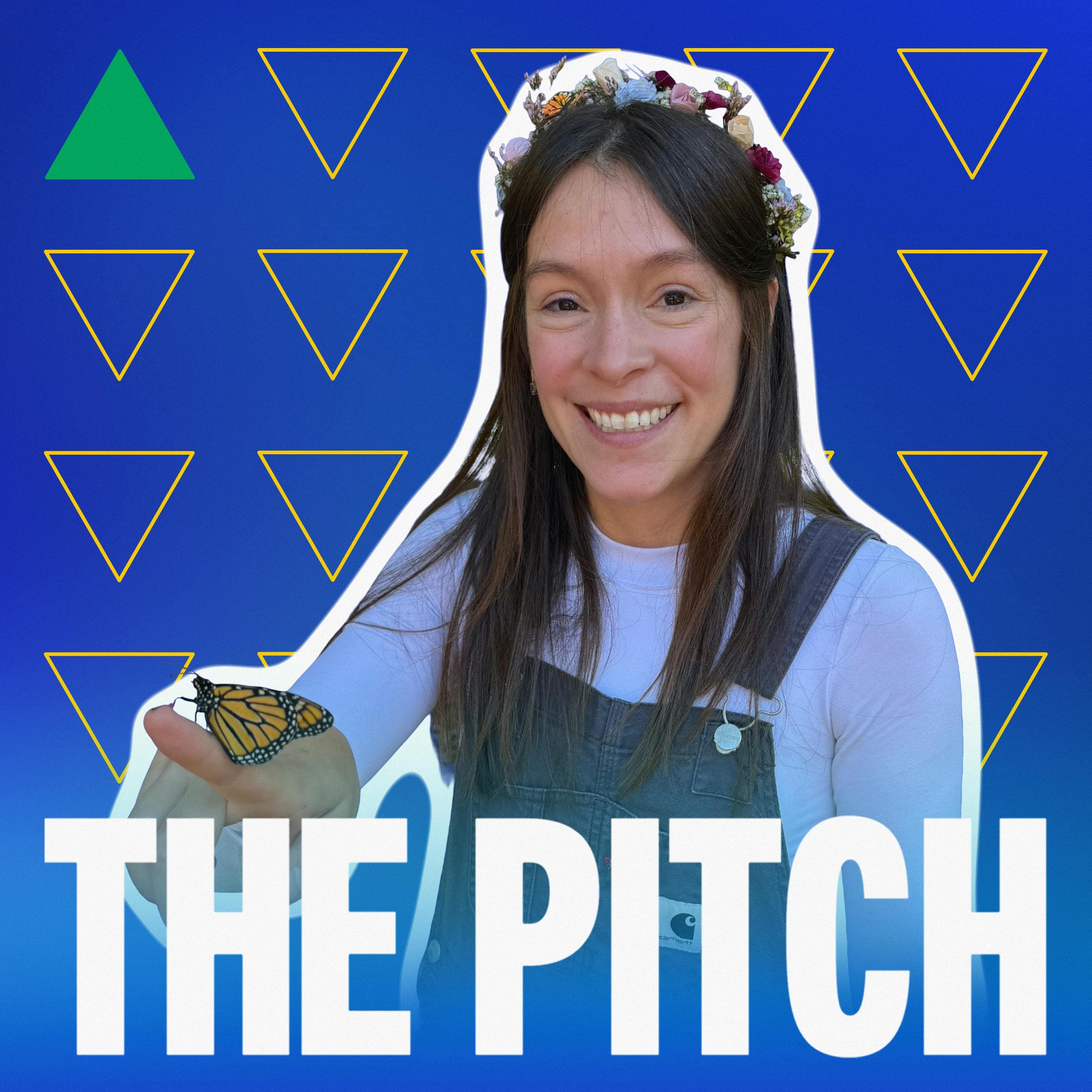
Aleoop: Show Me The Sales!
About this episode
 Spotify
 Apple Podcasts
After losing a huge sale due to product gaps, Meghan Scanlon left Stripe to start Aleoop, an AI that helps product and sales teams close more deals. But will she be able to close the investors with no sales herself?
This is The Pitch for Aleoop. Featuring investors Elizabeth Yin, Jesse Middleton, Laura Lucas, and Mike Ma.
Watch Meghan’s pitch uncut on Patreon (@ThePitch)
Join us for the Season 16 taping in Tampa
Subscribe to our email newsletter: insider.pitch.show
Learn more about The Pitch Fund: thepitch.fund
*Disclaimer: No offer to invest in Aleoop is being made to or solicited from the listening audience on today’s show. The information provided on this show is not intended to be investment advice and should not be relied upon as such. The investors on today’s episode are providing their opinions based on their own assessment of the business presented. Those opinions should not be considered professional investment advice.
The Panel




Josh: Welcome to The Pitch, where startup founders raise millions and listeners can invest. I’m Josh Muccio.
Lisa: And I’m Lisa Muccio. And on the show today we have Meghan with Aleoop. She’s raising $1 million.
Josh: Alright, let's role play.
Lisa: Okay.
Josh: Who do you wanna be? Do you wanna be sales or, or product?
Lisa: Oh my gosh. Okay. I'll be product.
Josh: I'm sales.
Lisa: Okay.
Josh: Yeah, that sounds right.
Lisa: Yeah
Josh: We're building a company. Company name is Wangadoodle, and we are building an AI fountain pen.
Lisa: This is my dream. This AI fountain pen basically reads the doc for you and red lines it and then signs it for you through osmosis. 'cause you're just holding this pen.
Josh: That's awesome. I've been talking to customers.
Lisa: Yeah
Josh: And they really, really love that feature, but they also want it to sign the documents on their computer.
Lisa: Oh no, I don't think that's a need. No.
Josh: And then, they really, really want like every signature to be on the blockchain. And they're telling me they will pay millions for the blockchain feature.
Lisa: I don't think so, because really what I see is that Gen Z and millennials are really back into this like kind of retro time period where they want things that they can touch and feel like paper and pen.
Josh: No, you're not wrong, but I'm talking to the customers. I'm in sales.
Lisa: I know, but this is my dream is to build this company that uses paper and pen.
Josh: If only there is a way to resolve this dispute.
Lisa: Yes. If only. But wait!
Josh: There’s Aleoop. Megan Scanlon is building Aleoop, which brings data into the picture so that sales and product can make informed decisions on the product roadmap and stop fighting
Lisa: Wangadoodle to the moon.
Josh: The pitch for Aleoop is coming up after this. And if you wanna join us for the live taping of season 16, we are gonna be in Tampa this April. Learn more about our upcoming show at Pitch.show/Tampa.
Lisa: And if you're a founder, apply to Pitch at Pitch.show/apply.
BREAK
Welcome back to the pitch for Aleoop. Let’s meet the investors.
Elizabeth Yin with Hustle Fund
Can I ask you a very direct question?
Jesse Middleton with Flybridge
I am so sick of people that are building stuff for building stuff's sake.
Laura Lucas with L’attitude Ventures
You are everything I am looking for in a founder
And Mike Ma with Sidecut Ventures
Cmon guys, like, what kind of risk are you looking for? You don’t want to overthink a deal.
Josh: Aleoop [clap]
Laura: Goop?
Josh: Aleoop
Jesse: Aleoop
Josh: Goop as a service.
Laura: Goop as a service.
Meghan: Hi everyone.
[hellos]
Meghan: Great to meet you all. I'm Megan Scanlon. Nice to meet you
Mike: I’m Mike.
Meghan Hey, Mike. Hey, Elizabeth.
Elizabeth: Elizabeth.
Meghan: Hi. Nice to see you.
Elizabeth: Nice to see you.
Laura: Hi, I'm Laura.
Meghan: Meghan. Hey Laura.
Jesse: Good to see you.
Meghan: Hey Jesse. Yeah. Well again, my name is Meghan Scanlon. I am the co-founder and CEO of Aleoop. And I've been in sales my entire career. and so I wanted to start our conversation by regaling you all with one of the most heartbreaking sales losses of my professional life. And it's ultimately the reason why I'm in front of you all today. It's two years ago. I'm an enterprise sales rep at a large payments company selling to big corporations and sales cycles are brutal. But life was good in this moment because I was closing in on my biggest deal yet. So I was working with a large streaming company and after 18 months of selling, momentum was perfect. So the CTO was aligned on our proposal. We had head of growth, back channeling to the C-suite. Contracts were in motion. So I was super excited and on a routine scoping call. We're presenting some of our reporting capabilities to the CTO and, you know, he stops us and he's like, oh, that's, that's not gonna work for us. I didn't realize you all did it this way. A couple minutes later we're going through some more functionality and, oh, I didn't realize you all couldn't offer this. Our current provider has this today. And so this theme went on and on for the next hour. By the end of the call, I'd uncovered six really fundamental product gaps preventing me from closing this opportunity. And I sound the alarm internally. So this is like Jira tickets. A bunch of Slack messages, escalation meetings. But something didn't make sense. We had a ton of perspective on how to win in the streaming sector. We had tent pole customers already using our offering, and so I started talking to sellers and account managers and what I learned, the gap that I uncovered has been a problem for many years. Across many deals. And the kicker, folks like product and engineering and leadership had no idea this was costing us billions in revenue. They didn't have the same information the sales team did.
So fast forward now, I'm catching up with an old colleague. I'm telling him about, you know, the sales loss, my inspiration for building Aleoop, and Adam starts laughing at me and he's like, oh yeah, I lost that same deal probably two years before you, I guess you never saw my notes. and so if we zoom out, there's 170,000 B2B tech companies competing in really crowded spaces now. 30% of their deals are gonna be lost to competitors. And the number one reason is because of product gaps So that's why I built Aleoop, to turn everyday sales insights into proactive product intelligence, so no one else spends the next 18 months chasing a deal that was doomed from the start. so I'd love to show you what we're building so far. Any, any questions so far?
Jesse: No, no.
Jesse: Let’s see it.
Meghan: Okay, awesome. yeah, so this is, uh, our platform. And so the homepage is our signal queue. So we are running unstructured sales feedback from places like Gong, Slack, JIRA, Salesforce notes, email, through our proprietary machine learning models. So we're taking like a ton of data that's really messy. We're running it through something that's really purpose built to be able to spot and flag signals.
And so what you're seeing here is like, what we're calling our daily digest. So this is where a product leader, a product manager, maybe even like an ops function, would come in and understand what's going on in the field. And at the very bottom here, you're seeing the affected deal. So this is tying back to the CRM records. So from day one, we're dollarizing this information.
Elizabeth: For the labels of where there may be blockers. Is that something that the company is sort of creating tags around or you guys are creating tags around or-
Meghan: Yeah, so I, right now we're starting the labeling process, so our machine learning models spit out these insights. And then we actually run it through an LLM to say, okay, what is this? What I've been hearing, like 10 out of 10 times over, is we don't necessarily wanna know the feature that needs to be built, oh, hey, we need multilingual capabilities, or we need this ERP implementation, but we wanna know more of like the root cause
Elizabeth: mm-hmm.
Meghan: Analysis, like, what's the customer actually saying they need? And so that's something that we're looking to incorporate, but we get it started and then we give them the opportunity to edit and relabel.
Jesse: Where does this data, all of this that you're showing the dashboards or, where does it live after someone's used Aleoop? Knowing how difficult this is for engineering or product and how it stacks up on prioritization, does that all get pushed into Jira and Asana? Like is that the sort of loop, or do you expect over time that product people, salespeople, like who lives in this application versus where does the rest of the data live?
Meghan: Yeah, so how I'm seeing this is like almost like a middleware, like a connective tissue where we read information in and then we push it out to the sources that, especially enterprise customers, like they're already deeply embedded in some of these like larger software solutions. So being able to write that back and kind of embed that into what they're already using, I think is really important. Today though, Jesse, like right now, they would log into Aleoop.
Jesse: Yeah.
Meghan: Um, and just to talk a little bit about our customers. Right now we're really focused on the series B, series C, which I know that's like a, a broad swath, B2B tech companies, a hundred plus employees, at least 10 million in revenue. And they found product market fit. But we know, we wanna sell this to publicly traded companies someday. I wanna sell this to my alma mater Stripe. we're gonna have to get this back into systems.
Mike: Let me just, I can tell you where I, I see this. I've been a CRO, recovering CRO as well, like, fighting with the CTO. It's like, no, you need to build this. Like, no, it's just software. And then we have this argument, which turns into a stupid contest. To me, the valuable part of this in my experience has been like, alright, well this is what the data say. So
Meghan: Yeah.
Mike: It comes down to try and like depersonalizing some of these very hard product traction decisions.
Meghan: Yes.
Mike: Do I have this right in terms of how you understand it?
Meghan: A hundred percent. And, and I'll just add, it's objective business cases. So now when you're in that, you know, that squabble with your CTO, you can look at the dollars, you can look at the revenue at risk, and there's also like a wrapper in terms of how we're thinking about these business cases, which is, you know, hey, if the company's really ambitious about net new logo acquisition versus, you know, maybe mitigating churn with existing customers. Like how do we layer on some of those strategic priorities and OKRs at a user specific level. So it's not just like the raw dollars and cents in the pipeline.
Mike: Totally.
Meghan: But it's a little bit more like North Star.
Mike: We've all been in these product meetings. Like, it's science and art, right?
Meghan: Mm-hmm.
Mike: And this, the part that's been missing in these is sometimes the science part of it.
Meghan: Definitely.
Mike: You know.
Meghan: Yeah. And this is meant to be the co-pilot. We're not getting rid of the product team today, but we're giving them the backbone to understand like, how do we derisk this roadmap? Like, Hey, we've got some big bets. Like is, this is almost like an insurance view. So we've run a number of proofs of concept and so sitting down with a head of product and actually going through some of these signals and it's like, a lot of smiles and a lot of like, huh, I didn't realize that was still an issue. Or like, oh yeah, that integration's been missing for quite some time. Like, we're tracking it, but not in a way that we probably should be. But what I've been hearing a lot of excitement around is the attribution against, hey, product and engineering is working really hard releasing a number of new capabilities over a given quarter. How are those showing back up in sales conversations? So you can tie business impact back to engineering.
Elizabeth: So I guess speaking of pilots, where are you in the process of customers and pilots and
Meghan: Yeah. Yeah. So, to date we've worked with five customers, all in that like series B, complex sales cycle. So just to share a couple sectors, right now we're like, pretty industry agnostic. I, I have a bent toward FinTech, but we'll see what happens. So We've worked with a crypto analytics company. We've worked with two HR tech companies and most recently we've run a pilot with, uh, legal software. five customers to date. we have three that are in the onboarding phase. all of them are unpaid today. and so how I'm thinking about the sales process, and I'm, I'm leading the sales conversations, is providing a free POC to be able to demonstrate value early, providing a static report and really showing how this technology works, getting that validation that product leaders would find this to be valuable, and then transitioning to paid, and I should say, our machine learning models went live in July, so we didn't have, you know, fully functioning technology that could actually do this until maybe six weeks ago.
Elizabeth: Have you suggested paid contracts to anybody?
Meghan: Absolutely. Every time
Jesse: As a sales person.
Mike: Yeah, I was gonna say, salesperson to salesperson.
Meghan: Yeah.
Mike: Like How big is the bread box?
Elizabeth: What's the ACV?
Meghan: Yeah, ACV, $15,000 today. $50 per user per month. We're looking at a minimum of 25 users per cohort. and I expect that to double and triple and quadruple as we look to move up market. When we get to an organization that, let's say there's, you know, at Stripe there are 400 sales reps that I sat alongside. So like that's where the prize is.
Elizabeth: What has the reaction been to the 15?
Meghan: Good. Actually, very good. I think as soon as you are able to correlate, hey, like we can directly tie back to revenue gains. Like we can show you how you're winning more deals faster and how you are building valuable products as a result of this tool. It's a really fun conversation to have.
Jesse: You, you mentioned the seats, you're, you're tying to salespeople or tying to product people?
Meghan: So I'm open to feedback on that.
Jesse: Okay.
Meghan: Right now both.
Jesse: Okay.
Meghan: So anyone who's accessing the reporting and like, actioning that information, definitely will be charging them. And I also think that anyone that we're ingesting records from will also have a seat license. But I think that part of the secret sauce in terms of our distribution is that salespeople don't have to be in this tool at all.
Jesse: Right.
Meghan: And I actually like, product folks, like, love that. As a former sales person, it hurts my feelings sometimes, but they're like, this is great because it's undoctored and then we can kind of make the analysis, we see the source of truth
Jesse: Right
Meghan: Um..
Jesse: And so is the product team the driver of decision making on this or the sales team?
Meghan: So I'm seeing it very cross-functional, but product is at the helm.
Jesse: Okay.
Meghan: So product has to be championing this. They have to be pumped about it.
Mike: What do you assess the competitive landscape to be in this area. It's not an area I normally invest in. But as a recovering CRO I feel this problem-
Meghan: I like that you say recovering. So in terms of competitive landscape, I'd categorize it in two buckets. One are the massive players like Product Board, Aha!, with the exclamation point, even like Salesforce, you know, Gong. Of all the big billion dollar businesses, we're watching Gong in the closest and right now, they have won in the sales coaching space, and I think it would take a lot to then kind of pivot to a whole different offering, which is now extracting product insights for product teams. So I think we're okay there. There's a bunch of startups that are doing this. So I would say I'm watching like the early entrants.
Mike: Mm-hmm.
Meghan: I have friends sending me links weekly, but we're all at the same, same page right now.
Mike: Just to follow up on that
Meghan: Yeah
Mike: To, um. Your intuition as a salesperson, what is the account plan?
Meghan: Yeah.
Mike: To convert free to this 15K if it's so easy and it's favorable.
Meghan: Yeah.
Mike: What work has to be done for you to get that?
Meghan: Yeah, definitely
Mike: Get the, get the paper.
Meghan: I would say when the head of product and I are reviewing the signals and they're like, this is all very valuable. Like, we would like to track these things. I feel like that's enough of the quality check that we need to then talk about what an always on solution looks like and converting to paid. but were you looking for something more, more specific than that?
Mike: Well, I mean two salespeople.
Meghan: Yeah. Yeah.
Mike: The question I would say is like, what metrics make this a no brainer for you.
Meghan: Oh, absolutely. Yeah.
Mike: And then, and then, great, whatever the answer is, we put this on paper. You put it on paper, I'll sign it and you sign it
Meghan: Yeah.
Mike: Like I'm just, I'm just trying to get some, some understanding of, 'cause free is always scary.
Meghan: Free is scary. Yeah. I don't wanna be in this free period.
Mike: I understand why you're doing it. So I'm just trying to get, especially since you're in the craft of sales
Meghan: Yes.
Mike: I'm just trying to get to like-
Elizabeth: What’s preventing you from getting signed contracts today?
A salesperson selling a sales tool to salespeople … but she doesn’t have any sales. What the investors think of that, coming up after this.
Elizabeth: What’s preventing you from getting signed contracts today?
Meghan: I think it's just showing how the product works. I think there's a little bit of skepticism, like, okay, hey, we've run some stuff through chatGPT, and it's kind of nonsense, or it's too generic, or we've tried the Gong keyword extraction, and that's like not actionable. So let us see if we can actually use this as our future discovery pipeline. So that's the purpose of the POC. I would say, and does that answer your question, Elizabeth?
Elizabeth: Well, I mean, you've had pilots for a little bit now.
Meghan: Yes, pre ML models though.
Elizabeth: But it sounds like, if I understand, like right now you have only just kind of started the model part and so you don't have the data quite yet?
Meghan: No, not, not yet. No.
Elizabeth: So you're hoping maybe getting a month of data and then maybe in September you're closing? Is that what I'm hearing?
Meghan: That's right. Yeah, that's absolutely right.
Elizabeth: Okay.
Meghan: And I, I have, just so you know, 'cause this is like, you know, I'm the sales person, so like if I'm not doing this right, then we've got serious problems. On every call, okay, we're doing this free period for four weeks, if you like what you see, if you find this valuable, here's the per seat cost. So everyone's aware that there's this transition period. we're just right at the cusp of like getting those folks signed.
Elizabeth: Uh huh. But I guess what we don't know, just to clarify, is we don't know if they find the value yet.
Meghan: So far so good with the POCs, ton of value so far. Like we're having weekly calls to continue to layer on more data.
Elizabeth: But not enough value to sign.
Meghan: Um. We're, like, so we're, we're kicking off that process.
Elizabeth: Yeah, okay
Meghan: Yeah. We're right there. We're right there. I, I get exactly what you're scratching at. Um, there's no delays. It's just like we're at that point in the sales process
Elizabeth: I get it. You kind of basically added the functionality you needed in July.
Meghan: Yes.
Elizabeth: And here we are in mid August, so it's like,
Meghan: I'm like, I wish I was pitching in September.
Elizabeth: Yeah. It's like you need just maybe a couple more weeks to kind of say Yes.
Meghan: That's right. Yeah. Exactly. Exactly.
Laura: So the five customers that you have, are they the customer, suite that you want?
Meghan: No, two of the five. So that's who we're still actively working with and we've disqualified three. And then three more that are coming
Laura: And those three more are at the sweet spot that you wanna be in
Meghan: They all are. Yeah. I've started to get a lot more rigid about those types of customers.
Mike: Do you use Aleoop on Aleoop?
Meghan: Absolutely. Yes.
Mike: Can you tell me what is at the top of the board on your own Aleoop analysis?
Meghan: Yeah. So we need to launch that attribution tracking that I had talked about. So having an ability to see what product teams are releasing and then listening for those signals to be able to attribute dollars to them. So that's one. Two, we need to become SOC2 compliant. Like we can't serve enterprise customers without SOC2 compliance and, and a level of regulatory rigor. so that's like-
Elizabeth: Her whole pipeline
Meghan: Yeah, exactly. The whole pipeline.
Laura: On the three that you're onboarding
Meghan: Yeah.
Laura: Are those going to be free?
Meghan: Free for the POC period. And then after that, we're done. No more free, no more free work. Yes
Mike: What are you raising and what are you hoping to learn with that raise?
Meghan: Yeah, yeah. So we absolutely need to hire an ML engineer, a full stack engineer, and then, once we have enough of a customer base, a customer success ops person. So raising a million, today is like the kickoff of the pre-seed raise. I've raised $165,000 prior and I'm eager to see what the market has to say in terms of, the, the terms.
Jesse: Cool. I, I would love to run this by a bunch of our companies that are
Meghan: Yeah.
Jesse: Series B, C, it feels like a no-brainer problem solution set.
Meghan: Yeah.
Jesse: I, I struggle to think about sort of how this becomes massive on its own, like this sort of middleware comment, like eventually
Meghan: Yeah.
Jesse: But that may be okay. And so I, I. Pending that, like, I'd, I'd love to dig in on this. So
Meghan: Thanks Jesse. Appreciate that.
Laura: So. I'm still racking my brain over because I've been in your shoes.
Meghan: Yeah
Laura: I've actually been in sales for a long time.
Meghan: You were at Salesforce?
Laura: Yeah, I was at Salesforce. But I'm trying to figure out like, at Salesforce, all the things that we were going through and how this would fit in that. I struggle with, you know, the free stuff, and I know you're moving into paid, but that just like, that breaks my heart because I'm like, you need to get paid for the value.
Meghan: Thank you. Can I quote you?
Laura: And I am like, girl, you need to get paid. Right now. I see more women doing free stuff and you need to get paid upfront for all your stuff.
Meghan: I appreciate that Laura and I, I think I wanted to make sure it worked first. Like I wanted to make sure I could bring value and now it's like, I have the confidence. Like we've, we've gotten a couple reps in. We're transitioning out of that.
Laura: So I, I'm a no for right now, but I'm happy to continue talking because I, I am interested. I think it's an interesting problem. I've been in your shoes.
Meghan: Yeah
Laura: I, I know what you're trying to solve. I'm just trying to, going back and forth on, you know, how to, how to figure this out right now.
Meghan: Definitely, definitely. And maybe the next conversation we have, I'll have some dollars in the door and maybe it looks a little different. We should be at 100K by the end of the, the year.
Elizabeth: I think for me, I mean I absolutely love people with sales backgrounds. Um, I think that in this day and age, like, being really focused on revenue is really, really important. I think I'm kind of struggling with this onboarding sales cycle thing, which is, I kind of think you should be charging for this onboarding, even if they're not paying for the POC, but like you are spending cycles on it.
Meghan: Absolutely. Yeah.
Elizabeth: And you should cover your costs and I don't actually know if I have conviction that these people are necessarily willing to pay 15K. I mean, I think in theory everybody's willing to pay 15K if the moon moves, but since you, I don't know, you're in this sort of weird interim period and I, just like, on gut feeling or whatever, I don't know if I have that conviction that everyone you take a POC with is gonna convert. So unfortunately I'm out. But you seem amazing
Meghan: Thanks Elizabeth. Thank you, Elizabeth. Likewise, right back at you. Yeah, no, this has been a pleasure. Thank you.
Mike: Let me, um I'm just gonna expose my biases and tell you what I think so far. I think you're solving a big problem. and I think you have an amazing background like FinTech is an incredibly hard place to sell. So I, I, I definitely credit your stripes.
[delayed laughter]
Mike: No, it's hard. Dad jokes. Um.
Meghan: That was really good.
Mike: Thank you. I was, I, I wrote that one down.
Mike: Those are the merits. Here are the risks.
Meghan: Yes. Yeah.
Mike: I, I'm not sure you’re using your own product theory on yourself I wrote down, if you knew SOC2 compliance had a hundred percent thing, why are you building anything else and why? And then the question, the go to market is like, well, why are you picking that? If the number one thing in building this is just getting usage and knowing that you're solving a problem the world needs.
Meghan: Yes. Right.
Mike: I almost will leave it to you to see if you want to have another meeting. We're impact investors. This is a little out of thesis. We do a lot of work. I have a different point of view on your go to market around this. We only do one in two out of this 30 day rigamarole. So it's like, we are not a fast check. It's highly improbable. Um, however I feel the pain of what you're building
Meghan: Yeah.
Mike: Firsthand. So it is, it's almost back on you as the arbiter of your own time. Is this a good use of your time to have a second meeting? And I'll leave that back to you 'cause we will dig into your product and we'll challenge your questions on this. And if that's a conversation you're up for, I would say yes.
Meghan: And so just a question, first of all, I'd love to take a second meeting, so just to kind of close the loop there, but what would you wanna see on the go to market side? 'cause I feel like I maybe lightly missed the mark.
Mike: What are you optimizing for? Are you optimizing for revenue? Are you optimizing for usage and data and building the product? I mean, there's, there's a part of the Venn diagram. You can do both.
Meghan: Mm-hmm.
Mike: But it, I struggle with which one you're, you're trying to do.
Meghan: Yeah. I would say in terms of that Venn diagram, certainly if it was possible to optimize for both, that would be ideal. But I think right now I'm hungry for case studies, like I'm hungry to be able to say, you know, hey, after 90 days of using Aleoop, there were five unknown product gaps that were identified and prioritized on the roadmap. And that's like a faster time than ever to get from, you know, discovery to to, to feature planned, or a hundred thousand dollars was saved or we were able to speed up sales cycles by 20 days. So that usage and data to that latter point is really what I'm hungry for today, to have the proof points to be able to sell this time and time again. So I'd, I'd love to have a second conversation. I think, I mean, I've learned a lot today. I'd love to continue.
Mike: Awesome. Awesome. Then, then I'm a yes from that. Great.
Meghan: Great. Awesome. Well, thank you all.
Jesse: Thank you.
Meghan: It was really nice meeting you. Thank you for taking the time.
Elizabeth: Thank you.
Laura: And I love the name Aleoop
Meghan: Good. Oh, great. Yeah. I, um, people sometimes ask like, oh, did you play basketball, and, like, until middle school. But yeah, every sale I've found needs that great assist and
Mike: I love that.
Meghan: I think this is gonna be the product to-
Laura: Oh, there you go
Mike: I got it.
Meghan: Thank you guys. Yeah, thank you Elizabeth. Thanks, Laura. Thank you for the feedback. Thanks, Jesse. Thank you guys.
Elizabeth: Bye.
[clap] [door closes]
Josh: I told her, I feel like this is too early. I feel like you should come back next season. And she was like, no. we're gonna have enough learnings. The tension of what you guys needed to hear was like exactly what I was worried about.
Jesse: I think 30 days from now if she would've walked in and been like, we had five pilots.
Laura: Yeah
Jesse: We ruled out three, but we converted the two that matched. We have three more that are coming. The two that matched are now paying 15k each
Laura: Yeah
Jesse: The rest have already said they're going to
Laura: This is why
Elizabeth: The January session would've been perfect for her
Jesse: Yeah.
Elizabeth: Yeah.
Mike: Well, I, I love her. I mean
Jesse: We'll see her in New York, so
Mike: Yeah. We'll see her in New York.
Jesse: That's right.
Josh: All right. Thanks guys.
Jesse: All right.
Josh: That's a wrap.
Jesse: See you tomorrow
Meghan walked out of the pitch room with interest from Jesse and a second meeting with Mike. When we come back, we catch up with Meghan to find what happened after the pitch.
[break]
Welcome back. A few months after her pitch, we caught up with Meghan to see if our salesperson finally got some sales.
Josh: During your pitch, you said, I wish I could have pitched a month later in September. So I guess the big question is, what happened in September? You had two pilots that were about to convert.
Lisa: Did they?
Meghan: They did, yes.
Lisa: Ah!
Meghan: So our first paying customer came online in September. So truly like within that 30 day window. We have nine live customers today, either in like a fully onboarded, like paying a month to month subscription or in like a POC proof of concept period. And of those nine, five are paying.
Josh: Awesome. So I think you were targeting 15,000 for your first pilots
Meghan: That's right. Yep.
Josh: Is that what you've been able to hit so far?
Meghan: we're a little shy of that if I'm being, you know. Full transparency. We have been extending some of these proofs of concept to really ensure that we're bringing value to our customers. And so like the iterative feedback loops that we're getting from our users in terms of like UI changes and integration needs, have been really beneficial. So we've held back on charging that full freight price point until we get to a place where we're really comfortable being able to command that.
Josh: So going back to September, you were talking to Mike.
Meghan: Yes.
Josh: He, in the pitch room, kind of offered a second meeting, but really put that on you.
Meghan: Yeah.
Josh: You know, it wasn't quite the full like foxhole. But like he told you, you could decide if you wanted to have a second meeting, which you obviously did, said yes to.
Meghan: He did, yes
Josh: What was that meeting like?
Meghan: That meeting was, was pretty intense. I felt like I, I saw the inklings of the foxhole. We talked quite a bit about our sales pipeline. He went really deep in terms of how we would use funds.
Mike: How did you come to the conclusion of what you would want to double the ML and BI hours for? What customer requirements are driving that? What are you looking to build? What is the market telling you? And I'm gonna push a, a thread here as far as I can go. If you build X, that will make you 100k how?
Meghan: So I would say these all feel fundamental to every customer we're serving. These feel like table stakes.
Mike: Okay.
Meghan: Do you buy that?
Mike: Sure I buy it. The answer is I buy it for the fidelity that I, I'm entitled to have on this. It all seems reasonable and that makes sense to me. The quintessential danger is this, I know what the requirements are, I'm just gonna build it.
Meghan: Yeah
Mike: And there's a fine line right between product vision, where you feel this way and the other spectrum is like overbuilding the product in your head, not what the market wants, but at the end of the day, sister, you gotta believe your own bullshit. And, and the question I almost put back on, do you believe it?
Meghan: Yeah, I do.
Josh: Was it fun to spar with another salesperson?
Meghan: Yes. Yeah, absolutely. It was. Mike's really smart and so like his questions are very pointed. You know, I feel like he's already kind of like seen around the corner. So yes, it was really helpful and I feel like it was all in the framing of like, I wanna be helpful. Mike ended up coming on as an angel investor, so it, it's been incredible working with him in that capacity.
Josh: No way.
Meghan: Yeah. Yeah.
Josh: How much did he invest?
Meghan: Mike invested $5,000.
Josh: So like, he wrote an angel check, but you didn't get a check out of his fund SideCut.
Meghan: Right.
Josh: Did he say why he wasn't able to write a check outta the fund
Meghan: The investment thesis mismatch is what I heard.
Josh: Yeah. He's more impact focused.
Meghan: He's more impact focused. Exactly. That's what I like to tell myself, Josh. I mean, there could be more to it than that, but you never know down the road, especially like. Mike and I are gonna hop on tomorrow. I should mention, to talk a little bit more about like some ideal customer profile hypotheses that I'm testing out. And one is definitely serving more healthcare tech adjacent companies. So who knows, maybe we could end up kind of, side cutting our way into… Thanks, Lisa. Nice. Thank you so much for this
Lisa: investment thesis.
Meghan: That's right. Yeah.
Josh: So Jesse Middleton in the pitch room.
Meghan: Yes.
Josh: Said he was going to share Aleoop with some of his portfolio companies. Did anything come of that?
Meghan: Unfortunately, nothing came of that. I was able to see Jesse at your live event and we got to catch up, so that was great.
Josh: Yeah at the NY live show
Meghan: that's right.
Josh: Were you like, Hey, what gives, man, I haven't heard from you in a while.
Meghan: No, I think I played it cooler than that.
Josh: Just reflecting on kind of the general sentiment in The Pitch Room. Everyone seemed really bullish on the problem that you're solving, but they couldn't get the conviction they needed to invest without you having any sales. Now that you have the data, how's it going with VCs?
Meghan: Excellent. We actually, yeah, we've got some good news just in the last week where we've received two new wires. So two new investors joining the cap table.
Josh: Nice.
Lisa: Awesome.
Meghan: Yeah, thanks. Yeah. So starting off 2026 on like a, a really great footing. Dave Smith is coming on as a strategic angel, and then we have Rogue Ventures.
Josh: Ah, you got your first check from a VC.
Meghan: I Did!
Josh: How much did they invest?
Meghan: In total 200,000 consistent with the terms that like, you know, Mike came on at, so, a 4 million post money cap.
Josh: Got it. Yeah. Got it. So from what I understand, while you were in Napa, you met someone else. Yev at Backblaze.
Meghan: Yes.
Josh: And he also angel invested in your company.
Meghan: Yev is awesome. I am such a big Yev fan. Yev is so great. So when we were in Napa in August, gave the pitch, you know, came out, took a big breath, and he's like, Hey, that was really great. I was like, oh, great, nice to meet you. And he was like, you mind if I get a demo? So like literally five minutes after we did our debrief, I'm giving him a demo. And then we just continued the conversation and it just felt really organic in terms of, you know, him digging in deeper to the business and getting conviction to invest as an individual and then also to make some really nice warm inroads to folks who are closer to the prioritization and planning at this like large company. So Backblaze is like an incredible POC win for us, and all thanks to Yev and his leadership behind it.
Josh: So they're a customer of yours.
Meghan: They're a proof of concept customer.
Josh: That's awesome.
Meghan: That's been great. What a win coming out of the pitch. I mean, Yev and Mike
Lisa: love that.
Meghan: It’s been great.
Lisa: Yeah. Those are, those are some good guys.
Meghan: Yeah.
Lisa: You got some good ones.
Meghan: Yeah.
Lisa: How much did Yev invest?
Meghan: He invested $10,000.
Lisa: Nice. Do you think that your sales background has helped you in fundraising, or do you feel like fundraising is a different skill?
Meghan: Yeah, Lisa, I, I do feel like most of it's like really helpful. Yeah. Like I'm comfortable asking for meetings, like I'm comfortable, like networking. Early on, you know, at this like pre, pre-stage level. I think you're really selling yourself, whereas I think in my sales career was very much like the product or service that I was selling.
Lisa: Right. Yeah. That's a big difference.
Meghan: It is, yeah. And it's like an at times awkward because you know, you wanna share all your accolades and like how great you are, but not overdo it.
Josh: So I have to ask, we told you before the show, I said, Meghan, I like what you're doing, but I think you're too early.
Meghan: Yes.
Josh: For the VCs on our show.
Meghan: No, you did say that.
Josh: And then, and then you sales’d me, you wrote a really great email basically saying why I was wrong. Do you think that was the right move?
Meghan: Yes, definitely. You know, and I kind of assumed, I'm like, am I gonna get a little beat up in the room? Like maybe, um, you know, for lack of a better word, like, um mm-hmm. But, all worth it. Oh yeah. And the fact that like Yev and Mike, and like obviously we have this great relationship now, so, nope, no regrets on my end.
Lisa: Okay.
Josh: I just, I had to ask.
Meghan: No, I appreciate that.
Josh: Uhh Well congratulations on all the progress you've made.
Meghan: Thank you.
Josh: Since the show, it's been cool. You've been one of the founders who's been most on top of keeping us updated. Always appreciate those communication techniques.
Meghan: Oh, thank you.
Josh: So whether they're sales tactics or you just being a great human either way
Meghan: can they be both?
Josh: I thought they were great.
Meghan: They could be both, right?
Lisa: They can be both, yes.
Meghan: Well, thank you. That means a lot and I'm, I'm really honored to be in this season, as you guys know, like, being a long time listener of the show. It's, um, it's like really special. So thank you.
Josh: Yeah, you're welcome.
Lisa: You're welcome.
Josh: We're excited to see what happens next.
Meghan: Yeah, me too. Thank you.
Josh: You know, I know she's not regretting that she came on and pitched. Because like she got some early momentum in customers and some angel checks. But I can't help but think like what could have been if she would've waited and pitched this year instead?
Lisa: Yeah.
Josh: Not just like have sales, have customers, but like have the data to be able to pitch this business.
Lisa: Yeah. There's some irony in that, right? That she didn't really have the data she needed
Josh: a little bit, but it also makes sense like you need to have customers before a product like Aleoop is going to yield any value.
Lisa: Yeah. There's just something that's different about a founder who has that data when they pitch. I was speaking just the other week with a founder that we spoke to, like last year for this event in Napa. And I was
Josh: you said no to him?
Lisa: I said, no. Like you're really early. Let's just circle back in a few months.
Josh: Circle back.
Lisa: I know. But then he got on the call and, and blew me away with his pitch because he has data, customers have been using the product and I told him, I'm like, wow, your pitch is way different. So much better. It's just a different feeling when you get that pitch from a founder and there's like so much less skepticism, I think, too.
Josh: Yeah.
Lisa: And so you can buy into the belief that this product is really gonna work and grow.
Josh: VCs get a bad rap now because they don't back founders that are pre-revenue.
Lisa: Yeah.
Josh: And super early.
Lisa: Yep.
Josh: But I think having revenue, having even just a few early customers, just allows you to give such a more coherent pitch.
Lisa: Yeah. I would be interested to see what her pitch would be like if she was coming to this next event in April.
Josh: The original plan.
Lisa: Yeah. Such a stronger pitch I think. We can still check in and and see how it's going then.
Josh: I'm sure Mike will tell us everything that's going on.
No offer to invest in Aleoop is being made to the listening audience on today’s show. But you can invest with us by becoming an LP in The Pitch Fund. To learn more, go to the thepitch.fund
Next week on The Pitch… robots.
Immad: What's been like the most impressive thing you've seen a robot do using your technology?
Anto: So at home I have like a cookie feeding robot, which is attached to my desk, and while I'm coding, it feeds me cookies.
Cyan: No way.
That’s next week! Subscribe to The Pitch on your favorite podcast player so you don’t miss future episodes. And remember you can watch full length versions of every pitch over on our Patreon at The Pitch Uncut.
And if you’re a founder raising a pre-seed or seed round you can apply to pitch on season 16! We’ll be taping in Tampa, Florida this April. Send us your deck at pitch.show/apply
We’ll see you next Wednesday, in the PITCH ROOM.
–
This episode was made by me, Josh Muccio, Lisa Muccio, Anna Ladd, and Enoch Kim. With deal sourcing by Peter Liu, John Alvarez, and Phoebe Sun.
Music in this episode is by The Muse Maker, Breakmaster Cylinder, The Firmware Rebels, Boxwood Orchestra, Joey Kantor, Shaky Faces, Cosette, Land of Legs, Peter Jean & The Runaway Queen.
The Pitch is made in partnership with the Vox Media Podcast Network.
The Outcome
$5,000 raised.
Raised
$5,000
Investors
1

The Founder

Co-Founder & CEO at Aleoop
Meghan Scanlon is the Co-Founder and CEO of Aleoop, an AI-powered intelligence platform that helps Go-To-Market teams identify and fix the internal roadblocks that quietly kill revenue. A career enterprise seller turned founder, Meghan has spent over a decade navigating high-stakes, multi-stakeholder deal cycles and saw firsthand how much growth is lost to misalignment. Before Aleoop, Meghan spent four years at Stripe, closing enterprise payment and fintech deals, and six years at General Assembly, leading a sales vertical through its $420M acquisition. Meghan blends sharp commercial instincts with a deep operational lens—giving her a unique vantage point as she builds Aleoop.
Related
Related Episodes


 After The Pitch
Nectir Part 2: From Flat Round to The Biggest AI Deal in Education
Kavitta Ghai · Nectir
S15
Also Featuring