Haiven: AI Protection for Young Gamers
Recorded live at The Pitch Tampa!, Tampa, Florida, Apr 21 to 23, 2026
About this episode
 Spotify
 Apple Podcasts
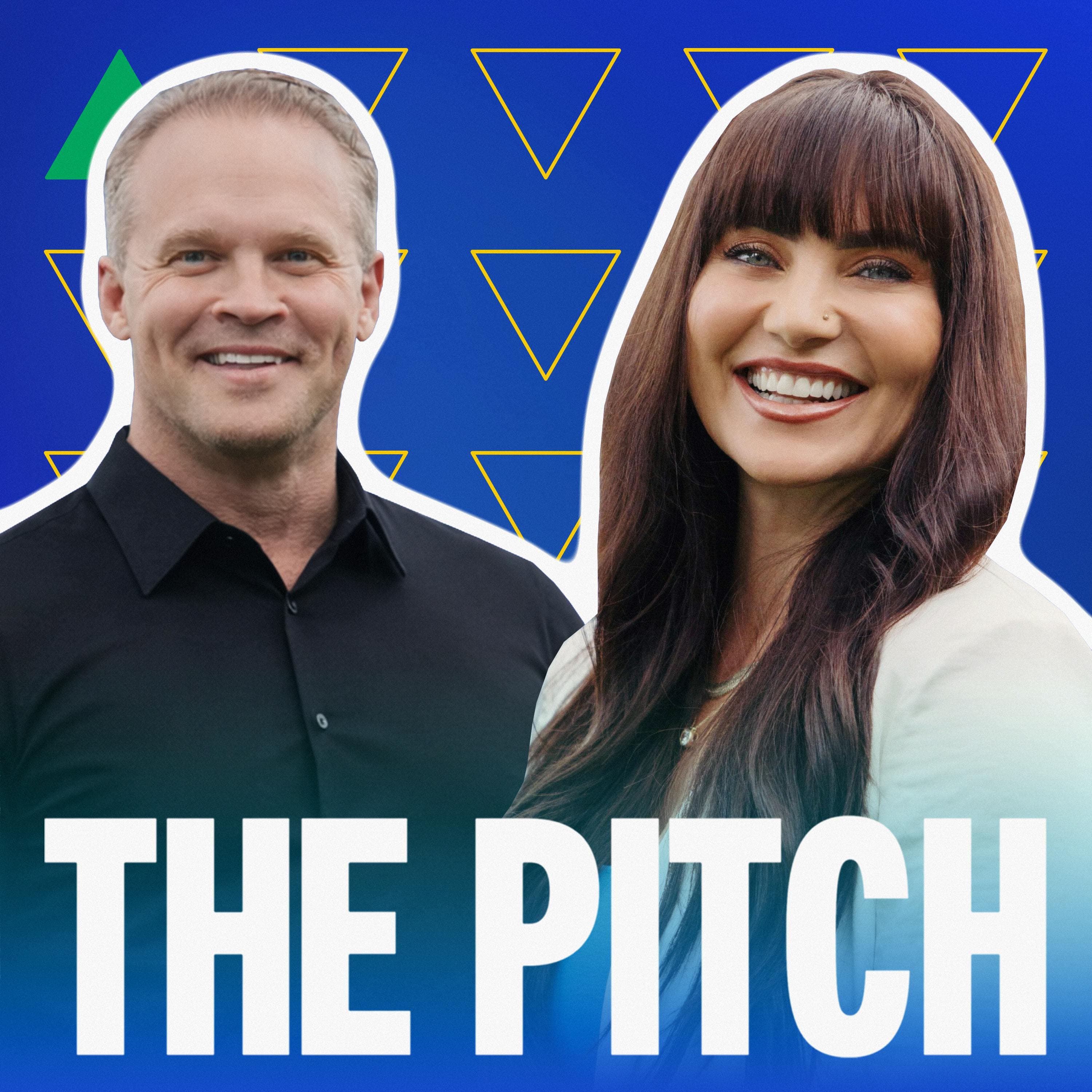
Luke & Jen Ritchie sold three companies and built games for Pokémon GO and Barbie. Now these married founders are tackling a darker problem—protecting kids from the predators and bullies lurking in the in-game chat. But will the VCs back Haiven when its business model has yet to be tested?
This is The Pitch for Haiven. Featuring investors Charles Hudson, Ellie Bahrmasel, Elizabeth Galbut, Jeff Cantalupo, and Mike Ma.
Watch Luke and Jen’s pitch uncut on Patreon (@ThePitch)
Join us for our fall live shows and Season 17 taping: pitch.show/events
Subscribe to our email newsletter: insider.pitch.show
Learn more about The Pitch Fund: thepitch.fund
*Disclaimer: No offer to invest in Haiven is being made to or solicited from the listening audience on today’s show. The information provided on this show is not intended to be investment advice and should not be relied upon as such. The investors on today’s episode are providing their opinions based on their own assessment of the business presented. Those opinions should not be considered professional investment advice.
The Panel





Josh: Welcome to The Pitch, where startup founders raise millions and listeners can invest. I’m Josh Muccio.
Lisa: And I’m Lisa Muccio. On the show today we have Jen and Luke with Haiven. They’re raising three million dollars.
Josh: Video games.
Lisa: [Mario noises]
Josh: [Mario noises]
Lisa: Wow, impressive.
Josh: Thanks. Well, I played a lot of Mario
Lisa: The old days of video games, so great
Josh: So great
Lisa: They were offline, you’re playing in real life with your siblings, shooting each other up
Josh: Nowadays, it’s chaos out there. Toxic chat, predators, addiction, mental illness. Today’s founders want to fix that. Because it's all fun and games until you have a child-
Lisa: Yeah ...
Josh: that likes video games. And then you realize, like, this is not fun and games, like the Mario-
Lisa: Mm-hmm ...
Josh: of old. Like, this is a battlefield. Not the video game Battlefield- ... but, like, a battlefield for our children's minds.
Lisa: Yeah. I hope that today's episode really does make an impact because there's just so many parents who don't understand the dangers that are out there.
Josh: Yeah. Today, a special guest on the show, our son. Today’s founders will have to convince, not only the VCs but a 12 year old gamer that they have the solution for toxic gaming culture.
The Pitch for Haiven is coming up after this.
Lisa: We’re hosting two events this November. A live show in New York City, and also, our season 17 taping in San Francisco.
Josh: Oh my gosh it’s gonna be so good
Lisa: Ah, I love the tapings
Josh: Best season yet. Come join us at either the live show or the SF taping of the next season. Go to pitch.show/events.
BREAK
Welcome back to the pitch for Haiven. Let’s meet the investors.
Charles Hudson with Precursor Ventures
We have 500 companies, so, you pick it, we have it
Mike Ma with Sidecut Ventures
I got strings, I’m not an easy yes
Ellie Bahrmasel with Peranaut
Entrepreneurship is the dance between hubris and humility
Elizabeth Galbut with SoGal Ventures
Not all exits are created the same
And Jeff Cantalupo with Listen Ventures
Do you want this to be a premium brand?
Elizabeth: Haiven. [clap]
Josh: Little more.
Charles: Little more oomph.
[clap]
Josh: Yeahhhh
Jen: Hello
Charles: Hello
Mike: Hi, how are you. Hi, Mike
Jen: Jennifer, Jen
Mike: Nice to meet you
Ellie: Ellie
Jen: Ellie. Good to see you
Elizabeth: Elizabeth
Jen: Hi Elizabeth
Charles: Hi, I’m Charles, nice to meet you
Jeff: Jeff
Jen: Jeff
Jeff: Yeah
Elizabeth: Elizabeth
Luke: Luke
Charles: Hey, Charles, nice to meet you
Jeff: Hey Luke, Jeff
Jen: Slither in
Ellie: Welcome to the party
Jen: Right!
Luke: Hi, guys. So my name is Luke Ritchie. I'm the CEO of Haiven. This is my co-founder and wife, Jennifer. We've had three exits, and we've done AI and gaming for places like Department of Defense, Pokémon GO, Meta, Barbie. One of the games we did, was doing 35 million a month in revenue when we handed it off to the client.
Jen: So a few years ago, we were building what we thought was gonna be our next big game. It had global chat at its core, and as we started digging deeper, there were things that we couldn't ignore. 63% of Gen A, Gen Z trafficking happens in digital chat. Youth suicide is up 62%, and nearly every Gen A child is gaming. as builders, as parents, as believers, it broke our hearts knowing this place where the kids are spending the most time is where they're the most exposed, exploited, and hunted. So we pulled the chat out of our game so that we could solve the real problem, and this led to the creation of Haiven. So we are a protective chat and gaming platform that detects toxicity, predators, and mental health risk, and actually intervenes. So we don't just block the harm, we actually guide behavior through our vibe score system and other really fantastic gamification methods that leads to a safer, healthier gaming culture. We have 150 indie game developers waiting to launch on Haiven. We have anti-human trafficking organizations waiting to use Haiven's data to go pursue predators, and we have mental health partners that are waiting for the exact moment to step in when a kiddo needs help. Because kids, frankly, they're not just playing in chat. They're literally crying out in it. The gaming market is a $300 billion market. It's bigger than movies, music, and sports combined. We truly believe that gaming culture is ready for a shift, and we're building the platform to lead that shift. So we are raising 3 million to bring the first version of Haiven to market.
Ellie: On what valuation? 3 million on?
Jen: Uh, 8.5 pre-money.
Mike: Well, I don't normally start with valuation, but since we're there, like, why so much so soon?
Luke: We have issued patents, the relationships, the traction, the letters of intent. we have the potential, actually, to launch with over 200 million players. So from a actual capability standpoint, we came down from where our advisors actually wanted because we specifically wanted our lead to be Eagle Freedom Fund, which is Tim Tebow's fund. we actually thought we came lower for an AI startup.
Elizabeth: So how much has already been committed of the 3 million?
Luke: We've brought in 800,000, and we have a second tranche from our lead coming shortly.
Jeff: I know nothing about gaming, so I'll start there. but I have four kids.
Luke: Mm-hmm.
Jeff: And I do know that chat is where things start and unravel quickly. I'm curious, like, what does the platform actually do? What's novel? What's the patent? What's the IP?
Luke: Mm-hmm.
Jeff: And then, for me, I'm a consumer investor, is Haiven the brand actually a brand, or are you a platform enabling other brands, and it's behind the scenes kind of enabling technology?
Luke: It's both. It's a platform, but it's also a plugin. So you could think of it like Telegram plus the App Store. We list games that we know are actually using our mechanisms, And then two we pull in players there. So if you're a single player game, you still have a community in Discord. and Discord is still, like, rife with predation, so we can either plug into your Discord, we can layer on top, or you can just move your community into Haiven. then you plug it into your game if you're multiplayer, and that allows you to actually have protected chat inside your game.
Jeff: Does the consumer know that they're in a Haiven experience? Like, does the gamer know?
Jen: when they're at the Haiven platform having the communications there, they know obviously that they're in Haiven. some of the games can choose to say whether they're Haiven enabled or not when they integrate that chat. they are incentivized heavily to do so because they're actually going to be, they meaning the game developers, are actually gonna be receiving a revenue share of the TIC, the time in community, and that's a monetization structure for the indie game developer.
Mike: Can, can, can you see how that works? Like, do you have like, a relationship with Riot?
Luke: Such a good question. We're not going after AAA. So AAA uses ToxMod. We're going after small to medium indies. There's 11.4 million of them. and they represent the majority of the actual gaming spend across the whole entire ecosystem. What we're doing is the old Netflix model where they took a B-level movie, and they had 10,000 rabid fans. And then they took another B-level movie and had 10,000 rabid fans, and they cross-pollinated those users. And then what ended up happening is a Nash equilibrium of growth that everybody won. And then you charge the user as a subscriber.
Ellie: I'm really curious. I wanna dig into the revenue model with you guys. It sounds like there might be multiple revenue streams here, and I really wanna make sure I have my arms around the different pathways to monetization here. So have I understood correctly that there are multiple revenue streams, uh, or potentially?
Jen: There's definitely potentially. The indie game developers aren't the AAAs. They're not the Fortnite. They don't have the funds to go spend all of these SaaS models. And so a lot of people hear things and they’re like, "Oh, just charge the game dev." It's like, you're missing the point. Their two biggest problems are literally discoverability and monetization. And so what we are doing is that chat exchange we give them, that plugin that they get to integrate, is free for them. The player pays a subscription to the Haiven platform, not to all the games that are on Haiven. The player has their own games. Why would they pay a subscription? The unique give and trade, if you will, is the game developers, we give them Haiven, the platform, the chat that they can tie in. In exchange, they give digital goods or loot that's available for their game on a biweekly or monthly cadence, where the user, for that flat fee gets to go in and claim all of their rewards. Very specifically for those in the gaming world, it is not a loot box. This isn't gambling.
Charles: Yeah. Gotcha.
Jen: In fact, gambling is not allowed on our platform, So it is specific loot.
Mike: Have you tested this, the uptake of your particular loot package and upsell?
Luke: We're doing slices, so we're actually developing this like a game 'cause we're game devs. So we just launched our developer alpha. We launched pre-alpha two months ago, now they're actually adding the loot packages. We've done testing with the interface of the player slice with players. I'm pretty sure our pro forma is underestimate by an order of magnitude what the uptake is gonna be. If you can imagine you're a kid and you see 500 games, you already play these two. And you're like, "Oh, and I get free loot in 200 of these if I subscribe for 14.95."
Mike: Have you done any testing for what that uptake would be?
Luke: Yes.
Mike: Can you share some of the numbers of what that is?
Luke: I mean, it's very light. So basically it's just asking kids, "Would you do this?" Like, "You're already playing this game and this game and this game. Would you-
Jen: The players within the games that the game developers that we're launching with.
Luke: Right. And so the actual live testing starts happening in June. We're pulling on users for the developer alpha, so I'll be able to have very specific numbers. just from the non-quantitative look at it, though, I think our pro formas are actually less than what was gonna happen.
Elizabeth: I have a question for my other panelists. my 13-month-old is not playing video games yet. Do you all let your older children play games? And if they do, is there, like, a budget you give them every month? Or how do they sort of make purchasing decisions?
Jeff: My 12-year-old and my 11-year-old, do play games, but we're pretty specific about which ones we allow them to play. We do not allow them to play Roblox.
Luke: Good.
Jen: Good. Same.
Jeff: Um, they play Minecraft, which I'm totally comfortable with, and we monitor, like, who they're friends with and what worlds they're actually building in. They're not just out there playing whatever game.
Charles: Yeah, we disable chat on any game that has chat. And no friends.
Mike: My oldest son is a gamer. He's on the e-sports team. I communicate primarily with him in college through Discord.
Charles: Yeah.
Mike: So I'm on the other end of the spectrum. Honestly, I, uh, right now, just to clue you in where I am he has a lot of gaming addiction and mental health. I'm in my son's head right now.
Ellie: Mm.
Mike: Just to let you know emotionally where I am. I, I'm not in the capacity to actually answer that question.
Charles: Yeah.
Elizabeth: And so can you give me, like- Walk me through the use case of, like, your technology identifies there's an issue.
Luke: Mm-hmm.
Elizabeth: Walk me through your case of what issue it's identifying, and then what are the next steps that happens through your platform?
Jen: So, our AIs are especially unique. We have the predator radicalization, grooming, sextortion, that kind of dangerous vein, if you will, and we are working with partners there. when those moments happen, for this vein. They get pulled out over here. We start working with these different groups. And globe, this is a global platform. This is not just US. I love the US
Elizabeth: Are parents also being alerted that there's something potentially noteworthy going on in these chats. Here are some resources.
Luke: So you guys are watching what your kids are doing. That is actually an anomaly. 450 million Gen Alpha aged into gaming last year. 450 million. But the majority of those aren't being watched. Yes, we would surface it to a parent, but really our motto internally is we need to be a parent to the parentless, the ones that aren't being watched. And that's actually what the whole mechanism is built to do. and nobody's doing it.
Jen: Most parents aren't watching, and I don't mean that in a condescending way. They just don't know. They don't know.
Elizabeth: I mean, I know as a young girl, I was on AOL Slingo.
Jen: Yeah.
Elizabeth: And looking back on it there were a lot of unsavory things happening
Jen: Right. Yeah
Elizabeth: Even back then, and I'm sure my parents had no idea.
Jen: Yeah. Exactly.
Ellie: I- I'm the first to admit that my gaming expertise ended somewhere around Duck Hunt on original Nintendo.
Jen: That was a good game though.
Luke: That was a good game.
Ellie: This is very pre-Chat. Um, but you know, as serial entrepreneurs, you've got three exits under your belt, and I'm sure if we look back at all of your ventures and met you in the first year, there were assumptions that you were holding that three years later you're like, "Boy, were we wrong." So I always like asking founders, in these early days, what's the riskiest assumption that you're holding right now, and how's this capital gonna help you either prove or disprove that assumption?
Jen: So I think especially in software, this isn't Field of Dreams, if you build it, they will come. That's not what it is. You can't just assume you have a really cool thing and they're all gonna come to it. And the second thing is sometimes as founders, no matter how much you think you know about something, you have to be responsive and reactive to your users and to what they're actually giving you as feedback. Like we tell our team, we have a check your ego at the door kind of policy. Just 'cause you think it's cool, and it might be. If 90% of your users are wanting something else, you listen, which is why we're bringing in intentional partners at the build level. Call our baby ugly. I mean, maybe do it a little gently. But no, really, because you don't want a yes man. You don't want a yes ma'am. Like, let's do this. Let's build this. What we're doing isn't just a platform for funsies. The culture shift needs to happen.
Alright, so we can all agree that this is a big problem. But how do you actually solve it when the problem affects 3 billion people? That’s coming up
Mike: Can I ask an impact question? I love what you're building. I feel the need of it firsthand as a parent. But Is indie enough to solve the problem you're looking at? Because if I'm a predator, okay, well, all the indie games are off. Cool, I'll just go to the big ponds where you're not.
Luke: Mm-hmm. that's a great question. we solved these problems because of the mission, because of the impact.
Mike: Believe you.
Luke: So it's not just what we're doing inside chat. We are working inside legislation. we have another meeting coming up with the Texas legislature, which will allow us to push it to 22 states. we are a part, deeply of some of the stuff that's about to happen with Roblox. It's a multiple front, battlefront. We're actually on every one of the front lines. Short answer is we're gonna force the AAA to do this.
Jen: Well, and tacking on, that's the predator's side. But what about the toxicity side? What about the kids who are feeling like garbage when they're in there, when they have no self-esteem, they're getting bullied. It's weirdly giving me horrible goosebumps. That's the second piece of what's going on, and how do you shift that? And that's where we have integrated our vibe score system that I mentioned very briefly, where if a player is, I'm gonna use cheesy mom terms. But if they're kind, if they're nice, "Dude, good shot. Nicely done. Let's play again," whatever, their vibe score goes up. If they're a jerk, it's different when you're, like, I'm kind of a, I'm kind of a trash talker when, like, you play games with me.
Luke: Smack talking is not bad vibes, like, it’s fun
Jen: Yeah, smack talk is different. Like, it's not- Like, "How'd you miss that move?" Like, it's different. The sentiment knows when you're just ribbing each other or when you're actually like... Here's an example. One of our guys was gaming, at our previous company. This actually was pre-Haiven. Just gaming, in the chat, and this kid jumps into his community. This is his guild. It's not just a random chat. These are his buddies, right? And he says, "My parents just got a divorce and I'm really struggling." Something to that effect. They start saying, "Nobody wants to hear that S-H-I-T here. Don't be a P-U-S-S-Y. Go kill yourse-" Horrible. And our employee's going, "Whoa, whoa. Whoa, whoa, whoa, whoa, whoa." And the kid bounced out of there so fast, he couldn't even hunt him down. So that's the other piece outside of the predators, how do we shift that culture?
Luke: Culture.
Jen: So if you're a jerk, your Vibe Score goes down. And One of our team members goes, "You guys, they're gonna game the system. They're gonna fake being nice for the Vibe Score to go up." And I'm like, show me the problem. Show me the problem.
Ellie: I, I guess to that end, you've told us a lot about the macro problem, which I don't think anyone can argue with you about the size of the problem. But what I'd really love to know is about how you've gotten into the mind of that end consumer, right? If it is the young person who's gaming who's got access to a wallet with a certain number of dollars that their parents might have pre-approved, what do you know about them that no one else knows that gives you confidence that they're gonna spend their limited wallet with a product like this?
Luke: They want light. So we are intentionally going after Gen Alpha. And there is a mentality among Gen Alphas that being a jerk isn't actually cool, but they can't... but nobody's grabbing the traction with them to actually say, "Let's make that into a platform where you can come be cool by not being a jerk." They don't like where their parents are. They don't like Instagram. They don't like Facebook. They hate Discord. but it's their only options.
Elizabeth: Tell me the mental health side of this story. Mental health and addiction, they're two different things. But both important in this gaming space. Like, what's each of your philosophies on it, and how is this going to apply to your product?
Luke: I worked the suicide hotlines. I did thousands and thousands of conversations. I actually stopped because I'm like, "I wanna do this at scale." So it's like how do we break isolation, lack of community, and suicidal ideation? Well, one, our AI detects with a 97% accuracy, even if you never talk about suicide, that you're ideating. How do you do this at scale? You build community for them. You bring them friends that are gonna actually grow them, love them. And we know that 'cause we're measuring the vibe and sentiment of these people. And so we put them with kids that actually love on them and take care of them, and you smash isolation. Phase two of what we're doing is, like, how do we get them outdoors? That's a whole nother part of the strategy.
Ellie: Do we have any young gamers in the house? Like I would love to ask a young gamer about …
Jen: Gamers in the house…
Luke: Yeah alright
Josh: We have a kid in the house.
Ellie: Amazing.
Josh: This is my son. Introduce yourself, son
Asher: I'm Asher.
Ellie: Hi Asher
Elizabeth: Are you a gamer?
Asher: Yes.
Elizabeth: What games do you like?
Asher: I like Minecraft. My dad doesn't let me play Fortnite, but I still play it at my church.
Ellie: Does Dad know that, or is this the first time he's learning it?
Asher: Oh, he knows that.
Ellie: Okay. Okay. Um, Asher, I'm curious. When you're gaming, do you see people say mean things?
Asher: Yeah, it's mostly to me and my best friend, Jack. We usually play Crazy Games Bloxd.io. He'll come on and- And he'll.. there's this… We have, like, s- a lot of kids, actually, who come on and they, they get TNT- ... and, like, blow up all our houses and all the stuff we've worked on.
Ellie: Mm.
Asher: Or sometimes they get protectors and they block so we can't build on our houses, or they steal our chests. It's really sad for us because we worked very hard for those.
Ellie: So what do you do when that happens? Is there anything you can do?
Asher: Um, we don't usually do anything. We usually, if we ever see them, we try to avoid them. But sometimes, we have a tribe we join, but the tribe is just, like, a... They're trying to capture us and then they just kick us out of the tribe, and then they try to kill us.
Ellie: / /That's a lot happening there. I'm curious, Asher, if I had a magic wand and I could create the perfect gaming environment for you, what would your ideal dream game be like?
Asher: it would probably be like Minecraft, but every single fun mechanical add-on I've ever seen, and everyone is, like, they're all on a team. I don't like 1v1s, 2v2s. I like when everyone's on a team versus, like, a CPU. Luke: Yeah
Mike: Hey, Asher, um, are there other games you play outside the big ones?
Asher: There's a few ones online. It's a game called Ships 3D, and most people don't even chat on that, and no one's really mean on that one because it's so small. But I like that one because I've never been bullied on that one ever.
Mike: Cool
Asher: I think it's pretty fun.
Mike: And any one of the new ones that did have a lot of chat?
Asher: I know sometimes I would go onto a Minecraft world. It was, like, Minecraft Zombie Apocalypse, and I remember there was, like, this one kid who everyone was like… They said, "Let's gang up on this one kid. He wasn't, like, the best Minecraft player in the world either. And they were saying, "Let's... He has to try to beat the game. We all have to defeat him," and there's, like, 100 kids on the server, and they're all trying to kill him.
Jen: To go for the one
Charles: Yeah
Ellie: Mmm
Asher: And so we're pretty sure what happened was he fell in, like, a cave. And then he just quit right away. And then they just, they wanted to do another player. So they found a random player and they did it again.
Elizabeth: Did anyone, like, speak up? Like
Asher: Yeah, there were-
Elizabeth: "Maybe we shouldn't do this," or...?
Asher: There was a few that said, "Can we do something else?" There was a few nice kids, like. But they think it's really fun to, like, when there's just a lo- a lot of their, like, team ganging up on, like, two little kids maybe even playing
Elizabeth: Mm-hmm. How does that make you feel when you're-
Asher: Makes me feel really bad for them. And then I, sometimes I actually see those guys and I actually help them. Except that's, it's kinda hard when there's a lot of players getting on you-
Charles: Yeah
Asher: And you can't. And see them sad.
Jeff: Well, the world needs more players like you, Asher.
Ellie: Thank you so much for telling us about gaming.
Mike: Thanks man
Luke: Thanks Asher, see ya
Elizabeth: Wow, he’s a cool kid. That made me cry a little bit. Cause I was bullied as a kid, and it's really impactful. It stays with you.
Luke: Oh yeah.
Mike: I'm gonna channel my Elizabeth Yin and ask kind of an a-hole question. Um, part of being an impact investor is to think with the heart and the wallet. From a heart perspective, I got slews of Discord chats. I live this problem. so the heart I'm good on. I do have questions about the wallet side, I'm really curious as multiple time founders, how have you tested this? You've built an alpha, and I'm just trying to understand
Luke: Mm-hmm
Mike: what your uptake rate for Loot is. And Asher's conversation confirms a lot of it. I'm just gonna spitball and say 95% of his screen time is not on indie games, and indie games have no chat.
Luke: Mm-hmm.
Mike: So with the thought of raising three on an eight pre, I'm having a hard time rationalizing this deal, and it's a hard thing for me to say. So my question for you as multiple time founders, how did you come up with this number and this raise for everything you've built so far?
Luke: Mm-hmm. One, from a revenue standpoint, we used what we know we've achieved in the past. It may sound like we haven't tested these exact mechanics, and that is true.
Mike: Yeah.
Luke: Like, we're gonna move into that, but we have actually done this hundreds and hundreds of times in games, in various mechanics. Yu-kai Chou, literally the father of gamification, sits on our board, has helped us work, like, so how you can compel and drive that actual spend. Nolan Bushnell, the father, the father of all video games, founder of Atari, sits on our, uh, our board with us. Like So, like, that part we're like, "Okay, we kinda know we're gonna monetize," but we actually wanna do it in a fair way. So, like, for example, when you're thinking with the wallet and the heart, in a poor economy, you're not gonna pay $4.95, you're gonna pay 99 cents. Why is that actually valuable? Because we actually know there's a billion Indian kids we can get who are playing mobile. So if you just think the US market, and if you think Asher, who, I love that kid, we he's being protected. His parents are already watching. He, he's actually not the primary target of who we're going after. We're going after the kids that are already spending, they’re free spending, $123 a month in America. That's the average spend in a strong economy.
Mike: I'm gonna ask this last question
Luke: Yeah
Mike: and, and Josh has given me feedback to be direct.
Luke: Yeah.
Mike: As multiple time founders-
Luke: Mm-hmm ...
Mike: Why have you not tested before you've asked for money?
Luke: Because we know it's gonna work.
Well, that’s bold. We’ll see how that pans out after this
Mike: Why have you not tested before you've asked for money?
Luke: Because we know it's gonna work. Like, we actually know these components. It, it would be like someone saying, "You need to test AI before you run, go do an AI company."
Mike: So for that reason, it is… Um, thank you for confirming that. That is why I'm out.
Luke: Okay.
Mike: The thesis of my fund is coachability and actions, and, assumptions are dangerous. I say this on every show, I'm rooting for you. as a father of, of a son who's suffering with gaming addiction, and I communicate through Discord, it kills me to say I'm out, but I'm out
Elizabeth: Well, so-
Luke: Well, thank you
Elizabeth: not all exits are created the same or create the same sort of exited founder.
Mike: Agreed.
Elizabeth: Can you go into a little bit more about the exits, and if you can share, like, the size of them, the outcome, if you raised money or didn't raise money those times around?
Luke: So, founder of OpenEye, was sold to Alarm.com. Can't disclose the amount, but it was a lot. Our last company was acquired by a gaming company in 2007. And it was actually a stock swap. So there was a small cash component, And we worked for them for two years. Very different, uh, management styles.
Elizabeth: I guess what I'm trying to get is, are your assets already creating what you need to live and more, or are you still hungry?
Jen: Still hungry. We're full-time everything in on Haiven at this point. This is what our whole focus is. It has to be.
Charles: I think at this point I'm out, but for a different reason. I worked in the games business, like MMOs, Facebook games, mobile games. The thing I keep coming back to is I believe there are players that have $15 a month to spend, but I don't know if the players that have that to spend and the target audience, the overlap, it just isn't quite clicking for me. And so, to me, that is the core assumption. I don't have any doubt that you can build the chat. I don't have any doubt that you have the relationships to get distribution. For me, the question is, like, will the monetization engine work? And 15 bucks is like Netflix money. That's like, not, not a lot if you're spending 100 bucks a month on games, but a lot on an absolute basis, and I think I'd wanna have more confidence that that price sticks and for enough people to build a big business. But you're gonna find that out soon, so this is like- I don't have, I don't have access to that information now.
Luke: Yeah. Mm-hmm.
Jeff: For me, the tipping point of the behavior that you guys are trying to solve is very clear and very needed, and so I'm happy that you're building this. And I'm a big believer in mental health. I was one of the first investors in a brand called Calm. but As a consumer guy, sometimes ideas to solve big problems are the simplest.
Luke: Mhm
Jeff: You know, how do you attack chat? There's a really cool company called Tin Can that's doing it by getting old physical phones.
Charles: Landlines
Jeff: But they made it cool.
Ellie: That's in my portfolio.
Jeff: But they made it cool.
Luke: Mm-hmm.
Jeff: And so, because I don't know anything about gaming, I just don't think I'm the right investor for you, but I'm glad that you guys are out there trying to, trying to build something like this.
Luke: Thank you. Yeah, appreciate it.
Ellie: Okay. I'm also in the painstaking no, but I wanna put an asterisk on this, because I don't feel educated enough to give you a yes today.
Luke: Mm-hmm.
Ellie: One of my areas of expertise is really in that relationship with the consumer. How are we testing? How are we learning?
Luke: Mm-hmm.
Ellie: And what I'm looking to learn more from is how you're doing that in the smallest bite-size ways today. And so I know that you've got deep conviction from decades of industry experience, which is massive. What I see happen sometimes is when we've got founders who've got massive industry expertise, that hubris, and I believe entrepreneurship is the dance between hubris and humility.
Luke: Mm-hmm.
Ellie: Hubris shows us that we believe there's something big enough I can do.
Luke: Mm-hmm.
Ellie: But making sure we're making space for the humility to constantly learn-
Luke: Mm. Absolutely.
Ellie: from our end consumer. And what I wanna dig in with you guys is how you're doing that learning. To Charles' point, how are you finding that overlap in the Venn diagram between the young person who's got the spend capability and who's experiencing the problem living in the environments where you think they're hanging out based on your go-to-market strategy. but I really wanna stay in conversation with you guys because you are early, and I wanna be part of the adventure, at the very least, as a friend and cheerleader.
Luke: Mm-hmm. Thank you.
Elizabeth: Ellie and I share a nickname. I think we also share a lot of opinions, and you said it so well, I don't wanna repeat you. Also interested in learning more. This isn't my space, but it is a big space and we're always open to learning about new spaces. But I can't get to yes today, because I just don't have the gaming background to give you a yes on today's show.
Luke: Well, thank you, guys.
Ellie: Yeah.
Luke: I appreciate it.
Jen: Thank you, guys.
Ellie: Thank you so much
Jen: Gonna scooch
Josh: I think Asher actually has some questions for you guys.
Charles: Oh, wow.
Ellie: Oh. Yes.
Elizabeth: Bring it on.
Ellie: Now we're really in the hot seat.
Mike: So you have a chance to be the winner in the Muccio family on the seat, 'cause yesterday your grandpa had it, right?
Ellie: Yeah.
Mike: And, we all know Josh, so the bar is low.
Ellie: Lay it on us.
Asher: Um, what's the biggest reason you didn't wanna invest in that company?
Ellie: Hmm. It's not that I didn't want to invest in that company. I actually very much want to invest in that company. But my job, right, like people think that investors, that we don't have bosses. Turns out we do. It's our LPs who believe in us, but that means we have a responsibility to them to turn over every stone and make sure that we're making a really good decision.
Asher: Mm.
Ellie: The mantra on my team, everyone knows here's how I operate, vibes but make it data. They pass the vibe check 100%, but I don't have enough data to pair with my vibes. So I very much want to invest, and I can't always do it from my heart. I have to make sure the brain and the heart are meeting together.
Asher: Mm, I understand.
Mike: I'll give you a, a different answer. The laws of building a startup don't change
Charles: Yeah
Mike: Just because you've built it before in this space. And one of the core things I tell every single founder is, "I don't know the answers to your question. Your customers do." The way to build a startup is sell, design, then build.
Asher: Mm.
Mike: What they're doing is design something, building it, and gosh darn it, we've done it before, we hope we sell it. And they may be right. And there are plenty of entrepreneurs in the world that do it this way. I am not smart enough to find that person. The part that I can understand is people who go through that process going out, feet on the street, figuring out what works and doesn't work from people like you.
Ellie: Yeah.
Mike: Would you pay for it? And actually getting money from you, and doing that over and over again. And then say, "Okay, this is what Asher would want," and then we build it for them. That's what I understand.
Ellie: And that’s the data I’m looking for
Elizabeth: I, I’d say it's a little bit different. Is, you're spending so much time on, right, Fortnite and Minecraft, and I'm wondering, like, what would they have to build to make you leave Fortnite and Minecraft, and all your friends to also leave those-
Asher: Hmmm
Elizabeth: and go somewhere else and spend, you know, all your time somewhere else? And is it enough just to have a space that's not being bullied and is safer, like- Or would you still wanna play Fortnite and Minecraft?
Asher: If they could build something like that would like take me away, I'd probably never, ever wanna play video games again.
Mike: Hmm.
Asher: Like-
Mike: Hmm ...
Asher: ever.
Mike: Hmm.
Elizabeth: Huh. That's how strong you feel about it?
Asher: Yeah.
Elizabeth: Wow.
Asher: If they could-
Elizabeth: Do you think that's how strong a lot of your friends feel about it?
Asher: No. Some of them feel like they could play video games for the rest of their life and never, ever do anything else in their life. I have that feeling sometimes, but not always.
Mike: I wanna respond to something and I almost lost it. Like, I could hear the audience laughing in the back. Do you find that funny? 'Cause I, I don't.
Asher: Mmm.
Mike: I, I actually... And I just want people to know, like, this is a thing.
Ellie: Serious problem
Mike: It's not that funny to me.
Asher: Mm-hmm.
Mike: I have a son.
Asher: Mm-hmm.
Mike: he's on the college athletics website as a gamer. It's part of his identity. it's a thing and, and when people don't understand that, even if I feel passionate about it, if they're not the building the business the right way, I can't put money in. Now, if they were building a nonprofit or something, that's, I could get behind that.
Asher: Mm-hmm.
Mike: But I'm unfortunately am in the business of giving them a little bit of money to hope to make a lot of money, and if I don't understand how that works, I can't do it, even though my heart wants to do it. That's why.
Asher: That makes a lot of sense.
Elizabeth: Yeah, and I think this one's really complicated, right? We always say as a fund, like, we wanna invest in the world that we wanna see in the future.
Charles: Yep
Ellie: Mm-hmm.
Elizabeth: And there's a lot of technology that can be used for good and bad, right? And sometimes it's unclear, like, yes, maybe there's less bullying, but does it still promote more dopamine loops that fuel-
Asher: Yeah
Elizabeth: more gaming addictions, right? So this one's a little hard because you're still trying to make money as a video game
Asher: Yeah
Elizabeth: But at the same time, you're just trying to make a more safe video game, but it's still promoting something that is problematic for some people.
Asher: Also, if you have a video game that's absolutely perfect, like you can get angry from playing video games or just after 'cause you wanna keep playing. If the video game is too good and you just wanna play forever, then you'll never wanna get off and you'll be even angrier
Elizabeth: Yeah.
Josh: Good job, buddy.
[congratulating Asher]
Jeff: Incredible questions.
Elizabeth: You raised a good one.
Jeff: I'm gonna switch seats with Asher.
Elizabeth: Yeah, I was gonna say.
Charles: I'm worried about my job. Don’t need to worry about AI, need to worry about Asher.
Josh: Can I give you a hug, man?
MIke: Yeah. That was a hard one.
Josh: Yeah
Ellie: That’s really hard
Lisa: That was really tough. I did not know that Mike had a son dealing with gaming addiction when I asked him to be on the panel. In fact, he was not even supposed to be on this panel, and at the last minute I thought, "Hey, impact investor-"
Josh: Come hear this impact pitch. Yeah. Right after that pitch, we chatted with Mike and we were like, "All right. How do you feel? Are you good with us publishing that?" And he was like, "Yeah. I want people to know that this problem exists and realize how pervasive it is."
Lisa: And I think you can tell how sincere Mike is about it, that he wanted us to publish this even though he was very vulnerable. So I really appreciate that he's willing to be transparent about that. It's a big deal.
Josh: And I agree with the panel overall. It's like this solution needs to be in every chat, in every game.
Lisa: Yeah.
Josh: I don't know if it's this solution, but, like, someone has to solve this.
Lisa: We have seen with our own kids that they're begging to play stuff like Roblox.
Josh: Yeah, they have been for years.
Lisa: We have said no, but also it's super isolating for them because all their friends play Roblox.
Josh: We have kids, as everyone on this show has heard in the last couple episodes, from like 9 to 14, so, like, we're in it right now.
Lisa: Yeah.
Josh: How many times do you hear each day, "Can I have more screen time, Mom?"
Lisa: Yeah. You're triggering me just by saying it.
Josh: 30? 30 to 40 times a day?
Lisa: I wish there was a way for our kids to, like, safely play these games. To me, playing with my brothers growing up was so fun. Like, I have core memories of, like, shooting my brothers on Halo.
Josh: Mm-hmm. Oh, you were shooting them?
Lisa: Well, no. Mostly my brother beat me. But-
Josh: Yeah
Lisa: Sometimes I got one in.
Josh: That was my experience. Yep.
Lisa: All of that to say, like, I want Haiven to come in and exist for them.
Josh: Until then, our only solution is, go play the video games that we loved as a child. More Mario for you, son.
Lisa: Or Zelda. They're totally into Zelda right now.
Josh: I love it. Zelda's a great game.
Lisa: Yeah.
Josh: So as of June, the Haiven team has raised another 250K, and they've got another million that they're in diligence for. I really hope they figure this out.
Lisa: Yeah.
Josh: Or at least someone does before Asher takes my job. He did so great, though.
Lisa: He did. It was great to hear.
Josh: He took it very seriously. It makes me realize, like, that's probably what he thinks of me, is like-
Lisa: That you're very serious?
Josh: Yeah. 'Cause he sits in the role and he's like, "Hmm, that makes sense." Those are words I don't think I've ever heard him say. But he said it to the VCs.
Lisa: I was surprised when I heard that, yes.
Josh: Such a delight. Well, we'll see how long I have my job.
No offer to invest in Haiven is being made to the listening audience on today’s show. But you can invest in The Pitch Fund, where we invest alongside the VCs on the show. We’re currently deploying Fund II, and we’re open to new investors through the end of the year! To learn more, go to the thepitch.fund
Next week on The Pitch…
Jack: Nowadays , we receive information through vision and what we hear. We're creating a future where you can receive information through touch.
Charles: I don’t think you’re raising enough money. I hope I’m wrong
That’s next week! Subscribe to The Pitch on your favorite podcast player so you don’t miss future episodes. You can watch full length versions of every pitch over on our Patreon at The Pitch Uncut.
And if you’re a founder raising a pre-seed or seed round, apply to pitch at our next event! It only takes a couple minutes to apply, go to pitch.show/apply
We’ll see you next week, in the PITCH ROOM.
–
This episode was made by me, Josh Muccio, Lisa Muccio, Anna Ladd, and Enoch Kim. With deal sourcing by Peter Liu, John Alvarez, and Phoebe Sun.
Music in this episode is by The Muse Maker, Breakmaster Cylinder, The Firmware Rebels, Base Collector, Sketchbook 2, Brendan Burns, and Peter Jean & The Runaway Queen.
The Pitch is made in partnership with the Vox Media Podcast Network.
The Founders

Founder, COO at Haiven
Founder & COO of Haiven, building an AI-powered gaming and social platform that protects Gen A and Gen Z in real-time from toxicity, predators, and mental health harm.

CEO at Haiven
Luke began coding in assembler at 14 and was building software for NASA and NASDAQ by 19. He is CEO of Gravity Jack, America’s oldest AR companies, and founder of Haiven, an AI gaming platform focused on safety, community, and impact.
Related
Related Episodes
 Live Shows
LIVE @ SF Tech Week: Vertigo, F-Bombs, and 24-Karat Gold
Daniel T. Sun · Sunchem
S16