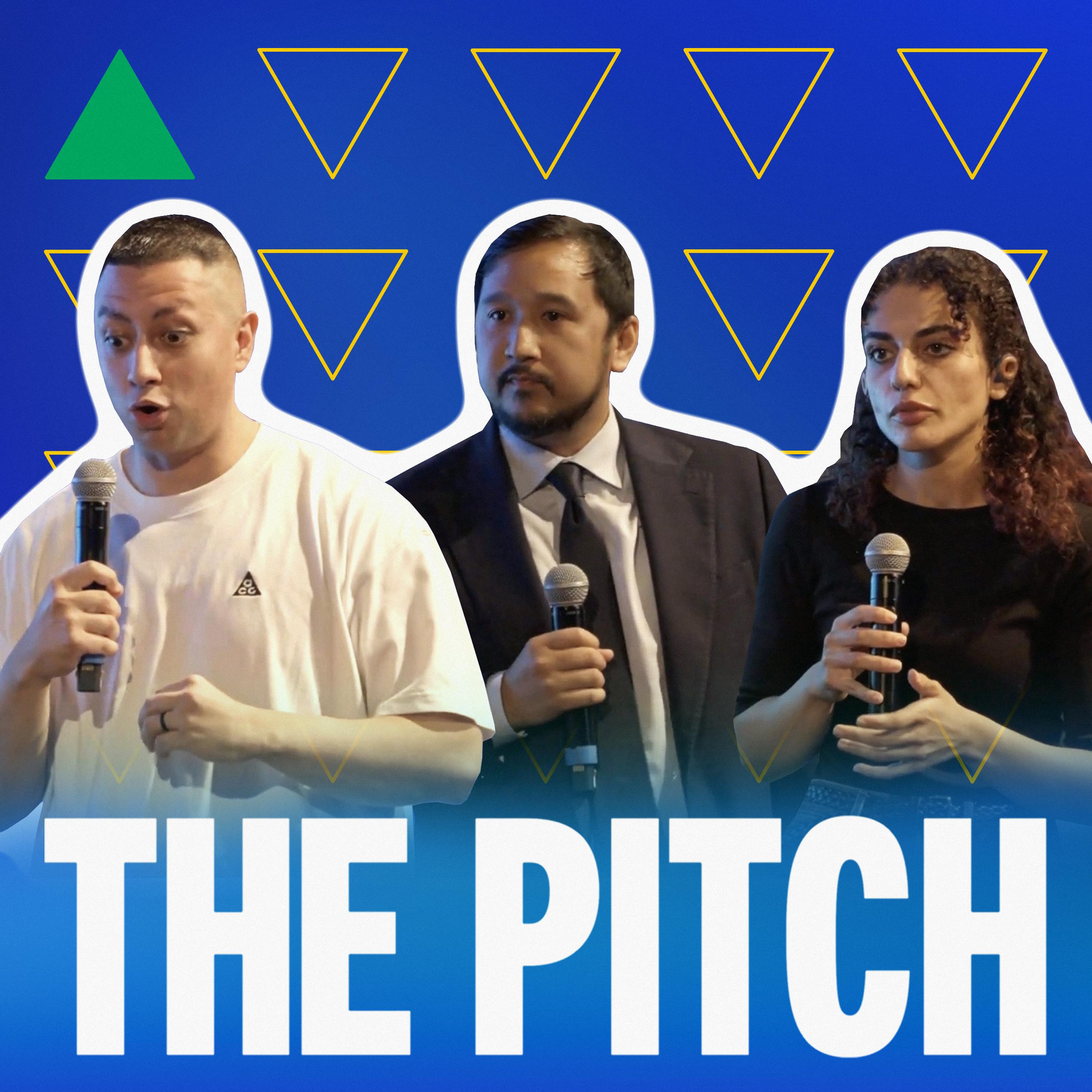
LIVE @ SF Tech Week: Vertigo, F-Bombs, and 24-Karat Gold
About this episode
 Spotify
 Apple Podcasts
Three founders pitch LIVE at SF Tech Week: an astronaut candidate grounded by vertigo presents earbuds that cool your inner ear, a Google DeepMind alum with an app that swaps F-bombs for quacks, and a Berkeley Lab chemist pulling 24-karat gold out of old electronics. After the last pitch, each VC gets to call one founder back for one final question. Will that be enough to get a yes on stage?
This is The Pitch for Avionova, Verso, and SunChem. Featuring investors Charles Hudson, Eric Bahn, and Arielle Zuckerberg.
Watch season 16 uncut on Patreon (@ThePitch)
Subscribe to our email newsletter: insider.pitch.show
Learn more about The Pitch Fund: thepitch.fund
*Disclaimer: No offer to invest in Avionova, Verso, or SunChem is being made to or solicited from the listening audience on today’s show. The information provided on this show is not intended to be investment advice and should not be relied upon as such. The investors on today’s episode are providing their opinions based on their own assessment of the business presented. Those opinions should not be considered professional investment advice.
Watch
The Panel

Welcome to The Pitch, where startup founders raise millions and listeners can invest. A few weeks ago, we took the show on the road and brought it to SF Tech Week. I’ll let that Josh tell you all about it.
Josh: Hello San Francisco! Welcome to The Pitch Live at SF Tech Week. I am so excited for today's show. I cannot wait till you meet today's founders. The VCs are all right, too. First things first, I wanna say a huge thanks to our sponsor, Engine, the intelligent travel- All right, yeah. Give it up. The intelligent travel platform behind half a billion in annual customer savings, smart controls, and serious rewards on every trip. The future of business travel runs on Engine.
If you don't know who I am, I'm Josh Muccio, host of The Pitch, where real founders pitch to real VCs for real money, and listeners get to invest. It is time to meet the investors.
In high school, this guy ran a landscaping business right outside Detroit, but he wouldn't shovel snow and he wouldn't cut grass, only plants and weeding. He's been weeding things out ever since. Later, he started a mobile game studio. Their big hit was a game called Aqua Pets, where you feed and collect fish in an aquarium. The game had three million downloads and was one of the top 100 grossing apps on Android. And then, in his words, they couldn't raise. So he did the next logical thing, he became a VC. Today, he has a portfolio of 600 startups, and this year, Forbes put him on a list with Jay-Z and Serena Williams. Charles Hudson with Precursor Ventures Welcome to the show, Charles.
Our next VC started his first company out of his dorm room with $4 of his own money, which is a pretty big swing if you only have $4. He never raised a penny from outside investors, and still he sold it for $8. Don't laugh, that's a 2X return, folks. Come on, we can't all be held to VC standards, am I right? Anyways, he put that same hustle into his fund. Since then, he's backed more than 600 startups and made driving a minivan cool again. Eric Bahn with Hustle Fund.
All the time. And our final VC was a nationally ranked javelin thrower in high school. So founders, if she asks you a pointed question today, duck. She made partner at Kleiner Perkins at 26. Now she's a general partner at Long Journey Ventures, where the investment committee is called, and I'm not making this up, The Absurd Committee. Their office is a Victorian in the Mission with tropical fruit wallpaper and a rainbow spin-to-win wheel. I'm not saying the wheel picked their latest fund size, but it's $181,818,181.80. Introducing for the first time on our show, big time VC, part-time DJ, Arielle Zuckerberg with Long Journey. Do you guys like those intros?
Arielle: I'm so glad you found that javelin fact.
Josh: I had to dig deep for that one. Between these three firms, they've backed more than 1,300 startups, which is more startups than Charles has hairs on his head. Okay. Three pre-Series A founders are about to pitch the VCs here. And after the last pitch, each VC gets to call one founder back to the stage to ask one final question, the one that decides whether they invest. And we'll see, maybe someone gets a check.
Our first founder is a commercial astronaut candidate and a NASA commercialization fellow. Her company tagline says, "Engineered for space, built for Earth." But what her company actually does will leave Eric's head spinning. Please welcome the founder of Avionova, Noor Haj Tamim.
Noor: Hello everybody. My name is Noor Haj Tamim. And at 17 years old, I was selected as one of the youngest astronaut candidates in America. Two years later, I ended up dropping a key at my engineering job, and I remember looking down, and looking back up, and suddenly the room was spinning, like I was on some crazy roller coaster. And I just remember falling to my knees, having my back against the wall, for three hours, waiting to feel a little bit better to unlock the door and go home. I was diagnosed with vertigo, and essentially the doctors told me, there was absolutely nothing to be done about it. I had to leave astronaut training, and I ended up waking up every single day, very worried about when the next episode was gonna come. And these episodes would last days, weeks, and so forth. It was a very daunting time for me. Um, and then the doctors ended up prescribing Meclizine, Valium, essentially sedatives to help you sleep it off. There is no anti-vertigo pill just yet. They refer you to a surgeon in case the problem gets worse, which it will get worse in the future, and send you on your way. But I'm not the only one this has happened to. Over 40% of individuals worldwide will experience a balance disorder at least once in their lives, and millions more experience motion sickness. Because of this, I dropped absolutely everything, took my tech transfer background, and knew for a fact that I had to go and build Avianova for others who are just like me.
Um, to date, I've spoken with hundreds and hundreds of people about motion sickness and vertigo, and that actually led me to learn about the maritime industry, and it's not just passengers, but it's crew members as well who are working on these boats. And it's interesting because these guys are prescribed the same medications that I'm prescribed and that astronauts prescribed. They're sedatives, right? So we built earbuds essentially to help cool down the inner ear to stop disorientation before it begins. Eric, it is your lucky day because the demo failed, and I was about to make you dizzy on that chair and have you put these on.
We have two platform technologies at the moment. We're using these non-electric phase change cooling material earbuds to expand in the maritime, where we have these seven pilots across offshore crews, expedition crews, and passengers, but also marine medical distribution, where the customers in our pipeline manage seven hundred to nine hundred vessels each.
Other than that, I really wanna get back into the vertigo market within the next two to three years for conditions such as vestibular migraine, vestibular neuritis, and Meniere's disease, such as myself. We are currently raising a million-dollar pre-seed, uh soft committed half of our round yesterday, waiting for a signed term sheet, hopefully by the end of the night, and I'm looking to close the rest of the round tonight. Guys, thank you so much for your time.
Arielle: Can you tell us a little bit about the unit economics? Like, what is the bill of materials, and how much do you plan to sell them for? And is it, like, a one-time use product, or is it something you can wear multiple times?
Noor: So our beautiful, beautiful earbuds, when I gave these to our engineers, I told them, like, "Listen, we just want them to be cool. We want them to be reusable. Make it work, whether it's a snap or whatever." And they listened, and somehow it worked. Uh, with the chemicals that we're using, they are reusable up to 50 times. The cooling itself lasts around two hours, and it's slow and controlled so that it isn't a sudden induction that can make you sick. And then we build these for around $6 right now with a small-scale manufacturer. We've already built our first 50 sets. We have already identified two different contract manufacturers in Asia with someone on site who's vetted these facilities, and we're selling these for $40 a kit. So for example, with our expedition operators, which is one of our first pilots because we are shipping, I believe, towards the end of the month. We're looking at $100,000 in revenue annually per operator. And for those guys, they are purchasing two sets per passenger
Charles: How do you think about your go-to-market?
Noor: Absolutely. So we are entirely B2B right now, and what that means for us is expedition. I absolutely love expedition because it's just like space. Around 90% of people are getting seasick on these vessels, to the point where even the captains are taking two Meclizine a day. I've taken Meclizine before. I was out for 36 hours. I'm not doing that again. Marine medical distribution is another big one that we're gonna expand to in April. We're running one of those pilots with a customer in Asia. And then within the next two years, we would expand into larger cruise lines where, uh, essentially it's a per open model, and there's around 7,000 to 9,000 passengers on those vessels. And then a couple years after that, that's when we truly expand into the broader clinical system. I love talking to customers, but I'm not ready to go B2C just yet.
Arielle: Who is the buyer? Who are you talking to at these businesses?
Noor: Yeah. It would be the chief medical officers of the vessels or the companies themselves. And the CEOs themselves as well of these companies. They're the ones who are directly purchasing. The way we find these guys is through industry conferences like Expedition Cruise Network, and we are also a Cruise Line International Association partner as well.
Charles: Can you talk a bit more about the rest of the team?
Noor: Yeah. So, so far, myself, I'm a solo founder. I come from tech transfer with NASA and the astronautics background. Run an international nonprofit. We were one of the first museum informal education partners with NASA. To date, we have, uh, Dr. Shew, who is the lead vestibular, so vertigo doctor at Ohio State University acting as an advisor. And then we have another guy who is 20 years med device experience and is acting as our project manager for these earbuds. We're currently working with contractors who, their entire expertise is miniaturization, wearables, and earbuds. So they worked on Loop before. And, uh, through this raise, I wanna onboard two engineers to help us move even faster to supply these pilots.
Eric: I'd like to understand, uh, a little bit of the nuance of how you segment this market. So for the earbuds that you're using right now, and I understand for people with more severe vertigo episodes, you know, that seems like a very escalated path to try to intercede and try to find some relief. But when I went to a cruise ship not that long ago with my kids, which, uh, I 50% recommend, by the way, uh, you know, a bunch of people did get seasick, but they just were handing out Dramamine patches, and it seemed to be fixing like 85% of those that didn't have like severe vertigo. So I, I guess like for me, the concern I have is, is a true ICP, like intended customer persona, I think a much more smaller subset that you're going after, and is Dramamine good enough for most people?
Noor: So part of the reason why these clinicians are speaking with us on board these vessels is because Dramamine is a sedative and these side effects as well, whereas we use holistic cooling to help slow down that feature before disorientation even begins. It can be helpful for some people, but the other thing is we don't know if it's gonna react with other people's medications or whatnot, so it's a big safety feature. And in fact, the one thing that our customers keep coming back to is the fact that their passengers are so tired, especially on board these smaller cruise ships going to Antarctica in these extreme environments. But that's just a small market. My interest primarily lies within the seafarers themselves, who they're not allowed to take medication while they're on the clock, just like pilots. And it's also such a confined environment where we get to study these, uh, crew members' ears as well. So for example, uh, we were at Sea Trade and, MSC was one who came up to us saying that their new seafarers, they're sick for two to three months on average, and that they wanna introduce these to thousands of people a year who are coming on board these vessels and cannot take these medications.
Eric: So, at least when I was on the cruise ship, a lot of the adult passengers were, like, six drinks in, so I couldn't tell, like, which ones were drowsy or not from, uh, the Dramamine. But, uh, you make an interesting case on maybe those who are kind of there on a professional capacity, right? Like, those who are actually crewing the vessels, they can't drink as much or the, those who are on expeditions. So, like, if you're to isolate-
Arielle: I don't know. Have you seen Below Deck?
Eric: That's true. Fair point. Okay, but, uh, do you have a sense of at least the TAM for those who are, like, more on the professional crew side, the seafarer types? I'm not sure if that's the right term.
Noor: Yeah. So statistically, there are just as many crew members on these vessels as there are passengers. So I believe it's around fourteen million annually, and happy to fact-check after this, but you know, motion sickness is just a small part for us. Motion sickness allows us to put these into thousands of people's ears by mid 2027 and helps us essentially unlock revenue to get back into vertigo. It also helps us understand ear shapes and really perfect that product before we move even forward.
Arielle: What's the market size including vertigo?
Noor: Yeah, so the market size for motion sickness is 750 million, whereas vertigo is 2.2 billion. And then, you know, what really struck out to me is that 60 billion annually spent in the US healthcare system because of vertigo and just how long pa- uh, patients have to go through different diagnoses and tests just to find an answer, and even then the clinicians themselves are arguing with these answers.
Charles: With the million pre-seed, what are the most important things to get done with that capital?
Noor: Absolutely. So that provides us 18 months of runway. It allows us to go and do a second study in Iceland so we can better understand what is happening with brain activity itself when we are testing with these individuals. And bringing back on those two people, so the engineers to help us build even faster. But really the biggest blocker for us right now is the capital to go and build our earbuds, because we do have those seven LOIs and those customers coming up that we need to be building those earbuds for.
Arielle: I guess if this solution has been around for Parkinson's, you mentioned, why do you think no one else has done this for this space yet?
Noor: That's a very good question. So the ears are the second lowest funded in research part of our body, unfortunately, under women's health. And because of this, it's very difficult for ENTs to communicate, build research. They're seeing on average around 120, 150 patients a day. And then the vertigo cycle is something people consistently talk about. So, you know, you go to the ER with a vertigo episode, they send you to neurologist maybe three months away, and then maybe they refer you to an ENT. But then essentially that cycle keeps happening, and what you see online is these patients who are so desperate for a solution that they are going to Reddit, and they are trying to find clinicians who have this magical new drug, and they go and fly over and try this drug, and then they end up back in the hospital several months later. And that's what people keep seeing. Coming back to the migraines and Parkinson's, so coming from a tech transfer background, there is a significant gap when it comes to creating technology versus commercializing it. And the other big thing that we really had to figure out was the technology itself. It is very difficult to cool people's ears, whether it's non-electric or electronic, but we were the ones who figured it out.
Arielle: Okay. And maybe this is a silly question, but, like, would my ears get cold?
Noor: Um, that's a really good question because when I say cooling, people think five Fahrenheit, you know, something like an ice cube. Your body is very, very sensitive, so what we're doing is called mild therapeutic hypothermia. So by gently cooling down the ears-
Josh: That doesn't sound gentle at all.
Noor: Um, by gently cooling down people's ears, Josh, by only a couple of degrees, the body thinks that those systems are slowing down and goes essentially into this preservation mode. It's actually also used as a therapeutic for hearing restoration and protection for ototoxicity, which is drug-induced hearing loss, but also sound-induced environments as well. Oh, we're out of time
Josh: We are out of time. Noor Haj Tamim, everybody. Thank you, Noor. I was really looking forward to getting you dizzy up here
Eric: Oh, so that was the plan, t- for me to-
Josh: The plan was to get you real big sloshed
Eric: Yeah, well- come see me in the next cruise, uh, with the family I only need six drinks
Metal music and precious metals… when we come back
BREAKWelcome back. Heads up if you’re listening with kids there’s some explicit language coming up in like ten seconds, we left it in because, well, that’s the whole point.
Josh: Our next founder was on the Gemini AI team at Google before he quit because working on a product used by billions wasn't enough. He wanted his own billion users. Please welcome the co-founder of Verso, Jonathan Bernal.
Jonathan: Does this song sound familiar? Well, my four-year-old has heard this song as well. And because he's heard this song as well, he's also heard this part.
Song: [song]
Jonathan: Yikes. Sorry, kids. I didn't even know there was a lot of kids here. I'm sorry. The National Institute of-
Josh: Did, is that my son? Did you just say we're okay?
Eric: I think I see a child crying back there, actually.
Charles: He's trying to be supportive.
Jonathan: Sorry. The National Institute of Health performed a study over the past two decades looking at the Billboard Top 100 every single year, and what they found was staggering. Over 90% of the songs in the Billboard Top 100 in the past two decades all contained sexually explicit content, content about drug use, and content about abuse. Let me throw another figure at you. 18 billion, that's the amount Meta just settled for with dozens of states motivated by children being exposed to content way too early, the harm that can be done there, and parents desperately wanting more control over content. My name is Jonathan. I led demand research to build Gemini natively in Chrome, and now I'm building Verso, the future of music and content. What we did with Verso is we took Suno AI's song generation model, the one that got them to 5.4 billion in two and a half years, and we completely flipped it on its head. And using neural models, made it so that you can customize any song real-time and make it family-friendly.
We started with a wait list, got to 14,000. Then we did a limited preview, and then a few weeks ago, we rolled it out to everyone, and it exploded. 100 million views on TikTok and Instagram, hit number one on the App Store, and crossed 100,000 streams. But our vision is significantly bigger. We're going for all content. We're building a world where users or families actually control the content in their devices, built by models and agents that will consume content faster than you can, adjust it, tailor it to your needs, and make it safe for you and your family. We're starting with the 1.3 billion users that listen to music in the Western market, but next we're going for the six billion that consume social media. Thank you.
Arielle: Um, can you describe the user experience, like the product experience?
Jonathan: Sure.
Arielle: Do I listen to music through your app?
Jonathan: Yeah, that's a good question. So all you do is you download the app, you go in, it's gonna ask you how you listen to music, Spotify, Apple Music, et cetera. You click it, it's all synced. When you get into the app, it's all there. All your music, all your playlists seamlessly there, frictionless. And then based on global controls, it will customize all your playlists, or you can customize songs individually based on your needs. So if you wanna play like a Tr- Travis Scott song, Drake. At playtime, the neural models will go through and customize the parts that are not family-friendly ephemerally at one time. So you have this peace of mind and freedom when you listen to music and consume content
Charles: Are there any licensing issues? I mean, mus- the music industry-
Jonathan: Good question
Charles: can be tricky to deal with.
Jonathan: Great question. You're, you're streaming your music from your already music subscription, your Spotify, YouTube, whatever. And at the top layer, that's where we act, and we give you that ephemeral customization on top of it. We do not save or distribute any altered MP3s
Eric: I'm curious as to how the artists would feel about this. I've been introducing my kids to some of the music I listened to in 2005 when I was courting my wife in the club. And I've chosen actually to play the original version of Old Dirty Bastard- ... and a lot of stuff. I like in some ways, like, the controlling the output because I have a young daughter who's listening to this stuff with me.
Jonathan: Totally. Totally.
Eric: But, um, I mean, is this... Y- or I also re- appreciate the fact that art sometimes is-
Jonathan: Right
Eric: Is art, you know? And, and the artist had a very specific reason for these kinds of lyrics. So, do you foresee that could be a conflict, or have you ever tested this with some artists that have been able to react as to whether they appreciate this or not?
Jonathan: Yeah, I've actually have, had artists that want, because the distribution that we unlock for millennials, they want, like, our app, or they want their music through our app, so they'll upload on Spotify, and they're like, "Hey," like, "can you like..." But to answer your question more directly, clean versions is not a new thing, right? Most people memorize the clean version versus the original explicit version. Artists primarily care most about distribution, right? And I think the second part is, we try to do this ephemerally so that it's protected actually below the Family Act, which is basically a law in the US that allows you, if you're in your home with your family, to adjust content per your family's needs. there's already precedence for this. This is already being done. We're not the first company that tries to do this. There's actually a company called Angel Studios. They're a $2 billion company, and they really do this for m- for movies primarily. So, uh, there's precedence here.
Arielle: Do you do it, like, in the artist's voice? Or is it in some different voice?
Jonathan: No, no, yeah, good question. So t- here's what, here's what we do. When you play a song, the normalizer will go through and will just take out, let's say, let's say you said an F-bomb or a motherF-er or whatever. It will take that vocal out and then keep the beat in the background as you play, just like a radio version in the 2000s. But it does it real time and in family. But what you can do with our app, and the reason why it's viral, is because we have sound effects. Like, we have, like, the DJ sound from, like, the old school, like, r- clean versions. We also have, like, a quack, a moo. So we have, we have, we have, we have even, like, farts, actually. So we have, we have parents that go in, and a song that would actually bring them a lot of anxiety if it would pop up in front of their kids, now the kids love it. "Hey, can you play that song again with the quack?" Or, "Can you play that song with the moo?" So yes, you can customize the song.
Arielle: Okay, that's hilarious. And I actually ... It, like, markets itself probably, right?
Jonathan: Totally.
Arielle: Are people like s- I, I guess how is the word spreading?
Jonathan: Yeah, yeah.
Arielle: And then, and then, uh, what's the percentage of people coming in organically versus through paid?
Jonathan: So no paid. Completely unoptimized at this point. I haven't even touched SEO. All completely organic. This is how we go viral. A mom will take a one shot, shot of video, completely unedited, with a Snapchat strip, like as she was to send it to a friend on a text message, of her, like, doing something natural and then flipping the phone. Right when the F-bomb is about to drop, she customizes the song and it replaces it with a quack. Ten-second videos. That's it. That's how we got 100 million views. And that's why people download the app. They're like, "Oh, what is that logo? How are they doing this?" And then we see downloads.
Eric: So I wanna come back to then Charles' question around licensing. So let's say that I- record some incredible TikTok content. And then I use your app, and then I'm making the case of, like, I'm changing the lyrics because it's... I think you're making, like, a fair use claim.
Jonathan: Yeah.
Eric: Right? Like, it's for my internal benefit.
Jonathan: Right.
Eric: But if I'm contributing to views on TikTok or Snapchat, aren't I generating, for the company, revenue, right? That doesn't go back to, uh... There's, like, a part, there's, there's something I think about. Someone's making money, like, in this kind of viral loop that you're talking about that feels like it was initially done through a fair use channel, but it's becoming commercialized.
Jonathan: So okay, so when we first started going with distribution, there was two paths, right? Like, you make a nice video, you put ads on it, or you partner with an influencer that gets monetized. We actually decided to try a completely different model, and can we just, anybody off the street record a video and go super mega viral and make the accounts be in-house accounts, unmonetized accounts, and just make content. That's how we've done it, and none of our accounts are monetized. Only the, the interest is w- when people come through our app.
Eric: I guess I understand what you're trying to say here, but I, uh, we're contributing views to TikTok, right? And they're gonna be able to commercialize those views in a different way, right? And part of it was contributed through the fair use content that your app produced. So I guess, like, it, it's very legalistic kind of question I have that I don't really know what the hell I'm talking about here. But like-
Jonathan: Yeah
Eric: uh, it, something feels like that could be a lawsuit.
Jonathan: So one of the thing I wanted to add is our video snippets are also very short. Like, three to four seconds. So our videos don't get flagged by any of the social platforms, and I think maybe one of the reasons why is because the videos are so short, and most of the video is, like, the reaction and what happens right afterwards.
Charles: Does it work in all languages?
Jonathan: We've optimized in English and Spanish right now. We just rolled out Spanish, and what we found is that it's super viral in other languages because we have an affordance here in the United States, in English-speaking countries where there's clean versions. That doesn't exist in other countries, like at all. So we had one person, this girl from Dominican Republic, we asked her to make an account, and she's going super, super viral. So we're starting to optimize for other languages as well, because there's a huge opportunity there that we underestimated.
Eric: Actually, let's talk about that for a second. So, uh, I'm, I'm ethnically Korean. I got a lot of family over there, and the level of foul-mouth stuff that was said to me growing up was, was pretty incredible actually. You think like English bad words are like creative. Like, that's like nothing compared to a lot of other languages. But like culturally, it's okay, at least like where I grew up of kids hearing that kind of stuff. Sort of a little bit like how in America today like I would be really nervous about showing like an explicit sexual scene to my kids on a movie. I'm like, "Ew, this is, you know, you can't see it." But if it's like violence, I'm like, "Yeah, let's watch this stuff." And then the Europeans are like, "What are you doing? The sex is cool, but not the violence," right? Like, so is there like a little bit element of just like, this could be a tautological fallacy, which is just like the reason why there's no bleeping out of bad words is because it's not a problem from a lot of cultures in the same way that Americans are just Puritans and wanna bleep out everything.
Jonathan: That's, that's the reason why I said I underestimated it, by the way. It's because of that, right? Like, you know, I'm Colombian. I came here as a refugee. My parents lost everything, and you know, I learned English. That's my second language, right? Now it's my main language, 'cause that's what I grew up speaking. But what I did find is that actually in a lot of countries outside the US, they're very traditional families, families that like really care about values and really care about their family unit. So I think that is what I underestimated, and that's why we're seeing so much demand in other countries, is because there is like a lot of young families which is, have a high buying power and have a incredible desire to have the control that they don't have today, and it's just, it just doesn't exist today. That's what we're trying to create.
Arielle: What are your, like, grand ambitions for this company? Like, where does it go from here, and what do you think this looks like, like three to five years from now?
Jonathan: Yeah, so, I talked about our vision at the very beginning when I talked about the pitch. Our path to 100 million is pretty straightforward. One million listeners at $100 a year is 100 million. So we're just sprinting to try to cross that milestone. However, the $10 billion vision is this kind of like, we've cracked millennials in a way... 'Cause most people, most apps, consumer apps go for Gen Z, like students, learners, or language learners. We found this, like, really interesting high buying power group that are very interested in what we're building. But I think the bigger vision is we wanna get to, hey, like, I can only, not only co- uh, not customize music, I will customize anything on my children's device, movies, TV, anything. I can say to the, to my Verso, "Hey, this movie's about to play, F-bomb. Or this movie has a sex scene, make sure there's no sex scenes. Or make sure my s- my, my child's social media has nothing about misinformation, politics, or abuse, bullying." And these models will literally consume content before your family and give you kind of this ubiquitous experience where you actually feel like you have control in your house, which I feel like a lot of parents don't. Like, you can't even control your own feed. I get underwear ads sometimes that I, like, block it out and it comes back, and I'm like, "I can't even control my own feed. How can I control my child's?" So that is the vision, is we want to bring that control into the regular family, the everyday family around in the US and the world.
Charles: I’m just curious, you mentioned a $100 a year. How, how would that work? Would that be subscription? Would that be per track? And how much usage would people need to get value out of the app to, to pay something at that level?
Jonathan: So we started testing paid subscription recently, and we hit 100K run rate in one week. We're s- and, and a few weeks later, we're, we're starting to hit 3K days. We're s- s- uh, touching a, a million run rate. So that was the thing I wanted to test, is like how p- much people are willing to pay. So right now we're starting, we're testing like paid model with like free trial, and shocked honestly, by the traction, given that we still have 14,000 people on the wait list that we haven't hit yet
Josh: To answer maybe Eric's question, like, where are your users? Oh.
Jonathan: They are in Facebook groups and Instagram is where most of our users come from.
Josh: Cool. All right, Jonathan Verce- Jonathan Bernal, everybody. Eric, your childhood either sounds super sketch or awesome, and I'm not sure.
Eric: It's a little bit of, uh, both columns, but I mean, I'm much older than you. 2005 was like my prime.
Josh: Much older than me?
Eric: I think so. We gotta compare skincare routines. I know that-
Josh: Yeah. I don't wanna reveal too much.
Eric: Yeah, okay.
Arielle: Hey, this is really gonna date me, but I'm the youngest of four, so my parents had very little oversight about the content I was watching, and I watched Howard Stern like all the time when I was like 11 or 12 years old. Look how great-
Eric: She turned out too. We all aspire to have a daughter like you.
Josh: Okay. Wow. All right. Puritans. Okay. Our final founder is a chemist who came up through Berkeley Lab. He works with a material so porous that one gram of it can cover a football field. His team taught it to grab one metal and leave everything else behind. Please welcome the co-founder of Sunchem, Daniel Sun. You showed up in a suit!
Daniel: It’s my super power… my super suit, I mean
Eric: You should be sitting here. You look like the VC.
Daniel: Hey, folks. First, it's an honor to be here. So there have been a significant regulatory tailwinds in the critical metal space, and the reason is we're in a race to secure our critical metal supply chains for all the advanced technologies that we use against the moves our foreign adversaries are making. And actually, an opportunity to help this is in electronic waste. There's billions of dollars of critical metals locked up in our electronic waste streams. And because of generative AI and data centers, that waste is increasing significantly. And the funny thing is, is that less than 25% of the electronic waste that we produce here, we actually only recycle less than 25% of it. We actually ship away the rest, and that means we're shipping away billions of dollars of critical metals. Folks, it is a shame that we do not refine those critical metals here.
And so at Sunchem, we're out to get those critical metals. We spun out of Lawrence Berkeley National Laboratory, where we develop new precision separation technologies that can get those critical metals. And the great thing is, is we can refine them and make pure metal just like this, and our technology is cost-effective and much more clean and more sustainable than the incumbent technologies. In terms of commercial traction, we already have 250 metric tons of electronic waste committed for our commercial demo. We have an MOU signed and a successful pilot with another IT asset disposition company, and we have a paid pilot with a hyperscaler processing the electronic waste from their data centers. And so I'm here today because we've basically reached the limit of what we can do. We now are raising $3 million to build our first commercial demo unit. This demo unit is modular, it's low CapEx, and it'll be able to process 250 metric tons of electronic waste, in other words, $7 million of critical metals to help secure our supply chains. Thank you.
Arielle: So the 75% that we're shipping away, is that just because we are lacking capacity to process it, or can you talk about why that problem exists?
Daniel: Correct. So there are two incumbent technologies to process this. It's either high temperature smelting, which is just heating these things up for lengthy periods of time, sending toxic fumes, or using toxic cyanide or NOx emitting acids, and they're just really not permeable in the United States. So our solution is modular. It's just below that permeating threshold so that we can distribute these and get all those critical metals out of those e-waste.
Arielle: And are you focused on specific metals, critical metals first?
Daniel: So the most valuable metal in electronic waste is gold. So that's what we're focused on first because that drives the economics. Then the next by concentration, the highest is copper. Although gold is much more expensive than copper, copper is 600 times the concentration. That's a very critical metal. And then we get a concentrate of, like, the lower concentrated stuff like iron, aluminum, tin, and then we make a, a plastic fiberglass mixture.
Eric: By the way, was that gold that we were holding?
Daniel: 24 karat. You can guess how much money is in there.
Eric: That's pretty heavy, so can I keep... No, okay, anyway, um.
Daniel: If you invest, you can keep it.
Eric: Yeah, yeah. No, no, no. Can you just say a little bit more about how the device works? It still feels a little bit black box. Like, so it's not smelting. It's not poisonous gases. So what is it?
Daniel: Yeah. It's a fully integrated metal recovery process. We take the electronic waste. We comminute it, so we reduce it. Then we treat it with a bunch of chemistry, so leaching formulations. Again, no NOx emitting acids, no cyanide. Then we have the absorbent that Josh talked about. And then finally, we just refine the metals out. So it's a very, you know, five-step streamlined process.
Eric: And then, so if I drop that, that cool chip board into your device, like, how long will it take for me to be holding gold?
Daniel: Uh, it takes a day. So from feedstock to pure metal, we can do it in one day.
Charles: Can you just talk about the research and the R&D? Like, where are you in terms of, like, the commercialization process? You mentioned being ready to build these units, but just the history of the tech.
Daniel: Yeah. So we discovered this technology in 2014, 2015, so there's been a decade of research and development into this technology. We have built techno-economic models. We've built mass flows. We had a EPC already designed this modular unit, so we're ready to build, and the technology has been de-risked.
Arielle: It sounds like you're, you don't pay for your supply of waste, right?
Daniel: So there's a few ways you could do it. So the current contracts we have, it's shared revenue.
So they give us the supply for free, we process it, we split it, right? But there are some mom and pop shops that just wanna get rid of it, so you could do an arbitrage play. You can buy the electronic waste and make metals at much more valuable prices.
Charles: Just from a yield and output standpoint, in order to get customers on the other end, who are those folks, and how much do you need to be able to deliver to them for them to be interested?
Daniel: So you have to get more than 95% recovery of the metals. You know, that's what drives the economics, and that's one of the biggest problems actually related to gold chemistry. You'll want to crash back out, kills the economics if the recovery rates are low. But what's interesting is with one customer, for every dollar of metal they send, they probably get 20 cents back when they were sent overseas, and so that's a huge loss. And so that's why they're working with us, is because we can not only make them more money, but we can do it domestically.
Eric: Can you share a little bit about the carbon footprint of y- this process? So if I'm pulling out, let's say, some gold from that, that chipboard and a bunch of that stuff, uh, you're saying it takes a day, and then what happens to the rest of the waste? Is it just put like in a Ziploc bag and throw it away? Or like what's-
Daniel: So right now, we do have Clean Harbor pick up our plastic fiberglass mixture, but eventually we do want to completely recycle the electronic waste. And so, for example, some people think we can maybe turn that carbon into graphite, which is another critical material. Carbon footprint is quite low. I mean, you can imagine it's much better than just melting these things and burning all of the carbon into the atmosphere. So it's significantly lower.
Charles: Were there any regulatory issues around this?
Daniel: Yeah, so that's the great thing about our chemistry. It's very mild. There's no NOx that's being emitted. There's no cyanide. And so the permitting is much easier. It's, uh, much better than just burning these things and shooting toxic fumes. That's the whole point of our design, was to sit below and be easily permittable. And I always say, if you could do it in Berkeley, California, you could do it anywhere. That's where we're based.
Eric: So you mentioned that gold is one of those critical metals. I, I actually was not anticipating that was gonna be your answer. After gold, what would be the next, like, two or three that are important for your team to recover?
Daniel: So I just wanna say gold is critical. We use it in everything. It's in all your phones. They're gonna need it for all the data centers that we're building, you know, more than 200 kilograms. The next is copper. We need copper for data centers, for, you know, EVs, for electrifying the grid, all that good stuff. And then there's nickel. That's a critical material for battery, for energy storage.
Arielle: And can you use the same equipment to extract each critical metal?
Daniel: Yeah. Yeah, yeah. It's a, it's a base leach. It leaches out, and then we, we get the metals out of the solution one by one. We get all the base metals out, which is the copper, and then we do the precious metal leach, which gets the gold out, and then we, we get the metals out from, you know, after those streams. Yeah.
Eric: Do you have a rough sense of how many, like, kilograms of waste you used to get to that gold that we were passing around?
Daniel: So there's about $5,500 of gold right there.
Eric: Yeah.
Daniel: We needed about 0.3 metric tons to produce that. Of electronic waste, about around 200 grams per metric ton.
Eric: Dude, that's part of your pre-seed round right there. Yeah. Just use that 5,500 bucks and bootstrap this thing.
Josh: The Hustle Fund way.
Charles: Can you talk a bit more just about how you think about commercializing it? Who's gonna lead those efforts? Like, who's some of the ideal first sets of customers are for you?
Daniel: Yeah. So the idea is to first build our first commercial demo unit. Show that the CapEx can be paid back quickly. And if you can do that, then you can do a distributed model, which then you can send these and, and distribute these regionally and then distribute them nationally, getting to those billion dollars of critical metals. We wanna work with obviously IT asset disposition companies that aggregate these things, sort them, and then usually they send it overseas. We also wanna work with the hyperscalers. For example, one of our hyperscaler partners is producing 5,000 metric tons of this high-grade feedstock, and that's hundreds of millions of dollars of critical metals. So the plan is to build these and send them to where the waste is.
Arielle: What exactly is your CapEx? Like how, and what capacity can you reach and I guess how are you planning to use the $3 million?
Daniel: Sure. So the CapEx to build our first commercial demo unit, it's $1.3 million, and we have a EPC that have already designed it and have quoted it out for us. The rest is working capital obviously for our grants and- And that's the
Arielle: 25 tons?
Daniel: That's 250 metric tons a year. Yeah. And our unit is projected to actually generate $7 million in revenue from that. And so the key is to show that that can pay the CapEx quite quickly. And then if you can do that, then you can do this distributed model and just expand across regionally and then nationally and maybe internationally.
Arielle: Is this process like a protected invention?
Daniel: For sure. Yeah, we have multiple patents on the absorbent. We have trade secrets. We have proprietary stuff around our leaching formulations. And then of course, there's know-how as well. You think shredding e-waste is trivial? It's not. We believe in a strong IP moat, and so every year we try to, you know, see what our team has done. Is there anything we can patent? What do we want to do as trade secrets versus IP protection?
Charles: Given where the technology is created, like what's your relationship with the lab going forward?
Daniel: So I started my career at Berkeley Labs. But I think that's one of the things that makes us special, is we have access to over eight million dollars of instruments that we routinely use that allow us to understand these feedstocks at the nanoscale to solve the problems that you face when building something. So we're affiliate, we're users there and we wouldn't be here without the National Lab. And that's why we built our pilot plant facility close by because we wanted access to those resources so that, when we face those obstacles, we can go up to the lab, use their fancy instruments, and then figure this stuff out quickly.
Arielle: So you said you have a paid pilot with a hyperscaler. What do you think they're looking for to turn that into, a more long-term relationship?
Daniel: They want circularity. So they want to take the e-waste that they produce, the thousands of tons, and they want to not only m- you know, have more money than shipping overseas, but they want the metals to go back to their manufacturers as well. So what's great about this partnership is not only do they give us the feedstock, but they facilitate the offtake of the metals as well.
Eric: I wonder if, um, there's a opportunity to work with, uh, the military, US government, things like that. I could see this being one of those cases where it could be a national security thing to protect these precious metals. And I also can see the other side of this too, which is, you know, it might be kind of dangerous to do work in China or Russia, right? Uh, as clients. There's not really a question here, but, you know, this, this feels like uh, a very like America kind of thing here. You know, just like to protect America's interests.
Daniel: Yeah. We're, we're funded by the Department of Energy. We have an advanced research project, AGC grant, um-
Eric: Is there like a DAR- some DARPA grants behind that too?
Daniel: Uh, there is DARPA grants. You know, we have people talking with the Department of Defense or War or whatever, you know, whatever they're called now. Uh, and, uh-
Eric: Berkeley Labs.
Daniel: Yeah. Whoa. But historically we have been funded by the, the Department of Energy. And military electronics have some of the most valuable and precious metals that are really constrained in the supply chains, and so that for sure is a-
Eric: Yeah, I imagine there's some sort of like deprecation of like old computer gear or something like that, like that's constantly happening with some of these, uh, decommissioned like naval craft or, you know- aircraft.
Daniel: Oh, yeah
ERic: Yeah.
Daniel: There's so much metals actually in these, uh, old decommissioned cra- n-naval crafts or, or ships or boats. Um, and so yeah, s- you know, once we, you know, demonstrate this unit, show that it can make money back, that it can do well, you know, then we can ship it over to them, and then they can process that either on site, at a base or in Virginia next to the, the Navy.
Charles: Just one more question for you. You talked about the sort of decentralized model. How much ... Is, is the R&D version, the proof of concept, is that gonna be the same scale, or would the production ones be bigger? And sort of why the decentralized model as opposed to like one mega?
Daniel: So I think there's a lot of risks associated with centralized plants. You know, I was in a talk, uh, six months ago where a guy talked about how Salamander has put back their plant six months, right? There's logistics risks, there's safety risks. If something happens, the plant shuts down. Our reasoning is if you have 20 of these things out there, if one goes down, at least 19 are still making money.
And the commercial demo unit actually is designed to double its capacity, so it actually could do 500 metric tons. And that's the unit that we want to send out. And it's modular. You could build multiple of those, and go where the waste is. And you get rid of that logistics issue as well.
Josh: You like gold?
Eric: Uh, not particularly, but I was pretty impressed by how hefty that was. If people haven't really held any pure gold before, that's like small volume, but pretty dense. Yeah. Oh, okay.
Josh: All right. Thank you. Daniel Sun, everybody. Just count those gold pieces. Make sure-
Eric: Yeah ...
Josh: you got them all.
Eric: Some fell in our pockets.
Josh: All right. That's all three founders, which, you know, picking founders to invest in is kind of hard. These things take time. You have to do math, TAM calculations, write an investment memorandum to LPs, whatever that is. Go out for boba, maybe two bobas. Anyways, these things take time, which is why I'm giving you 60 seconds to decide. Actually, I'm gonna give each of you the chance to call back one founder to ask one final question.
The final decisions… when we come back
BREAK
Josh: Stop having fun. Alright, pens down, VCs. Charles, who you calling back?
Charles: I had one more question for Daniel.
Josh: Daniel. Arielle, who are you calling back?
Arielle: Jonathan.
Josh: Jonathan. Oh, they're coming up already.
Josh: Eric, you get to pick too.
Eric: Daniel.
Josh: All right. Daniel and Jonathan. All right, Charles, I'll let you go first. What do you wanna know?
Charles: I have a question. The three million for the first R&D unit, that seems totally reasonable. How do you think about the longer term capital needs? And is this a business you'd finance with equity, with debt, with grants? Just like what does the funding mix for this look like as you scale?
Daniel: So ne- next round, we wanna do 5,000 metric tons in a year. And so we would at least need 20 million to build that. I think it's gonna be a mixture, 'cause we'll start generating revenue, and so it'll be a mixture of debt, project financing, and equity. But you know, we really need to talk to a savvy financial person to help us understand that, uh, moving forward, yeah.
Josh: Charles is pretty savvy.
Charles: That's debatable.
Josh: Ariel?
Arielle: Um, Jonathan, I'm curious, what is the hardest thing you've figured out technically or would be the hardest to recreate, that others wouldn't be able to figure out?
Jonathan: Yeah, there's the distribution side, which I think that's, that was very difficult, but, like, on a technical side… So what we're building is we're building neural models that run 300 to 1000x faster than real time. At Google, I specialized in on-device models actually, 'cause we felt like that was what gives you unlimited usage. And we actually have found that in the space that we're in, nobody has really established a crazy moat. For example, like if you look at Google just launched a transcription model and, you know, this huge company, but they're still not nowhere close to ElevenLabs, for example, the transcription model, which is crazy 'cause Eleven is this, it's a smaller startup. So I do feel like we have an opportunity not only to build an experience that's gonna reach billions of users, but also an experience that is gonna be powered by technology that is novel.
Josh: Eric, what's your question?
Eric: If everything goes right, what do you th- what is the TAM for the market that you're chasing? Like, how would you measure it in terms of billions of dollars or hundreds of millions or whatever?
Josh: Can I produce you?
Eric: I'm sorry, what?
Josh: Can I produce you?
Eric: Pr- produce me?
Josh: Yeah.
Eric: What the hell does that mean?
Josh: Can you say the name of the founder when you ask your question? Just 'cause we're switching back and forth between founders.
Eric: Oh, okay. You're saying like produce me like on a TV show.
Josh: Yeah, yeah.
Eric: Okay. Daniel- from Sunchem from Berkeley Labs. I have a question for you. Someone in my, my ear told me to say it that way.
Josh: Quack you, Eric.
Eric: Uh, yeah. Thank you. Well done. Yeah, mic drop. Um, TAM.
Daniel: Yeah. So for electronic waste, uh, just in the United States, $30 billion, right? But also, you know, we're a metal separations company, so we have projects in the mining sector, so that's even, you know, half a, you know, trillion dollars.
Josh: All right, VCs, it's decision time.
Eric: What, what are we deciding?
Josh: Are you in or you out?
Eric: Ah. I'd love to talk to you more. I wanna understand your business more. I find it super fascinating, and it's a really cool project that you're working on.
Daniel: Happy to talk, yeah.
Eric: All right, we'll do it. Woo-hoo.
Josh: I need you to answer the question.
Charles: You didn't give him… Josh, you didn't, you didn't give him the briefing.
Josh: Charles, why don't you give it to him?
Eric: Okay.
Charles: You have to say yes or no.
Eric: Yes.
Charles: Thank you. Thank you
Josh: That's how we do it. And how much would you invest?
Eric: Potentially $150,000.
Josh: Cool. Arielle, do you have a decision?
Arielle: Yes. Yeah. Yes. I don't, I don't know. How much are you raising?
Jonathan: We're raising three mil. We just raised a million very quickly, and yeah.
Arielle: Okay, cool. You can count us in for 100,000.
Jonathan: Awesome. Thank you.
Josh: Hey, Ariel, can I produce you? Can you... That was great. The yes was great. I love it. It was lots of conviction. Like, I really felt it.
Arielle: Yes, Jonathan, I'm in.
Josh: Wow, you guys learn so quickly. It's amazing.
Charles: Daniel, we've made a couple of other related investments in reindustrialization. Probably the most relevant is Knox Metals, which is building a bunch of really cool custom precision metal parts. I'm in for 25K.
Josh: Let’s go. Well, that's really exciting, guys. Whoo! That's real money
Jonathan: Throw some 50 Cent on.
Eric: Blink twice if you need help.
Josh: All right. That's it. That's the show. Thank you. Thank you for coming.
And that is The Pitch Live at SF Tech Week. And our final episode of Season 16. Daniel, Noor, Jonathan, Charles, Eric, Arielle, thank you for doing this. And a special thank you to our sponsor, Engine, the intelligent travel platform behind half a billion in annual customer savings, smart controls, and serious rewards on every trip.
The future of business travel runs on Engine. And thanks to our team, Eleanor, Amanda, Elisa, and the whole Vox Media events team, who worked tirelessly to put this event together. And also Peter on our team, who sourced all these founders. Don't go anywhere. The mixer starts right now, and if that bar is really full, there's also a bar upstairs. Arielle, are you gonna DJ for us?
After the show, Arielle and Long Journey, invested $100k in Verso. So you can get the quacks out of your music. Or add more if that’s what you’re into.
And as far as Sunchem, Daniel raised $150k from Hustle Fund. And as got on a call with Charles, we’ll see what happens there, we don’t know yet. But The Pitch Fund did invest in both companies, $150k in Sunchem and Verso.
No offer to invest in Avionova, Verso, or SunChem is being made to the listening audience on today's show. But you can invest with us by becoming an LP in The Pitch Fund. We’re open to new investors through the end of the year!
Subscribe to The Pitch on your favorite podcast player so you don’t miss future episodes. Next season starts… next year.
–
This episode was made by Josh Muccio, Lisa Muccio, Anna Ladd, and Enoch Kim. With deal sourcing by Peter Liu, John Alvarez, and Phoebe Sun.
Music in this episode is by Breakmaster Cylinder, The Muse Maker, Soul City, 50 cent, The Firmware Rebels, Baleen, BA\YO, Imagined Nostalgia, and Pastek.
The Pitch is made in partnership with the Vox Media Podcast Network.
The Founders

CEO at Sunchem
Daniel T. Sun is a San Francisco Bay Area native and the co-founder of Sunchem. He received his B.S. in chemistry at Loyola Marymount University in 2013 and his Ph.D. in chemistry and chemical engineering from the Swiss Federal Institute of Technology Lausanne in 2020. His objective is to revolutionize how critical metals are separated and refined while protecting our environment.

Founder / CEO at Verso
Jonathan led DeepMind research to build Gemini natively in Chrome and was previously part of Microsoft hardware inception team. Now he’s flipping Suno AI’s generative audio model on its head. Instead of song generation, he uses neural models to customize ANY song real-time, making it family friendly. 100M views, #1 in app store, and 100k streams in a few weeks. Music is the beachhead; he’s going for all content.
Founder, CEO at Avionova
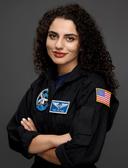
Noor Haj-Tamim is the founder and CEO of Avionova, a company developing earbuds to relieve motion sickness and vertigo without medication or surgery. A biomedical engineering student and private astronaut candidate, Noor began experiencing vertigo during astronaut training at 19. That experience inspired her to build the option she wished she’d had: something wearable that could help people stay steady and alert in everyday life.