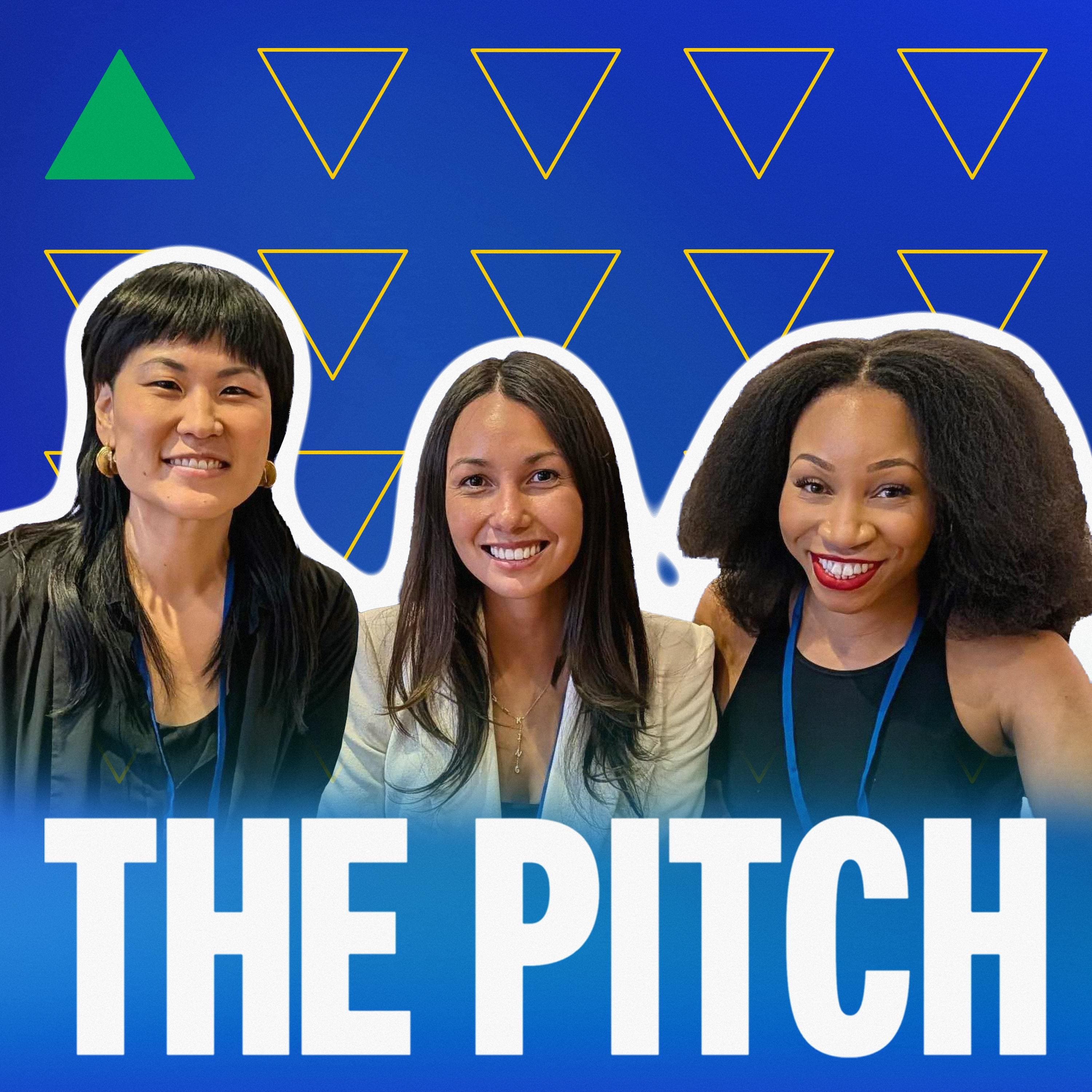
LIVE in NYC: 3 Startups, 3 Investors, 15 Minutes to Invest
About this episode
 Spotify
 Apple Podcasts
Live from New York, it's... The Pitch! Uche AI, greenIRR, and Wiggle Room were given just 15 minutes to pitch at the SEEN Summit hosted by Visible Hands. But is 15 minutes enough time to secure our first ever investment on a live show?
This is The Pitch for Uche AI, greenIRR, and Wiggle Room. Featuring investors Jesse Middleton, Jenny Fielding, and Charles Hudson.
Listen to the live show ad free on Patreon
Join us for the Season 16 taping and founder happy hour in Tampa
Subscribe to our email newsletter: insider.pitch.show
Learn more about The Pitch Fund: thepitch.fund
*Disclaimer: No offer to invest in Uche AI, greenIRR, or Wiggle Room is being made to or solicited from the listening audience on today’s show. The information provided on this show is not intended to be investment advice and should not be relied upon as such. The investors on today’s episode are providing their opinions based on their own assessment of the business presented. Those opinions should not be considered professional investment advice.
The Panel



Josh: Welcome to the Pitch where startup founders raise millions and listeners can invest. I'm Josh Muccio.
Lisa: And I'm Lisa Muccio. And on the show today we have
Josh: The live show
Lisa: The Pitch Live
Josh: Fun fact or not so fun fact, we've never had an investment on a live show before.
Lisa: Yeah, they were always more pitch competition style, which really isn't our vibe.
Josh: No, we don't do competitions. We do real money on the pitch, which is why I declared that this next live show there's gonna be real money.
Lisa: Yes. We had the Seen 50 list that Visible Hands puts out each year. And from that list, we picked three founders to pitch three of our VCs live in New York City.
Josh: The question is, did we get our first ever live investment on a live show? You'll find out after this.
Lisa: But first
Josh: There's more.
Lisa: We're hosting a founder Happy Hour in Tampa on April 20th, and if you're a founder or listener or just a generally fun human, then you should come hang out with us.
Josh: Only fun humans allowed.
Lisa: You can RSVP at Pitch.show/party. It's free. There's no reason not to come.
Break
Josh: All right. Welcome to the Pitch Live. I'm so excited to have all of you guys here. It's gonna be a great time. All right, so I'm Josh Muccio, host of the Pitch, where startup founders raise millions and listeners can invest. Now normally on our show, startup founders have 45 minutes to pitch the VCs, and it's a format that's worked out pretty well over the years. Over 14 seasons, founders have raised over $25 million on the show. But today we're gonna change one of the variables. What happens when you give founders just 15 minutes to pitch? Can they create the kind of connection in 15 minutes to get a VC to a yes? And can we get a commitment from a VC on a live show? We're about to find out.
Our first VC today is Jesse Middleton with Flybridge and Next Wave, New York City. Welcome, Jesse. Thank you. Jesse has a billion dollars under management with Flybridge, seven funds, and he's on 14 boards.
Jesse: Too many boards.
Josh: That's a busy guy. Next we have Jenny Fielding with Everywhere Ventures. Thunderous Applause.
Jenny: There we go.
Josh: Uh, Jenny has 100 million under management across 300 companies. There's a lot of SaaS in that, I'm sure. And last but not least, we have the legendary Charles Hudson from San Francisco. Charles, you've reached Legendary status. You've been on the show for 13 straight seasons. How many pitch companies have you invested in?
Charles: Maybe a dozen.
Josh: The correct answer is 21.
Charles: Oh, okay. Well, that's a lot.
Josh: It is a lot. All right. I am genuinely excited about the companies that you guys are about to hear. We chose three pre-seed companies out of the Seen 50 list. VCs, are you ready?
Jesse: I am ready.
Jenny: We're excited.
Charles: Ready.
Josh: First up, we have Amaka Uchegbu with Uche AI. Floor’s yours.
Amaka: When I was 13, I decided I would be pretty. Failing to find products that worked for my Afro hair. I resorted to a chemical straightener, and as I washed it out and saw clumps of hair fall into the sink, I joined the millions of overlooked consumers trying but failing to just find a product that works. A lot of founders have tried to solve this problem with a product recommendation app, but the unit economics are tough. That's why we approach it differently. Uche AI is the first B2B consumer intelligence platform powered by the value it delivers consumers. Shoppers scan any barcode on a product at a store, and they find out instantly if it'll work for them. Each scan feeds into a data set companies can query to de-risk strategic decisions. Textured hair is a $3 billion market of consumers just guessing what to buy, but $14 billion is wasted across CPG every year by brands guessing what to launch. What if by helping consumers, you generated the data that helps brands build better. So far we've captured 450,000 user data points. We've closed our first paying customer, a celebrity beauty brand who has brought us into 250 Sephoras. We have $2.2 million in our warm B2B pipeline, and I have met every decision maker in person. And we've done all of this, mostly bootstrapped, but completely cashflow positive. Today we're raising a million dollars for every overlooked consumer because with Uche AI, we finally have a business model for inclusion.
[clapping]
Jenny: That was a fantastic pitch and you have great presence. I love it. Can you talk a little bit about how you built that pipeline? So, obviously you said it's B2B, so how do you get these brands in these stores excited? And what was that sales process like, getting that first one on?
Amaka: So what we really have as a secret sauce is we get a lot of inbound. We acquire our consumers who obviously power the data set through organic social media content. We post educational evergreen content, which consistently brings traffic even when we stop posting. For that reason, brands come inbound asking to do collaborations and it's very easy to then say, do you wanna find out how successful this is in store? And so that really is the conversion loop. And so for this first beauty brand we closed, it was actually a seven day sales cycle from “hi we need your help” to live in Sephora because they knew who we were. Right. You know, we're the authority from at least their user's point of view. Making sure I answer the second part of your question, have I answered it properly?
Jenny: Yeah. But just so to unpack that, so the customer that you have was inbound?
Amaka: Yes.
Jenny: And you expect most of your customer pipeline to come inbound or you're going to
Amaka: Oh, so yeah. So we also rely on the key industry events a lot of our buyers gather at. So we see things like, CW has a ton of events across New York, Cosmo profit, of course Suppliers’ Day. And so our warm pipeline was really nurtured through those events. And then of course, you know, it means a lot to a, a buyer when you go to their, you know, middle of nowhere manufacturing plant, and walk the floor. And so I like people. I may have started my career at McKinsey, but I'm a sales girlie at heart. And so this is the part I genuinely enjoy.
Jesse: Can you, can you double click a little bit on the consumer experience? So they see that content, it's an app they're downloading or, or it's in- so yeah, help me to understand that whole flow and just, and what is the scale of the consumer side today?
Amaka: Absolutely. So there are two entry points. One side is online, the other side is offline. The online entry point is when people are researching products to buy, they will typically come across some of the content we've created 'cause we've optimized it for search. And then from watching the content, they're going to the link in the bio and they can use it as a web version. The in store deployment is a QR code on the gondola. A gondola is the shelf of a store, and so they're able to scan the barcode and the journey is actually different because a lot of people think offline is just a shorter version of online. No, it's not. But the offline journey is a one shot, which means we make sure they're able to get advice instantly and dip in and out because of the fact, you know, someone's kid might be bothering them. We can't do a, a quiz in a store. It just doesn't work that way.
Jesse: And are you those consumers then, do they become users of your platform going forward or do you always sort of get top of the funnel from in store, online through search? Are they starting with you, I guess is the question in the future?
Amaka: They do become users because for them to be able to go back to past recommendations and have, you know, incremental value, they have to save their progress.
Charles: Can, can you talk a bit more about the business model, just to make sure I understand that part.
Amaka: Absolutely. So we monetize from B2B.
Charles: Yep.
Amaka: We sell annual licenses to the dataset, to the brands and the businesses. We charge 10,000 per team with a land and expand model. This is what I mean. We're targeting businesses in the 20 to 100 million revenue range, and those companies typically have multiple teams. Given AI, we're able to serve multiple stakeholders at once because they're querying the data set and getting answers in natural language. We don't have to build 10 different dashboards. For that reason, we start in brand marketing and then we can expand to product development, category management, sales. And from a business model standpoint, we expect to average at 50,000 ACV per client, you know, 150 for the big enterprises. And the view here is closing 25 logos and converting about 40% to 50k, top 10% to 150k. We can reach our 1 million ARR in that 12 months.
Jesse: What, can you give an example on the, take the first group that's buying the product marketing side. What, what is the insight they're asking and getting and do they know they have this problem before coming to you? Or are you uncovering new problems?
Amaka: Awesome question. So I was talking to a lady, she is the head of marketing at a leading haircare brand. I'm not gonna say the name. And we're on the phone and she keeps putting me on hold. At a certain point I'm like, happy to call back, but what's happening? And she said, Target's threatening to pull one of our SKUs. They're claiming the consumers are confused. I was like, oh, are they confused? They can't be. We've written what it is on the bottle. It's very clear, but they're just saying the consumer's confused. I was like, alright, what data do you have and will you get? And she said, it's just the guy at Target who said it. I was like, but they're gonna give you data. She was like, by the time they give us that POS data, it'll be very clear that the customers are confused. So we're gonna lose that. And the key thing is, if a retailer pulls your SKU, you buy back every unsold item at retail. So this is a tremendously expensive problem that today these brands just, you know, bake it into their P&L and they expect to waste that money. So that's the value. And you know, when you explain it to them, the, the value and the impact is clear.
Jenny: What would you say makes the product sticky? So I can see that, you know, in a case like that, you know, there's a real ROI, but you know, for other products, like what, what makes people kind of keep on going back to you?
Amaka: Yeah. So planograms reset on an annual basis. So what that means is the location of your shelf space, the amount and what SKUs are there, reset every year. And we call that the line review process. And so we anticipate our tool being baked into core processes like that because then you can advocate with the retailer and say, Hey, we deserve, you know, x percent extension because maybe we're not driving sales, but we're clearly what brings people to the door. There are different kind of SKUs, which they say pull traffic versus convert. That's one thing. Secondly, we have pipeline planning. Again, this is annual, and we anticipate our tool being baked in to these regular routines and processes such that they, they don't really wanna churn off because every quarter there's a reason for them to get this data.
Charles: Can you talk up a little bit about the kind of team you need to build around yourself to scale this?
Amaka: Yeah, so right now I am the sole founder working full time. I taught myself to code to be able to get this off the ground, so that's really kept our burn lean. And so by the time we close our round, you know, the two main FTs we'll be hiring, have their resignation letters ready. One is a fabulous girl who feels a bit like a mini me. She's at McKinsey right now and another is a Waterloo grad who is excellent. She's worked with me in the early stages of building out the technology and she also is ready to jump on board full time once we've got the funding.
Jenny: You're raising a million dollars, so what will that get you from a metrics point of view?
Amaka: Yeah. The key focus for us right now is sales, just because of the fact that our cold start problem has been solved given the corpus of data we have and our pipeline is, is ready for us. So we're hoping to invest in ops and product such that I am free to sell. And we anticipate, as I mentioned, hitting that 25 logo goal in 12 months.
Jenny: What does that translate from a revenue point of view?
Amaka: Awesome. So with 25 logos, if we convert 40% of them to 50,000 ACV and the top 10% to 100 to 150 thousand dollars, that gets us to the million.
Jesse: I'll go back to the, I'm curious a little bit about the, the data that you have prior to having a customer. So before the QR code's up
Amaka: Yeah.
Jesse: On the shelf.
Amaka: Mm-hmm.
Jesse: Pull that thread on the example you gave about like, understanding if consumers are confused, right?
Amaka: Yeah.
Jesse: So, so how do you know that they're confused before that customer you're pitching tells you?
Amaka: Yeah. So essentially what we're able to do is, as a consumer, you’re walking about the floor, you're scanning things. You're like, okay, cool. But is this gonna give me enough hold? You know, when you have curly how you want a hold, and so it'll be like, Hey, so you also need to layer it on with a mousse. Okay. Oh, should I get this mousse or that? So basically we're getting their stream of consciousness because in addition to the scan interactions, we're getting questions and answers. We see the confusion verbatim. So in that interaction, when the lady, when we were on the phone, I pulled up the little, you know, we, we have it just literally live streamed on a Google sheet. I filtered for that SKU and I could literally see the reason why
Jesse: The queries that people are making. So like,
Amaka: yeah.
Jesse: And it was, I don't understand. Is this actually for me? Is that, got it.
Amaka: yeah, yeah, it's, I can tell you about it offline. It was fascinating. It was actually really interesting.
Charles: Are there any other companies that are pioneering a similar approach or how do you think about competition?
Amaka: Yeah, so our competition really falls into two groups. We have the quantitative data and the qualitative data. On the quantitative side, brands usually get what we call POS, which is point of sale data. And it's usually from the retailers. Retailers have no incentive to give complete and timely data. Amazon is famous for not even telling their vendor, their brand, sorry, who is buying the product. 'cause they don't want the channel conflict. So today from a competition standpoint, we have, um, the retailer's point of sale data and obviously people like Nielsen, Mintel who aggregate it, they tell the brands what people bought, but not why, not what they almost bought. On the qualitative side, we have surveys, focus groups, reviews, and we all know the challenges with them because they are typically incentivized, so not as organic. And even with focus groups, you know, those are 10 people, it cost 30 grand and it takes four weeks. And so we're a much faster version of that.
Jenny: How do you think of kind of a bigger vision or expanding out of the vertical that you're in into more products within retail?
Amaka: Yeah, so our core vision is to expand across CPG, and we're starting strategically with beauty and with haircare because it is such a unifying segment. What does this mean? What works on your hair interacts, with what food you eat, with what you put on your skin. A lot of our users, actually, a quarter of our users are men are also asking us about, you know, if I eat this, will my beard get fuller too? So it all really connects. It all really connects. And so what we kind of see as exciting comps, the companies like Highlight, that, they do product testing and they started in beauty and have expanded to food and bev and have actually done even better in food and Bev, they raised their series A in 2023, about 18 million. And we also see Yuca. Yuca is a barcode scanning app for finding clean product. They started in beauty, also expanded to food and Bev. They're at about 42 million users.
Josh: Okay. We at 15? What time was that?
Enoch: 11.
Josh: 11 minutes. Wow. You don't need the four minutes. Okay. Efficient panel. Well done.
[clapping]
That was Amaka with Uche AI. When we come back, we’re talking trucking and toddlers. And hopefully, some cash.
Josh: Next we have Celine King with GreenIRR.
[wooooooo]
Celine: Okay. Hi, my name's Celine King. I'm the founder and CEO of GreenIRR. The carbon accounting and visibility platform for Fortune 500 supply chains. I have dedicated my entire career to having a positive impact on our planet through bringing disruptive technologies to legacy industries. I started at the National Oceanic and Atmospheric Administration doing climate research, and then I worked at Green Backer Capital investing in renewable infrastructure. And as I watched organizations use estimates in self-reported data to make critical business decisions, I knew there had to be a better way. So I built GreenIRR to drive transparency from the source because you cannot improve what you're not measuring. So GreenIRR is the first and only SaaS platform that collects primary data directly from the vehicle and provides operational and environmental reporting that's third party assured. In 2024, we piloted with some of North America's largest trucking fleets, including NFI and Warner. We commercialized earlier this year and we've quickly built a $36 million pipeline, and we are revenue generating. We've patented our technology protecting the only two primary data sources that can be used in freight. And most recently, we secured a partnership with Geotab, enabling 200 resellers to upsell GreenIRR into their existing customer base of 55,000 fleets. This channel alone can generate $1.5 million in recurring revenue over the next 12 months. The US trucking industry represents a $900 billion market, 14% of global emissions, and supply chain represents one of the largest but most controllable costs for an organization. So I'm here today to close our $1.5 million pre-seed round. We've raised a million dollars to date. We have 175K committed, and this is an opportunity to bring automation to a legacy industry as supply chains become more and more digitalized.
Jesse: That was great. I'm curious if you can expand a little bit more on how this works. You have two patents on this, so hopefully it's protected, but help us understand, it's software, it's connecting down to the trucks or getting data. So, so what does that whole flow look like today?
Celine: Yeah. To talk about the tech, so no hardware, for every fleet that we integrate with, we integrate with two APIs. There's two systems. The first is telematics, which is one of the primary data sources. So that is a hardware component that exists inside of virtually every vehicle. It collects real time vehicle performance data. So your fuel consumption, your mileage, harsh braking, left turns, is the driver's seatbelt clipped in. And so we integrate with the telematic provider. And then with their fuel card. So, every time a driver purchases fuel over the road in the same way that our credit card records, you know, data transactions associated with a purchase, we're looking at amount spent, the fuel type, the location of purchase, and we combine both data sources to get net new accuracy. And that's what our patent protects. Onboarding takes less than 14 days. 14 days is the maximum time period. So if we're working with an enterprise fleet like JB Hunter Penske, but for users that already use a provider, we're integrated with, it's usually less than 48 hours. We pull historical data and then we do forward looking.
Jesse: And the user, if I understand it's at a fleet level, so you don't need the drivers to onboard or they do that themselves separately?
Celine: It's at a fleet level, but all of our calculations and data pull is on a vehicle level as well. The product itself is a dashboard, so our two core competencies are reporting both operationally and sustainably. And then we provide analytics that advise the fleet how to run more efficiently.
Jenny: And then what do your customers do with that data typically? I mean, is this to check regulatory boxes or? You know, where, where does it go?
Celine: Great question. When we first got started, we were born because the trucking industry was experiencing unusual pressure to report their emissions in order to carry for Fortune 500 and multinational companies, which is still true today. There are certain private companies that no longer ask because of the regulatory environment. The Fortune 500 have continued to double down. No regulation has ever impacted trucking directly. It's always been customer driven, top down. And so, we built a platform that automated data collection and reporting end to end so that a trucking company when asked by six of their customers every month for a report, instead of spending, you know, hundreds of hours trying to answer what a scope one emission is, they could just press a button. And then we expanded into the efficiency side. So one of our biggest lessons was some players in the industry don't care about sustainability, but they care about efficiency. And sustainability and efficiency are the same thing in trucking, if you reduce your fuel consumption, you're more profitable and you're more sustainable. So the platform direction went more towards recommending solutions to reduce their fuel consumption. So they use it operationally and then to check the box with reporting.
Charles: Who typically is the buyer for this inside the organization and what is that process like?
Celine: So it's twofold. If we're talking about the trucking side of the market, I would split it two ways. You have small to mid market fleets. Generally speaking, 20 to 500 vehicles. Typically the buyer is the president because it's a small enough organization or a director of operations. If we're talking enterprise organizations, 500 or more vehicles. It's typically the C-suite and there's typically a dedicated sustainability person or persons. And then this spring we had our first instance of customer pull through where the Fortune 500 companies that have been receiving our reports month after month approached us directly to see if this was a tool they could implement and mandate across their entire supply chain to standardize visibility. And so the majority of our conversations now are in an effort to lead shipper led adoption. And those conversations include typically head of procurement or responsible sourcing, chief sustainability officer, and then finance, there's three stakeholders.
Jesse: And how do they think about the budget for this in, in each of those buyers? The efficiency one? Is it some sort of metric against that, or is it pure software?
Celine: It's a good question because I would say those three roles who are the stakeholders are measured on different KPIs. So sustainability's function is to unlock capital from finance to fund initiatives that help them reach their reduction target. And so the better quality of the data, the more budget finance gives sustainability to invest in technology like this. For procurement, they're constantly trying to lower the rates of transportation. And in general, one of, I would say the bigger pushes that we're making with these shippers is to use evidence-based procurement. They don't wanna be negotiating with a rate table. And so if they have this level of visibility, they can effectively lower their cost of transportation while rewarding more efficient carriers a higher volume, right? You don't wanna penalize the carriers that we're working with. And so to answer your question, I would say it's a combination of those things where there's an ROI related to procurement, but also time savings. So the amount of time they spend getting supplier engagement is unbelievable for an organization of that size, especially getting data from carriers. And then there's a compliance aspect, a credibility and reputation aspect as well.
Jenny: Once they, you know, optimize their fleet, what's the incentive to keep on reviewing the dashboard or continuing to optimize so that they wanna like, really have your product top of mind.
Celine: Mm-hmm. One thing I also should have clarified is the majority of the revenue still comes from the carrier. So they're mandating it down. The big buyer is not actually the Fortune 500 company. / They're a partner and almost function as a channel for us. These same companies that we're talking to, if you have a European subsidiary, you have to report your supply chain emissions no matter what. And then there's, you know, you're seeing more state level regulation become more and more fragmented, and so I think you'll constantly have this regulatory push where compliance is an anxiety, maybe not a main motivator. But what's been really interesting for us is when we're in these conversations, if they have a public facing commitment, they're doubling down for other reasons outside of regulation, investor pressure, shareholder pressure. Consumer pressure. And so I hope that helps answer your question.
Jenny: Yeah, thanks.
Charles: What do you think the product looks like two years from now?
Celine: I, I would see us first being the gold standard for emissions reporting within the trucking and logistics industry. I would also envision us being the visibility infrastructure layer for supply chains, because primary data is one of the most difficult things to get. And because we've done the hard thing, going bottoms up first, that's where we wanna be. And then if you were to ask me three to five years, I would say that we would be iterating into other transportation modes. I would love to see this technology apply to maritime shipping, aviation, intermodal makes a lot of sense as a next step. And it's built in an agnostic way, and then horizontally into other markets like Europe that have a, a more welcoming regulatory environment.
Charles: I was gonna ask you if the other modalities are more difficult or more challenging to track
Celine: Anything with an asset tracking system, different inputs, same outputs.
Jesse: I'm curious, you know this industry well, it would seem like Europe for at least the last couple decades almost have been leaning in towards this, you know, caring more about the climate more broadly. But you've made the decision to start here and not in Europe, I guess, help us to understand sort of that process for you. Obviously you are here, so that makes sense, but it would seem like if you said, hey, your government cares more, they're asking, they're requiring you to do this. It's a hundred percent of Europe and it's, there's 50 different rules here.
Celine: Mm-hmm. Candidly, the reason that we have not tried to do Europe yet is because I don't feel comfortable doing that without a partner to take us over there. I don't have experience taking a technology internationally, and so unless we had a customer that pulled us over there But we've been asked by some of the global shippers that we're engaged with in conversation, can you do this type of reporting internationally in Europe and Asia? But, uh, I would say almost more exciting this partnership with Geotab. They're North America's largest telematics provider and they have a massive European market. We had discussions with them about taking this globally with their resellers over in Europe, which makes our life a lot easier. So that's, I think, the step that we would be looking for in order to pull the trigger rather than doing it cold.
Jenny: When did you start the company?
Celine: Uh, personally three years ago, and then we commercialized earlier this year
Jenny: Which means what?
Celine: We went to market.
Jenny: Okay. And talk a little bit kind of about your traction and then what this round is gonna get you.
Celine: Sure. So, 2024 for us was a year about testing technology, validating the product. We were not selling yet. We wanted to test the different pressures between enterprise versus mid-market fleets. I would say one of the biggest lessons that we learned was that we're battling legacy attitudes, which is I think why we're very excited about the shipper led adoption strategy. And so for us, this round, closing, the rest of this round is about scaling because I've been like amazed how quickly these conversations are happening at an executive level. We thought the sales cycle for an enterprise fleet was 9 to 12 months with a Fortune 500 company. We've gotten a proposal out to six of them within four and a half months. And so it's clear that they want this. And so use of proceeds for us is bringing on a head of business development, head of sales. The majority of the sales have been founder led. And I would, I would love to have someone doing that full time to keep the flywheel going and then a channel manager. Because for us, in order to afford the focus on this new strategy and building those relationships, we need to make sure that our reseller partners are selling this properly direct. And so, yeah. I hope, I hope that answers your question.
Jenny: You'll be the head of sales for a while, trust me.
Jesse: What, what keeps you up at night, right now? You've done a lot of de-risking of this. You've raised some of the round already, so you have some capital, but sort of what are the, what are the unknowns that you spend cycles on right now that, that you're trying to solve over the next 12 months?
Celine: I think the number one thing for me is that we don't have a reference account that's large enough to shorten the sales cycle for us right now. So there's so much enthusiasm and excitement, which gets our team fired up and we know that it's super validating, but always the question is, who else do you work with? And you know, we're talking to these Fortune 100, Fortune 200 companies and until we can say, oh, you know, we're working with 3M or we're working with Mars, I think there's a little bit of friction in getting to a yes. And so that keeps me up. How do we get our first one? And we're close. And then secondarily to that, I would say that there is a lot of thought that needs to go into implementation. Should this be a preferred voluntary carrier program? Should this be mandated? And if it's mandated, how do we prevent rates from raising? And so that piece is, we're looking for a design partner and so that's how we're hoping to battle that and figure out the model. But those two things I would say I’m certainly thinking about 24/7.
Jesse: That's good.
Josh: Alright, let's hear it for Celine King.
[clapping]
Josh: What was the time on that one? I'm just, this is an experiment. 13 minutes. Wow.
Jenny: We're fast over here.
Jesse: The next season of the pitch could be a lot shorter, it turns out.
Josh: Is that what you want?
Jenny: Hint hint
Jesse: I love spending time with you. It's fine.
Josh: Oh yeah. Me too Jesse, final pitch. We have Jaime-Jin Lewis with Wiggle Room. Floor is yours.
Jaime-Jin: Oh, I go now. Okay. Hello, I am Jaime-Jin Lewis, and I'm the founder of Wiggle Room. We are building Shopify for the $150 billion childcare industry. 80% of childcare happens in small programs run by one woman and she wears every hat. She's the lead educator, the admin, the cook, the nurse, the marketer, and she's on her feet 60 hours a week. 18 million parents rely on women like her to go to work every day. I know this world intimately. My mother ran her program for 30 years and educated over 450 children. I myself, during COVID, ran New York City's pandemic childcare hotline, and I've personally called over 6,000 childcare providers and they actually begged me to build this solution. So I'm here to tell you about Wiggle Room. What we do is we are the first daycare management tool purpose built for the way that daycare is actually run. We take tedious workflows like compliance, billing, staffing, parent communications, and put them into simple workflows that providers can do on their phones. A little over a year ago, we made our first sale pre-product, a tool called Auto-Enroll, and we have 50 paying daycare customers, zero churn over that entire time, and a hundred percent of our daycares are super users from the first day that we deliver our product. I just completed the infamous 30 day diligence process with Mike Ma at Side Cut Ventures, where we accelerated our go-to market by 6 months and are on pace for 1 million ARR next year. As of last week, side cut is leading the round and I'm here to close the rest of the $1 million raise, maybe by 5:00 PM, um, so that I can go back to getting my providers and the families that rely on them a little more Wiggle Room. Thank you.
Jesse: Well, congrats so far. And by the way, Mike is a big fan of yours because he told me last week, uh, so I heard a little bit about this. Um, no, that's great. As a parent of two young children, I understand both the, the front end challenges, the consumer of this, and having backed a couple of companies that are more business in a box, sort of end-to-end product management. The problems resonate. I, I'm curious for you to give a lay of the land outside of what you do, you know, square does this for coffee shops, you know, Toast for restaurants, squire for barbershops, like sort of what is it that's so different about this business that requires this entirely separate stack, and what are you kinda seeing as the differentiation early on?
Jaime-Jin: Yeah. Well, childcare, rightfully so, is a heavily regulated industry and it has very specific regulations, like we need to know, it has to have two modes of egress. It has to have food safety. It's actually in New York City, regulated by DOHMH as well as OCFS at the state level. In each of the other 50 states where I have done preliminary looks. There are just different agencies there. And so they're just much more heavily re- regulated than many other industries. And so they have a lot more paperwork. So that's really where our sweet spot is, is coming in and supporting with all of the little micro changes that happen over even the course of a day. Kids get older every day, that actually unlocks other forms that have to be filled out. The premises of the daycare can change week to week, even capacity and things like that unlock new needs for the daycare. And so that's where we specialize, is just understanding through and through how the business works. But the other piece is that our workforce is a desk-less workforce. So we have to really, specifically, I actually build all of our products by sitting in daycares and I like watch how many times she goes to the kitchen, how many times she goes to the bulletin board, how many times she loses her pen, right. You know, this is the workforce that keeps their cell phone like kind of shoved in their shirt on the side. And they answer every single call that comes in. So we just, we really build for exactly the way that they're moving through these specific types of businesses.
Jesse: And is that the first product, the auto enroll product is the process paperwork. That's what that is.
Jaime-Jin: Yep.
Jesse: Got it.
Jenny: I love your background. I also heard from a few people about you before that were very excited about you, but you have obviously great founder market fit. I always ask the same questions about customer acquisition, but in this one, dealing with these mom and pops as you described them, as not like necessarily most tech savvy, how do you get them in an efficient way to really build this business? And then also can you talk about your ACV?
Jaime-Jin: Yeah. So I started in the most inefficient way. It's me and my clipboard running through the streets of New York one by one. But I'm so glad I did that. I learned a lot. And now we are eyeing networks and trusted organizations as you know, kind of top of funnel. Those, we are not selling to them directly yet because they are very, very slow to move. And we want to build the most user friendly, beloved product for our end users. But our playbook is a little bit from like SMB with a little bit of consumer sprinkled in. So we, we get them through their networks, we get them through the trusted organizations, they hear about us. We co-sponsor, things like that. We do webinars for them, but then they book demos and they buy at 1:00 AM on, when they're scrolling Instagram and they're like, shit, I don't wanna do this paperwork. So it's also the, one of the most profane industries I've ever worked in. So like literally the transcripts of my calls are like, so profane, uh, the demos. And so that's what our playbook is. So we have 20,000, uh, daycares in our pipeline for 2026. That's what we're just trying to move, uh, yeah, move down,
Jenny: but break it down for us a little bit more. So, I mean, you're a small group and you know, you have to do these demos that are going to, you know, give you what type of return, right. So-
Jesse: What's the business model as in the price point?
Jenny: I mean, how's that scale versus the price point?
Jaime-Jin: Right. Yeah. So we right now, we're selling our auto-enroll for $400 a pop. We've been thinking a lot about that. I, like I said, I made my first sale pre-product. That's why it has such a terrible name like auto-enroll. I literally said it on a call as I was selling it and someone bought it, so it just stuck. And then, the price point too, I did, I called 50 day cares and just kind of got a sense of what they would pay. All of our, uh, future tools are gonna actually layer nicely. I didn't know this at the time, are gonna layer nicely on top of auto-enroll because much of what we need to know about the business and the ways we can kind of check in daily and weekly with them, we still ingest at the moment that a family is enrolling in a program. Yeah, so our, we're moving towards a price point of $99 a month with the layered on services. We are understanding the unit economics of their business, different than a lot of the incumbents, that typically think what time do you open, what time do you close, and how much do you charge? And that's not what the way that childcare happens and 80% of settings. We're understanding that it's more around the clock and non-traditional while still looking to provide stability for the provider. Sorry. I know. Okay. Uh, I'll pause, I'm gonna pause right there 'cause I see that you're, you're-
Charles: No no no, we heard a kid. There’s a kid.
Jesse: And just to clarify, the $400, how was that billed? You said like, per, that's,
Jenny: Yeah. Uh, so I just said, well, you give me $400, and they did. And then I'd give them the tool and then a year later I go back and I asked for more money.
Jesse: Got it. Okay. So I was like, for a year in theory
Jaime-Jin: Yes
Charles: I just had a question.
Jaime-Jin: Sorry. I'm, I'm, I'm still pretty early and we’re still figuring this out
Jesse: No I just, just clarifying
Charles: We, we almost invested in Bright Wheel and I'm an investor in Wonder School.
Jenny: Me too. I was the same
Jaime-Jin: Yeah
Charles: We’ve I've looked at a bunch of things in this space. I'm curious. Um, what level of complexity can this scale to today? Is this only for the sort of solo operator, single site, or do you envision like how, what's the ceiling break?
Jaime-Jin: No, we can be, we can be in everyday care in America, it’s 200,000 units. I won't bore you with like the federal designations, but there's childcare centers, but then there's small childcare centers, fam, group, family childcare, family childcare. In most of that are fewer than 25 seats. And that's where we want our kids. We don't want our kids in like baby factories, right? I don't know if there's a baby factory here, but like, and if there is, we should talk. 'cause I can do their compliance. But, um, no. And so that's where, that's what we're looking at. But we can be in every program and in fact, we want to be the most user friendly again, because we're building for the operator. A fun fact is all the incumbents were built by parents. Which is great. We love parents. We love the work of parenting. But it's very different. And I like to say that parents are the tourists in this industry. They like, come in for a few years. And providers are the locals. They're investing their credit scores. Their life savings. They're going back and getting more credentials to create the culture of childcare. And so we need to just invest in the supply.
Jenny: But sticking on that point, I think, you know, it was maybe like five years ago where there, it seemed like there was a wave of very similar, like I looked at a bunch of 'em. I almost invested in one. So can you maybe, aside from maybe some of those people being parents. Can you just talk about like, maybe, why now, why that didn't work and
Jaime-Jin: Absolutely.
Jenny: Why is the perfect time for you now?
Jaime-Jin: Yeah. So a few of our providers actually also use Bright Wheel in addition to what we're doing because they don't actually do some of the business functions that we do. I mean, we're coming for Bright Wheel, but um, right now they're using us. We've actually also pulled several customers from Bright Wheel just to us because like they're, like, we don't need all those bells and whistles. We are mo- more mobile first, recognizing that many of our daycares are actually running off of an Acer laptop from 2014 that takes 20 minutes to reboot, right? They're not running over there to run a report and things like that. And so we are very mobile friendly. We use SMS and WhatsApp a lot. We are starting to automate all of those different pieces. We know, we're learning the cadences of their businesses so we can say, Hey, do you wanna run your Sunday night schedule? We, daycares have the most intense Sunday scaries of any industry. They have to figure out if they can afford to run their businesses each week. No joke. And you know, that's not sustainable. But we hope to provide that stability by showing them, okay, this is when, who's coming. These are the staffing ratios you need to hit. Yeah.
Charles: Other than software, what else could you do for your customers that would be valuable?
Jenny: Yeah. Oh my gosh. We can, so we can sell into them so many things. Curriculum, which Bright Wheel is actually already doing right now, as well as Lilio, you know, other tools, hardware. But the thing that we are gunning for, which is actually understanding, listen, I've built a parent product before, it failed. I built a marketplace before, it was okay. What I learned through those is that it all comes back to the supply. And when you call a daycare, when I was doing marketplace, you call them and you say, hey, do you have a spot? And they say, it depends. And I frigging love the answer, it depends because I get to figure out what it depends on, right? And so, we've figured out, okay, the age of the child, their ratio, how much they can pay, what, how they pay, da, da, da, do they have siblings? Is there another sibling coming through? These are all the things that go through her head. And so once we own the instrumentation of daycares, then we can layer on childcare, marketplace, employer benefits, et cetera. And also we need to expand this TAM because every zip code in America is a childcare desert. So we need to make it easier to license and grow and build sustainable childcare businesses. And now's the right time to do it.
Jesse: You clearly have a passion for this and deep knowledge in the industry. Do you have a team around you today and sort of who's building this with you, who's executing on this like grand vision?
Jaime-Jin: Yeah, it's funny. People think I say I'm passionate. I'm like, I guess, I don't know. It's just my personality.
Jesse: It sounds like you're passionate. Yeah. No, I mean, I hope you're passionate about it.
Jenny: Yeah. No, I, yeah. I live and breathe this, like, oh, I don't know. I get a, I mean, yes, yes. I'm passionate about this. Um
Jesse: You fooled me otherwise, so I'm impressed.
Jaime-Jin: No. Um, so I've been, I'm a solo entrepreneur right now. I, when I made the sale, I called up some people. We duct taped a MVP together. We sold, it was, it took two weeks. And then I sold 10 of them, built them from the ground up just to understand the logic, to, I literally laid 20 enrollment packets out on my living room floor and mapped how many times you have to ask the name and the date of birth. And like, allergy to peanuts and stuff like that. And then I was able to build a standardized version. It is still duct taped together. And so I've been using contractors up until now. So that's part of the raise. But in an optimistic gesture, I've started bringing in incredible folks who are already starting to take it from my duct taped MVP, put it onto a more sustainable and scalable backend. A, so I can automate every single thing I'm doing right now so that we can make our website, our 24 hour sales person. People can self-serve, they can buy, and then we can ship our next features much faster. So there's that. And then of course, go to market is the big piece. And so, also looking to bring on a go to market lead as well.
Jenny: Yes. So tell us
Jaime-Jin: Ask me, how, tell us, tell me why you don't like this deal.
Jenny: I actually like this deal. But, um, the thing that I worry about is the, just the acquisition. I think just, you know, mom and pop, zip code to zip code takes, it's gonna take a big sales force. So is there automation or tools that you're building in or things that are gonna help?
Jaime-Jin: Yes
Jenny: So I'd love to hear more about that 'cause that is my lingering worry.
Jaime-Jin: Yep. So we are really moving to just go through these networks right now. They are very trust built networks and I've been working in this industry for 16 to however old I am years. And so I have all of these trusted, I have the, all of the executive director of the national affiliates on my speed dial. So I'm known in this industry, and so we've already lined up for December and January, webinars. And so that's, we just bring their members together. We do intros, we sponsor, we do a toy giveaway and we bring them in and it really does go far. And then we pull them, they all have these assigned little, like QIS quality improvement specialist or whatever their organizational structure is, and we pull them in through that. And we sell to them that way. And then, yeah, hit the geography with paid media at 1:00 AM when their hair's on fire.
Jesse: We, we have a portfolio company you could learn from called Topline Pro, which has done an amazing job of automating that outreach to small businesses and generating AI videos and sort of example content, all that. And so they can ping a thousand people every week, you know, with two people on the team. And I think you'll, you'll certainly find there's, there's paths to do that for a lot less money than hiring humans currently.
Josh: We hit the 15 minutes.
Jesse: We finally did it.
Jenny: Finally.
Apparently 15 minutes is plenty of time. It’s almost time for decisions. When we come back, the VCs each get the chance to call one founder back on stage to ask one final question.
Josh: All right. That's enough time.
[ignoring Josh]
Josh: Okay. No more talking. What’s … everybody, clap once
[clap]
Josh: Clap twice
[clap clap]
Josh: Clap three times
[clap clap clap]
Josh: Oh wow. I could run a preschool.
Jesse: It's that easy.
Josh: It’s that easy.
Josh: Jesse, who do you wanna call back out to the stage?
Jesse: I have a question for Jaime.
Josh: Jaime-Jin, come on out.
Jenny: Me too.
Josh: Jenny, who do you wanna call to the stage?
Jenny: Also wiggle room.
Josh: Charles. Who do you wanna call out?
Jesse: You're not giving her the mic
Charles: Celine
Josh: Celine. All right. Jesse, why don't you go first?
Jesse: Sure. Uh, Jaime, I appreciate the, the time I, you went through a lot in a short period of time, so I wanted to just come back to something very basic, which is sort of current traction of the business at this stage. And, and I'd like for you to paint me a picture of a couple of years from now, what do you imagine the business and the business model looks like? You mentioned $99 a month, is it, you know, hundreds, thousands. Are you taking payment processing fee, just help me understand what you envision this business looking like.
Jaime-Jin: Yeah, absolutely. All of that. So every lost child is 15 to $20,000 and we can recoup that for a daycare. So we believe they have a huge ability to pay. I've tested this, we've talked through it with our customers, so we wanna be, I mean, you know, I'll be optimistic. We wanna be in every daycare. We wanna be the default industry standard and we wanna be their operating partner. We wanna do payment processing. We're owning every piece of their business that matters to them so that they can focus on the part that we don't own, which is educating the next generation. On top of that, we do wanna layer marketplace employer benefits, other pieces where, you know, wouldn't we understand what the actual supply is so that we can build a more robust and durable and dynamic childcare system in America? Does that answer your question?
Jesse: Yes. But I did sneak two questions and can you tell me the current traction?
Jaime-Jin: Yeah, 50 paying daycares.
Jesse: 50. And that's the $400 a year?
Jaime-Jin: Yep.
Jesse: Roughly.
Jaime-Jin: Yep.
Jenny: That was a very similar to what I wanted to ask.
Jesse: Sorry. Um, you wanna ask it again?
Jenny: I'm an investor in Vivvi. You probably have heard of that one. So their model is very much focused on education and less about giving individuals tools, but setting up their own schools. So can you just talk about, as that model gets more and more prevalent, because they've actually expanded, not quickly, but pretty significantly in certain locations, how you kind of think about the balance, I guess.
Jaime-Jin: Yeah. I love Vivvi. Brick and mortar is just a different business. Like I'm not in the business of making childcare programs. I mean, Vivvi and brick and mortar is happening, for example, in Manhattan where there's the lowest number of actually childcare slots and of childcare locations. The majority of childcare across America, and particularly in metropolitan cities, happens in these small daycares. Right? And nobody's just addressing how to instrument those. And so that's where we're starting.
Jenny: So that doesn't cut into your business at all, really? I mean
Jaime-Jin: No.
Jenny: Okay.
Jaime-Jin: And you know, if it, listen, we want families to have choice. We want you to be able to take your, your little human wherever works for you and works for them. But the truth is, is that most, particularly in, I'm gonna keep using New York City 'cause that's where we have the largest footprint. You know, we wanna keep our kids in our own communities, maybe, raised by people who, you know, who reflect our culture. You know, my mom raised generations, she raised kids and then she raised their kids. And so, you know, that's how care is happening in America and we really wanna like, keep that and preserve that and that's why we're instrumenting those daycares. Yeah.
Josh: Charles, your question
Charles: My question for Celine is, Can you tell me more about like, what are the penalties or consequences for some of your customers for non-compliance when it comes to this? And like, how does that factor into their willingness to pay? /
Celine: So because the main driver of this pressure to report is customer driven, the main consequences is lost business or the inability to participate in a bid or an RFP that you want. So, either you cannot carry for a particular shipper unless you have this capability. And I would say it's interesting when we talk to them, sustainability isn't the key deciding factor in awarding a bid. It is definitely a tiebreaker when price is comparable. And then I would say even if you're in a contract with a shipper, it's common that they impose reporting requirements after the bid is selected. And if you can't adhere it, they'll actually break their contract with you. And so I would say the penalty is more so from a risk retention standpoint than an actual fine coming from a gov, a government or a regulatory body.
Charles: Thank you.
Josh: Do each of you have what you need to come to a decision? Gosh, this is so exciting or terrifying. Okay. What are your decisions? Let's hear it. Who wants to go first?
Jesse: I think, look, Jaime. Jaime, you're, you are very early in this. It is clear how excited you are by this. We have a pre-seed program that we do $50,000 checks and we come in and work alongside you. We don't make you work for 30 days and then get it. That's not it. I backed, I was the first investor in a company called Squire, which is a platform marketplace that helps small businesses, not wildly dissimilar in some ways. They deal with humans that are complaining as well, a lot, in barbershops. And so I think there's a lot of knowledge that can come from those partners in Nextwave as well, which is our pre-seed vehicle. And so I think pending a bit of diligence, I'd say we, we'd be in for $50,000 in this round.
Jaime-Jin: Thank you.
Josh: woo hoo. Yes. We got a commitment on a live show!
Jesse: I did the job you asked for?
Josh: Jenny?
Jenny: All right. I have a bit of a plot twist on this one.
Josh: Oh.
Jenny: So Jaime, I feel like you're meant to build this business and it fit, fits nicely into future of work themes that I'm, I'm interested in and I wanna see this happen in the world. I do feel like from our fund, we probably have a little bit of a conflict with Vivvi. I mean, just because we've, you know, taken a bet in that space and put a lot of time and love into that one. But I'm interested in potentially writing a personal check. So if you're interested in having a rando angel on your cap table
Josh: You're not a random angel.
Jenny: I mean
Jaime-Jin: You're not a random angel by any stretch of the imagination
Jesse: You should see if Charles will adopt this platform
Jenny: Yeah. I mean, and, and all of this is like a, yeah I'd love to be a supporter of yours.
Jaime-Jin: Thank you so much
Josh: Charles.
Charles: I would totally invest in Wiggle Room if we weren't awash in early childhood related, in fact, between Urban Sitter and Wonder School and a bunch of others too,, we probably don't have room in the portfolio, but I am actually um
Josh: no wiggle room?
Charles: I know. You said it.
Jesse: Womp womp womp
Charles: I set it right there for you.
Josh: Thank you Charles.
Charles: Wow. But no, I was really, I was genuinely impressed and I think from what I know about the centers you're working for, you really get your customer. But I'm really interested in participating in GreenIRR. I think you've really are onto something. We like kind of stopped doing a lot of climate related supply chain investing 'cause it's really hard. But I really liked your answer to the why, and I was hoping that would be the answer. So we would do 25K pending, due diligence. We've spent a lot of time with supply chain, air, rail, maritime, and this is a big issue and I think you've got the right product. And I'm excited to join you with a 25K investment
Celine: I'm excited too. Thank you so much.
Charles: Woo.
Jesse: Josh, what's your answer?
Josh: This-
Jenny: Oh
Josh: I co-invest alongside you guys, so,
Jesse: so you're in!
Josh: Yeah, that's, we just spent a hundred thousand dollars. Thank you.
Jesse: There you go.
Charles: You invested, you invested
Josh: Spent
Jesse: Spent
Josh: Yeah. No, you're right. We invested
Jesse: We lit it on fire. You invested.
Josh: We invested a hundred thousand dollars. Yeah, we're, The Pitch Fund is in too, we're psyched about both of you guys. You know, you guys committed, but you didn't even ask what the terms are.
Jesse: I know the terms already, so it's not, I didn't have to ask
Josh: Why do you know the terms already?
Jesse: I told you Mike was talking her up.
Charles: Yeah, he's doing what he’s supposed to.
Jenny: We've heard about this.
Jesse: Yeah.
Josh: Did you do the steal behind the scenes and just save it for the show?
Jesse: No, we, we didn't,
Josh: You're smiling.
Jesse: No, no, we didn't do the deal.
Jenny: It wasn't just Mike. I got it from someone else too.
Josh: Okay.
Jesse: People are excited.
Josh: This is great. All right, so
Jesse: This is a lesson for founders, by the way.
Charles: We'll, we'll figure
Jesse: Be careful.
Charles: We'll figure it out. I don't worry about the terms. We'll figure it out.
Josh: Yeah. Yeah. We'll figure it out.
Josh: And that is The Pitch Live folks. Well done. Thank you. I do want to say thank you to Kate for helping you put on this event. She was amazing and for Kerry and for Justin, the whole Visible Hands team. This was a fantastic, uh, event and the whole Seen 50, the list we got to work through was great. And thank you to Peter on our team for doing the sourcing leading up to the event. Thank you. You've been a wonderful audience. We'll see you in the pitch room.
Josh: We did it.
Lisa: Yeah.
Josh: I got a live show Money. Money on the live show.
Lisa: I mean, you didn't get live show money.
Josh: No, but I felt like I got it.
Lisa: Founders got live show money.
Josh: That was crazy.
Lisa: It was a lot of fun.
Josh: So we should probably catch up on what happened after the show.
Lisa: Yes. Tell me
Josh: After the show, Jesse and Jenny both invested in Jaime-Jin's Wiggle Room.
Lisa: Say that five times fast.
Josh: One time fast is hard enough. Plot twist. Jenny ended up investing 50K out of her fund instead of the angel check.
Lisa: It's a plot twist on the plot twist.
Josh: And then The Pitch Fund. We invested 70K in her round as well. At a 7 mil post money valuation, if you're wondering, which brings her total raised in the pitch room to $170,000.
Lisa: Pretty good for a live show.
Josh: Not bad Jaime-Jin ended up closing out her million dollar round
Lisa: and
Josh: now she's oversubscribing it.
Lisa: She's oversubscribing. She's on a roll.
Josh: Charles, however, did not invest in GreenIRR after going through diligence.
Lisa: I'm sad about that. I really liked this deal. But Charles said in an email he didn't think the business could get to the scale it needs to be to return his fund.
Josh: Good old venture scale.
Lisa: Yeah. But Celine was still able to raise elsewhere. She's got a lot of funds in her round and she's almost closed the full 1.5 million. In fact, she only has 78 K left
Josh: 78 k, so close
Lisa: Very specific number.
Josh: We also followed up with Amaka at UcheAI, the very first pitch from the live show, and she got her first 100K commitment.
Lisa: I need that app for my curly hair. Someone invest.
Josh: No offer to invest in Uche- Someone invest. No offer to invest. No offer to invest in Uche AI, GreenIRR, or Wiggle Room is being made to the listening audience on today's show. But you can invest with us by becoming an LP in The Pitch Fund. We're raising fund two right now. To learn more, go to thepitch.fund. In two weeks, our season finale…
Lisa: We're bringing back an all time favorite founder.
Josh: The founder who raised the most money on our show to date.
Josh: 1.4 million in The Pitch Room. Kavita Ghai with Nectir AI
Josh: This is the outlier all these VCs are hunting for. It is you. How do you feel?
Kavitta: Fucking amazing. Oh my God. It is the best goddamn feeling I've ever had in my life. A 28 year old, first time founder, woman of color, didn't even go to business school. I have no idea how the fuck I'm sitting here doing this right now. Not a goddamn clue.
Josh: I'm gonna go bench press 400 pounds. Let's go.
Kavitta: Exactly
Josh: I'm so pumped!
That’s coming up in two weeks! Subscribe to The Pitch on your favorite podcast player so you don’t miss future episodes. And you can watch full length versions of every pitch over on our Patreon at The Pitch Uncut.
And if you’re a founder raising a pre-seed or seed round, apply to pitch on a future season of the show! It only takes a couple minutes to apply, just go to pitch.show/apply
We’ll see you in two weeks, in the PITCH ROOM.
–
This episode was made by Josh Muccio, Lisa Muccio, Anna Ladd, and Enoch Kim. With deal sourcing by Peter Liu, John Alvarez, and Phoebe Sun.
Music in this episode is by The Muse Maker, Breakmaster Cylinder, The Firmware Rebels, Pastek, Soul City, A\YO, and Peter Jean & The Runaway Queen.
The Pitch is made in partnership with the Vox Media Podcast Network.
The Outcome
$170,000 raised.
SAFE · $7M post-money cap
Raised
$170,000
Investors
3
The Deal
$170,000raised from 3 investors


The Founders
Wiggle Room
Jaime-Jin Lewis is the founder of Wiggle Room, a startup that pitched live on The Pitch podcast. Wiggle Room was one of three companies that pitched at the SEEN Summit, hosted by Visible Hands, during a live New York taping of The Pitch. The company secured investment on the show, where Jesse Middleton and Jenny Fielding sat on the investor panel.
Uche AI
Amaka Uchegbu is the founder of Uche AI, which pitched live on The Pitch at the SEEN Summit. Uchegbu pitched Uche AI at the SEEN Summit hosted by Visible Hands in a live New York episode of The Pitch. Uche AI secured investment on the show, with investors including Jesse Middleton and Jenny Fielding. The live episode also featured founders pitching greenIRR and Wiggle Room.
greenIRR
Celine King is a founder of greenIRR, a startup that pitched on The Pitch, the podcast where founders pitch real investors for investment. King pitched greenIRR live in New York at the SEEN Summit hosted by Visible Hands. The live episode featured investors Jesse Middleton, Jenny Fielding, and Charles Hudson.