STAG: The Tesla of Construction Equipment?!
About this episode
 Spotify
 Apple Podcasts
When Adam and Patrik met on the Slovakian National Swim team, they never imagined they'd build a startup together in the US. Can they get the VCs on board with their made-in-America electric mini skid steer, or will the blue collar market scare them away?
This is The Pitch for STAG. Featuring investors Elizabeth Yin, Jesse Middleton, Laura Lucas, and Mike Ma.
...
Watch Adam and Patrik’s pitch uncut on Patreon (@ThePitch)
Subscribe to our email newsletter: insider.pitch.show
Learn more about The Pitch Fund: thepitch.fund
RSVP for one of our LP meetups: pitch.show/events
*Disclaimer: No offer to invest in STAG is being made to or solicited from the listening audience on today’s show. The information provided on this show is not intended to be investment advice and should not be relied upon as such. The investors on today’s episode are providing their opinions based on their own assessment of the business presented. Those opinions should not be considered professional investment advice.
The Panel



Josh: Welcome to The Pitch, where startup founders raise millions and listeners can invest. I’m Josh Muccio.
Lisa: And I’m Lisa Muccio. And before we get to the pitch…
Josh: We’re doing a LIVE SHOW!
Lisa: Ugh, okay
Josh: IN Brooklyn on December 4th. Your favorite VCs will be there and we’re gonna be doing a happy hour after the show. Tickets just went on sale, grab yours at pitch.show/live
Lisa: On the show today we have STAG. They’re raising $1 million.
Josh: Whatever the blueprint is for venture and the things that they invest in. This is nothing like that blueprint. Like, we meet these guys. They were on the Slovakian National Swim Team, and now they're building electrified construction equipment.
Lisa: I just really love Adam and Patrik. They're like best friends that feel like brothers, and so there's like that really strong trust that your co-founders got your back.
Josh: Yeah, like me and you.
Lisa: Just like brothers.
Josh: The trust part. I love companies like this that are just so outside the venture mold, but yet the more you dig in, the more you think like this is actually a really, really compelling investment. I told the team, it feels like a long shot bringing these guys on the show. But I would regret it if we didn't invite them. And then I heard the price tag.
Lisa: The price is so good.
Josh: So good.
Lisa: God, I sound like a VC.
Josh: [laughs] Well, you are
Lisa: The Pitch for STAG is coming up, after this.
Josh: Lisa and I are currently touring different cities meeting listeners and LPs! We’re in Austin right now, and next week we’ll be in NY!… because we’re raising Fund II! You can RSVP to join us at one of those meetups at pitch.show/events
[break]
Welcome back to the pitch for STAG. Let’s meet the investors.
Elizabeth Yin with Hustle Fund
Can I ask you a very direct question?
Jesse Middleton with Flybridge
I am so sick of people that are building stuff for building stuff's sake.
And two new investors to the show, Laura Lucas with L’attitude Ventures
You are everything I am looking for in a founder
And Mike Ma with Sidecut Ventures
Cmon guys, like, what kind of risk are you looking for? You don’t want to overthink a deal.
Josh: Stag [clap]
Jesse: You're doing such a great job with that.
Jesse: Hello.
Adam: I'm Adam.
Mike: Mike
Adam: Nice to meet you. Hi Elizabeth. Good to see you.
Elizabeth: Yeah, good to see you. I was gonna say, you look familiar.
Laura: Hi, Laura, nice to meet you
Adam: Nice to meet you. Adam.
Patrik: Patrik. Nice to meet you.
Jesse: Hey
Patrik: Patrik.
Jesse: Nice to meet you. Jesse.
Elizabeth: Elizabeth. Nice to meet you Patrik.
Patrik: Nice to meet you.
Jesse: Adam. Patrick. Got it.
Adam: Yes sir. Yes sir. Awesome.
Patrik: Alright. So, hello everyone. My name is Patrik. I'm the oldest of the four sons. My father was high ranking military officer. My mom, teacher, kind, very religious, so they tamed my crazy teenage period by swimming classes. And they did good, the right thing because almost 20 years ago I was able to see Adam swimming and training with his dad. And even though he wasn't big as he is right now, I still was like, whoa, how could this big mass be moving so fast and efficient in the water?
Jesse: What stroke?
Patrik: He was, he was butterfly and freestyle.
[wows]
Patrik: So that's even more impressive if you look at him. So over the years we swam for Slovakia national team and we became very good and close friends and we always talked about doing something together, some business, some venture. And years later I got chance to work with a company that was tackling electrification of construction equipment industry. So I picked up the phone, I called Adam and I said, Hey, I got this opportunity and I think this might be the next Tesla of this industry. Are you in?
Adam: I remember this moment. And when he called, uh, one would say it was the right time and right place, right? It was three years after I graduated with an engineering degree from Florida Tech, which I attended on a swimming scholarship. And I was ready for my American dream to continue. So when I picked up the phone, I almost yelled. I was like, yes, of course, I, I'm in, I'm in. Within the week I was on the plane to Slovakia. We met with Patrik and that's where our business journey started. Fast forward two years, the company we worked with got acquired and then we didn't really align with the vision and uh, we decided to walk away. However, the relationships we built proved that our vision was working. The customers and the dealers started to call us. They're like, Hey guys, what happened? We wanna work with you. And that's why we created STAG and we design and manufacture construction equipment to be electric from ground up. So this massive, massive equipment can move way better and way more efficiently. Let us show you what we built.
Laura: Let’s look.
Adam: We actually last week, we secured our first investment and that allowed us to kickstart a production. So the prototype had to go to the manufacturer in Indiana, so, made in USA product. So, um, this is like a quick video from what we've been doing in the last three years. That's our prototype.
The VCs are looking at a video of the STAG electric mini skid steer. It’s essentially a tiny forklift, sometimes remote controlled, sometimes there’s a person standing on the back. They show it pushing snow around, picking up rocks, digging holes, there’s all sorts of attachments you can use. It’s like a little tank!
Adam: Bobcat of Palm Beach, one of the dealers we, we are working with.
Jesse: It's a multi-use construction.
Patrik: Yes, yes. It's like Swiss Military Knife.
Jesse: Yeah.
Patrik: It’s versatile
Mike: it's basically a John Deere on steroids.
Josh: Have any of the VCs here ever operated a machine like this?
Jesse: Yeah. We're invested in three different electrified non automotive companies.
Adam: Mm-hmm.
Jesse: One is a, electric rail car, one is an electric vehicle used at airports for baggage claims, and one is an electrified tractor and they're actually headquartered up here in Sonoma.
Adam: Yeah. I, I think we know, who we, who you’re talking about
Jesse: Yeah. So, uh, so I'm, I’m headed there tomorrow. So in addition to the electrification, you've also done this multi-form factor. Are both of those sort of innovations in this space?
Adam: So, based on our research, this category, that mini skid steer, you stand on, you walk behind with it, it's the largest growing sector of the compact construction equipment. So that's why we decided to, this be our pilot product. to basically make a name for ourselves and enter the market. And we design it to be electric from ground up, so we basically design it on a scalable platform. So from that we can bring other products, in house. Right. so this is our first product. Then we have 4 other products in the pipeline we wanna build.
Jesse: Got it. And what is the partnership with Bobcat?
Adam: So the company is built on feedback from customers who actually use this equipment every day. When we entered the market with the prototype, we put it on a trailer, you know, we bought a truck and we just went to the road Let's say I put it all over 40,000 miles on the truck in a year. So we stopped at Bobcat of Omaha. Curtis Lane Equipment, largest Bobcat dealer on the east coast. and they all wanted to sell it for us, which was really big surprise, you know, like
Patrik: What's going on?
Adam: And, uh, what surprised us too is they actually went to headquarters and they're like, we don't really have equipment like this. Can we sell it? And they're like, yeah, we don't really plan to go into this right now. Yeah, you guys are free to sell it. So that was, that's really important especially down the road.
Patrik: Yeah.
Adam: When you, when you're thinking about mergers, acquisition and so on. So
Patrik: So, Bobcat is a leader in the industry, So it was a big thing for us. Even John Deere dealers, they were interested ASV dealers, Kubota dealers. Six years ago when we tried to call them, it's like, what? Gimme a break, you know?
Adam: And now they're calling us. So
Patrik: Yes. And we have customers, even we found now, we didn't do any marketing. People keep calling us and emailing us and they say, is this already in production? Can I buy it? When I can receive it? And people can wait 6, 8, 9 months because they need it. Because government is restricting them to use a diesel equipment in the big cities.
Jesse: Yeah.
Mike: As someone who's new to the product, can you tell me stories about what failed? Like Can you gimme some highlights or low lights of the product?
Adam: the biggest thing was, those uh, times when we kind of like were failing, gave us that feedback and the problems we need to solve in the industry. And one of them was the accessibility to charging. The US grid is overpowered. Uh, a lot of people don't have access to three phase power.
Jesse: Mm-hmm.
Adam: So what we did. we put an onboard charger, one phase, so you can literally plug it in next to your iPhone on the wall. Then the balance of the machine, right? It's lifting thousand pounds. So, on the prototypes we kind of had the military tracks on it, so we had to adjust that and then put also high drive. So we moved the electric motors a little bit high so it has better traction and so on. Um
Patrik: We also needed like stronger motors and bigger capacity for the battery. We had 14 kilowatt lithium ion, which is good for phones and cars, but ion can explode and it can burn. So we switched to LiFePO4 batteries now we have 24 kilowatt battery. We should be easily doing eight to 10 hours, which is wonderful because when you are remote somewhere, you are landscaper, you need the machine to work eight hours. We changed the hydraulics, we increased the power we need. We learned what we need to do. For example, Bobcat, they have electric skid steer here, big one. They were selling to Sunbelt a few years ago. However, they removed the hydraulics and it was a big mistake because suddenly the machine that's versatile, that has like 25 attachments could use only one attachment because they didn't develop electric attachments. So the dealers were buying equipment that was $350,000 compared to a hundred thousand dollars and they were like, okay, it's expensive shovel. What I'm going to do with it. So they were returning the machines. So that's why we removed the hydraulics from the drive. And we kept it only for the important stuff, which is the attachments.
Adam: So it can be that you know, that Swiss knife in your pocket, that you can put a bucket, you can put a grapple on it, you can put a auger or a hydraulic hammer. And, uh, that's very important to the clients. And also we make sure that we put a standard attachment plate to the front. So if somebody has a diesel equipment, but it needs an electric one for a different type of work, they can use the attachments they already have.
Jesse: In the product choice. You mentioned having remote control capacity.
Adam: Mm-hmm.
Jesse: Do you do remote and autonomous, or is that necessary?
Patrik: So it's already -
Adam: So we uh, designed the software for it, and we design it with the ability to be for machine learning and AI and with autonomous use in the future, because we know it's coming.
Jesse: Yep The hardware is on there for cameras and sensors already, or
Patrik: No. Not yet.
Jesse: Okay.
Patrik: We don't have it then because even, you know, we, we working with farmers.
Jesse: Yeah.
Patrik: We working with construction companies. Those people, they're afraid or scared to lose the jobs. And also they would like to operate because the machine is heavy and can kill people. So they still wanna have some kind of control. So that's why we have remote control. You can operate up to 150 feet.
Adam: This allows the people with disabilities, go into workforce. Right. Because for example, if they're in the wheelchair, they don't have to stand on a skidsteer. They can take the remote control and operate it that way as well. So that's one of the things we were thinking about when we were designing the machine.
Jesse: What's the price point?
Adam: the model for end customer, it's 54,900.
Jesse: What's the comparable on the gas powered?
Adam: If you load it up with the same like remote control option-
Patrik: Telematics
Adam: and stuff. Probably 45 to 48,000.
Jesse: Okay.
Adam: Yeah.
Patrik: The goal was to be like very close to diesel.
Jesse: Yeah. Close. Yeah.
Adam: Yeah.
Patrik: Even though, you know, with our equipment, you are reducing the maintenance cost and total cost of ownership
Jesse: Fuel and-
Patrik: So by 70%.
Elizabeth: And how do you think about battery life?
Patrik: So the batteries are designed to outlast the machine. So first things it'll be changing will be some hydraulic components, maybe the tracks, the rollers and so on. The battery should last at least 3000 recharging cycles, and after that it'll depreciate to 18.8 kilowatts. So still you will be able to achieve seven hours of continuous runtime after 10 to 15 years, depending on how heavily you use the machine.
Jesse: The batteries are swappable or hot swappable, or no.
Adam: That was a learning point.
Patrik: So we had experienced that. We had that option with previous models and so on, but people were doing crazy stuff. And especially when you are on construction site. Sometimes you tilt the machine something and the battery's heavy, it's around, I think 350 pounds. So if you're trying to manipulate if it, and it falls down, you know, you, you break it, you destroy it. So that's why we try to attach it inside and like fix it. So even if you roll the machine, because people do crazy stuff with the machines, I had a customer and he's like, something happened. He sent me the pictures and the machine was like slammed. It was -
Jesse: He’s like, I don't know what happened. It's like in parts.
Patrik: Yes, big ranch here, it's like you know, I was just moving some trees and suddenly the machine, you know, fell down with the cliff. I was like, whoa, how that even possible?
Adam: You know how people say the, what's the fastest car? It's the rental car, right?
Elizabeth: That’s right, that’s right
Jesse: What's the margin on that then in production?
Adam: So our model is B2B, right? So we sell to dealers, and dealers sell to, uh end customers. Dealers get standard 20% discount. And then our, our cost right now with small production up to 100 units is between 29 and $30,000 fully assembled. So we probably make around. $12,000 per machine once sold to dealer.
Patrik: And that's only for the machine. Then you have attachments, telematics, extended warranty for the battery, extended warranty for the other components like motors and so on. And so, and especially with the software, we are able to collect real life data through the 5G modem and we can see what's like being used the most, what we need to replace the soonest and so on. So based on this, we can calculate which parts we need to ask how much money for and where we can make more money. Especially for telematics, it's easy subscription model, and people want it, you know, it's not available with John Deeres or different companies and you have to pay a lot of money. Our goal is to set like a reasonable pricing point for dealers to sell it and to offer it to customers.
Elizabeth: Somehow I thought that John Deere had tried subscription.
Patrik: They do, and they actually have it for some type of equipment. But the thing was that most of the time they do big equipment, heavy duty, we do compact size. For smaller, like contractors, landscapers, they have few smaller machines in the cities and so on, so it's more important. And small rental businesses.
Adam: Also. Yeah, like with the rental we've been talking to United Rentals, Sunbelt Rentals, Home Depot, Lowe's, and uh, the telematics was very appealing to them because when they rent a machine, they can track it where it is. Also, they can track if it rolls down the cliff and customer returns it and said, oh I didn't do anything.
Adam: We have the inclinometers and sensors in there, so they know if something crazy happened to it.
Jesse: You, you mentioned at the beginning the Tesla of this industry. You made a choice to not go direct to the end buyer and to leverage the dealers.
Adam: Yeah.
Jesse: There are pluses and minuses to that. I'm curious about sort of your research.
Patrik: So that’s also what we learned
Adam: Yeah. So the biggest reason to go B2B is that there's already so many dealers out there who sell this equipment, right? And they already have the dealerships ready. They have service centers. They have huge customer base who comes to them already. So it's just much less costly for us. We don't have to build brick and mortar buildings, creating new dealerships, hiring people, overseeing it, service. This way, if something happens, that customer can go to the dealership, they fix it, they're taken care of. We talk to dealers and we have some dealers signed already. We can just talk to them and put our equipment on their line.
Mike: Can, can I go through the numbers a little bit here?
Adam: Yes, sir.
Mike: So 55K, 20% margin, sold through the wholesale. 100 units. and you basically net operating margin 10 K per unit.
Patrick: Yes
Mike: Do you already have sell through on, on this hundred? I mean do you already have a million dollars of operating margin already booked up in this company?
Adam: So, so, so we have orders for 25 units, which is worth $1.1 million across six dealers. Why I mentioned 100 is because up to 100 you have certain, you know, prices. From your suppliers. Over a hundred. I think we can go down to $24, 25,000 costs so we can expand that margin.
Mike: So lemme just ask a really, like, why are you raising money?
With margins like that, who needs VC? The answer, after this.
Adam: I think we can go down to $24, 25,000 costs so we can expand that margin.
Mike: So lemme just ask a really, like, why are you raising money? You know,
Jesse: And maybe give the history, the money raised so far.
Adam: Um, so far we've been funding it through our, uh, you know, from our
Elizabeth: You’ve been very scrappy.
Patrik: So, yeah, in Slovakia I built multiple successful businesses through which I was able to fund building these prototypes.
Adam: But back to your question, why are we raising money? We're a pre-revenue company, right? to generate revenue, we need to build the machines, order the parts, and then sell it to generate the revenue.
Patrik: And some of the parts are coming from Asia or some from some suppliers that we are pretty new for them. So they don't allow us to have a credit lines. So for example, for batteries, we have to pay upfront.
Mike: How much capital have you put in and is that paper, what does the cap table look like and what are you looking to do next?
Patrik: So we’re raising $1 million. Our pre-money valuation is 2.3 million and we already raised $120,000 through convertible note last week. for us to start and to be comfortable, it's $500,000 is like the milestone. And the sweet spot would be 1 million. So we can like, accelerate much faster. we put together probably, I dunno, I haven't, we were like-
Adam: 650,000?
Mike: You put 650 in and you, sorry, let me get this right. You, you're putting 650 in, I'm sorry.
Adam: We're 50, basically 50 50 partners in the business.
Mike: And then you're raising
Adam: Up to a million dollars
Mike: You're raising up to a million on a 2.3?
Adam: 3, pre money valuation.
Mike: Pre?
Elizbeth: Adam, I, I, we've met before.
Adam: Yes. Third time's the charm, I guess?
Elizbeth: Uh, I think one of the things we've talked about before also is like, if you have these contracts in hand, is there a way that you can get financing against them to kind of build it like one Bobcat at a, or-
Adam: So, we have AR and PO financing available to us, but it's pretty expensive.
Patrik: So
Adam: and to build the first one
Elizabeth: How expensive?
Patrik: So it's about time. So longer you have money out there with the components, much more money you pay, especially with PO, the limit is almost, it's between 90 to 120 days. But with us, for example, these tests for the batteries and so on, some of the components have lead times 90 to 120 days. So the PO won't be approved.
Jesse: Yeah.
Elizabeth: I see
Patrik: For these uh components.
Adam: But down the road we have agreements with suppliers that we have certain forecasts so they can stock the parts for us
Elizabeth: uhhuh.
Adam: So basically they're ready on monthly basis and that's when the PO, AR financing comes in hand.
Mike: Yeah.
Adam: Where we can turn around the PO very quickly.
Elizabeth: And let's say we waved a wand and you had all the money you needed today, like when do you think you can deliver this into hands of customers?
Adam: Tomorrow morning we're flying to Chicago. We're going to IVT expo where a lot of our suppliers are gonna be. And then we're driving to Indiana where our manufacturing is and we're starting production and we're expecting within first 120 to 140 days to have first production units ready. And after that, on a monthly basis, based on the forecast, we can start scaling up.
Jesse: And what are the 25 unit deals say, those are guaranteed purchases. They're waiting to see delivery.
Adam: Yes. Yes.
Patrik: They sign the dealer contracts. And the part of the dealer contract is that they have to sign up for at least four machines in 12 months.
Adam: We probably visited over 30 dealers on the road show. And 90% of them were ready to sell our product, but they say make it as production, deliver it to us, and then we can start selling it and we'll, we'll commit with the dealer agreement. it's a blue collar industry, a lot of handshakes and a lot of in-person kicking tires and feeling the product. That's why we're raising money.
Mike: Sure.
Adam: Because on financing, if something happens, some little thing happens.
Elizabeth: Yeah.
Adam: All of a sudden the financing can basically ruin you
Elizabeth: Sure. What happens if you can't raise the full million? Like you're already starting production one at a time it sounds like
Adam: So, we raised $120,000
Elizabeth: Yep.
Adam: That allowed us to order parts for first three units.
Elizabeth: Okay.
Adam: With those we can sell them, generate more. Also with those angel investors, they basically, they have the, the ability, the option to go up to half a million and they said, let's build the first three, see how you're doing, and then we can invest more at stages,
Jesse: So they're committed already.
Patrik: They already, they already received the first five.
Jesse: Okay.
Adam: Yeah. Yeah. Actually there's, there's, there's a lot of things to celebrate, right? Today for me is, uh, actually on this day, 14 years ago, I came to US, Last week we closed on the first investment. Uh, we've been talking to Josh and Lisa for the last five months, and they, they gave us a big wind in the sail. This past two weeks been incredible. And on Saturday I was getting on a plane to San Francisco. I opened the Chase Bank app and the money was there. I'm like, this is real. This is exciting!
Laura: The money’s in the bank
Jesse: That was the greatest thing, the first angel investment I ever received. I went to the ATM, I printed out the receipt. I'd never seen so many dollars in the bank.
Patrik: Need to screenshot that.
Jesse: They were saying, so that's yours? I was like, no, it's not.
Mike: Can I, Tell tell me more about the what type of dealers and wholesalers are, are the best ones for you.
Adam: So that was the big surprise when we started the trade shows, that these big name dealers, like Bobcat, ASV, John Deere, came to us and asked us to come to present our product to them. we found out that these muli locations and multi equipment dealers are best fit for us. Because they have the ability to service the equipment, that way we can cover the whole United States pretty quickly. And uh
Patrik: And they have national accounts.
Adam: Yeah.
Patrik: So they have like, biggest demolition companies in the country. They have rental companies, and these companies, they have need for electric equipment and they don't have it. They know they're losing money when they're not selling it. So that's why I think they sign up because they said I already have like two, three customers.
Laura: So my question is more on your supplier side. because, we've invested in hardware and we invest in a lot of products and it's always like, that's the kicker.
Adam: So our, our goal was to have multiple suppliers for one part. But also to narrow down the suppliers to as little as possible. So currently we have probably around 25 suppliers.
Patrik: Yes.
Adam: Across the board. Our goal is to, uh, be made in USA, and I would say 70% of our suppliers are in the United States or have entities in the United States, and then the 30% like the batteries, chargers, and some small components out of Asia just because of the price point. So we can, we can be competitive with the diesel alternative, right. so we try to de-risk it in a sense where we have the least amount of suppliers and we are finding backups for those suppliers.
Elizabeth: Patrik, can you talk a little bit about the businesses you had before?
Patrik: I did digital marketing first and IT coding. Then I had a car company. I was selling and renting cars. And later on I started advising and helping manufacturing companies to expand to new markets. and understanding how to like find the new leads, new customers and so on. And that's actually how we learned about construction equipment industry.
Elizabeth: Do either of you have a hardware background?
Adam: A little bit, yeah
Patrik: Adam, little bit. Yeah. I have bachelor degree in finance, banking, investment, and a master degree in marketing and management. But later on when we did this, in six years we've been with Adam, we've been supporting all our customers and since our R&D teams, they didn't speak English, so we had to translate for them. And that's how we learned everything about the electric equipment from them. I'm not saying I'm expert because I'm not, but that's why we outsource things. But we need to understand everything we do. For me, it's very important to understand every wire, every motor, every component in the machine.
Adam: I think we, we, we turn every screw on the machine. And also with the first 3 to 10 units, we'll be putting them together because I want to know every, every part of it. but my background is in engineering. I, uh, graduated with ocean engineering degree mm-hmm. And then I worked in the field in marine construction, so I crawled through cranes and, and, uh, dredges and on boats and surveying. So, uh, I always liked the hands-on part as well.
Elizabeth: The thing that, like I'm still trying to wrap my head around is it feels like there should be some sort of financing that works for this. I understand maybe the people you approached initially had too short of a time period, but it's like very chicken and egg. You have this demand, but you cannot fulfill it because you don't have cash.
Patrik: We talk to like three different companies. One is also from California and they all offer us PO and AR financing but they were very strict on when you have to like switch from PO to AR and if you don't do so, you know they are going after you, after the company and so on. And AR financing was also expensive. And we say, okay, that's doable, but not at this stage. We can do it maybe in three to six months. When finally the supply chain and everything is like, the wheels are in motion. Then we can go there. That's why we raising only up to 1 million and even 500 is enough for us because then we can go with the PO and AR financing.
Mike: From my perspective, like I, I would love to, I would love to dig in more and, and, and say Yes to go through our process. We're writing somewhere between 100 and, and 500K checks right now. you know, our process, uh, we, we coach first, give capital second.
Adam: Yes.
Mike: Um, we play together for 30 days. You like us, we like you, you know, we will write you a check. And, and, and our view is to underwrite the actual operation, the grinding.
Adam: Yeah. Yes, sir.
Mike: Jesse has, we, we want people to break through walls. I mean, in your case, this may be actually literally break through walls.
Adam: We have a hydraulic hammer.
Mike: But if you're down for that process with full disclosure, we're not a fast check. And again, I'll give you all the reasons why you shouldn't take capital from us. Like only one in two so far, historically have made it out of that 30 day process where we've invested. But I mean, if you're down for that, I would love to dig in more. I think what you're building is, is incredibly compelling. I think the, the more is your story of how you've been thinking about it. those are the principles I, those are the, the characteristics of a Sidecut founder and grinding through stuff. And there's a whole bunch of other questions but I, I would, I would love to dig in more.
Patrik: We love questions
Adam: We love to learn. We love to learn.
Jesse: I have one question that I need to ask of another founder. 'cause you could be competitive with one of the hardware companies, just based on some of the things you described. So I'd want to, with that caveat aside, as long as they're comfortable with it our pre-seed program is a much smaller check. We're usually 50K to 100K. There's a lot of risk here that you still gotta make the product, it's gotta ship, it's, it is gotta run, it's gotta not explode. But that aside, like I'd like to commit to doing the 50K, at least in our pre-seed program and then see if we get to a larger commitment either today in this round or what we usually are doing is working with you for the next three to six months.
Adam: Amazing!
Jesse: Helping you close this and then dealing with a, a full seed
Adam: Yeah. We would love to have you on board.
Laura: So I think you guys are building something incredible. and you guys did a fantastic job on explaining why and how you got here. I've seen some of the supply challenges with some of our hardware companies, so I think I will gracefully bow out in this round, but happy to follow your traction and here to support all the way through Series A if you guys are interested in-
Adam: Thank you, appreciate it
Laura: talking to us later.
Adam: Mm-hmm.
Elizabeth: And then for me, and we've chatted about this before, like we don't focus on hardware. And I think in particular, I care a lot about sort of the, the capital requirements and how kind of the money flows.
Adam: Mm-hmm.
Elizabeth: Like at Hustle Fund we write relatively small checks. So the problem with hardware is like, we don't want our money to get stuck. And so this is where I'm still trying to grapple with like, okay, you have your Angel investments, now you can build three of these, and if you get another check like that, you can build another three. But at like where, at what point do, does the cash cycle reverse? Like Costco has a very ideal cash flow cycle.
Adam: I love Costco
Elizabeth: They collect membership dues upfront, right? And then they have all these things to sell that they haven't paid for. And then they pay for it, whatever, 90 days later. So it's the cycle of dreams where you're getting all this cash and you don't have to pay for any expenses later. You have the opposite. You have to pay for all your stuff upfront, and then you sell to the dealers, and then they, they pay you, right? So you are out of cash.
Adam: It kind of becomes like a, financeable circle almost, because the end, end user using financing to buy, the dealer is using Floorplan to pay you right away, basically. And then we can use the financing to finance the production. So basically you can finance it all.
Patrik: So at the beginning we need like hard cash just to start to build the first units, but later on we can switch to financing and that's our ultimate goal. but as I said, at this point, it will be very expensive and very dangerous for the company.
Elizabeth: Right. So I guess my question is like, what level of volume do you think you need to be doing to be able to get favorable financing to reverse your cashflow
Patrik: It’s more about time. It's like when we, because in manufacturing, you have to have manufacture in windows. So you have, you tell your supplier in the next 12 months, every month, I need this, I need this volume of, you know, components.
Adam: I would say probably seven to 12 months, it would take us to, uh, be able to. Basically turn it around.
Laura: Yeah. They, they just like, a lot of the companies, they just don't like taking bets on anyone until they have that like, repeatable process.
Patrik: Is it because-
Elizabeth: No, I, I get that.
Laura: Yeah
Elizabeth: I get that.
Adam: Worst case scenarios, you know, you know, you gotta be prepared for the worst case scenario. That's why we don't wanna just jump into the PO financing and then within six months we can, you know, close shop. Right.
Elizabeth: Yeah. No, understood. Well I think all of that is to say, I'm not ready to commit today, but, happy to continue the conversation.
Adam: Maybe fourth time is gonna be the charm. [laughter]
Adam: Thank you so much.
Mike: Thank you. We'll be in touch for sure.
Elizabeth: Great to see you. Yeah, thank you. Great to meet you.
Mike: Hey, thank you. Excited.
[crosstalk and applause]
Josh: Lisa, Lisa
Lisa: What
Josh: We'll invest with this guy.
Jesse: Oh, no. I, I, no, no. I was just asking cause you normally have that conversation. I know. I wasn't trying to bust your balls this time.
Josh: No, you're good.Um What did you guys like about that deal? Because I wasn't, I was reading body language and I did not know you were interested. I thought you were like, well, I, I'm conflicted out.
Jesse: I'm gonna see him tomorrow, the founder. So I'll ask him, if it's not a conflict, he would probably also invest in this company. If he says to me like, no, we're really close to that same, same price point. You know, they're not construction, but like, that could be interesting.
Jesse: Why do you like this category so much?
Jesse: I actually don't. I, the funny thing is I don't, we, we did a whole project like a year ago
Mike: But here we are looking at number deal number four
Jesse: We effectively concluded from the first three that we did that we don't like large hardware like this, it's, it has a lot of financing risk, takes a long time. I think what I like about this though is. For $650,000 of their own money. They have gotten a product that sounds like it is ready for market, ready to go out and to Elizabeth's questions, like, with a million dollars in theory, they should be able to produce, let's say 10 of them, give them some space. They can sell those 10 and get paid $45,000 for each, make the next 10. Like if that actually plays out, coming into a very early stage, very low price deal, like that's a good risk reward trade off.
Josh: Right.
Jesse: For all the other companies I mentioned, they've all raised not hundreds of millions, but they've raised tens of millions of dollars to get to a place where they're now manufacturing. so I, I like that setup about it. It, it could be not real. That would be a risk. Like it may not actually work, but the trade off is, it's a super, it's priced like an idea. And so it's like your risk reward trade off in that is good.
Elizabeth: The pricing is great.
Jesse: And so the, the risk will be that they can't finance, however, they've been extraordinarily scrappy. And so if they can't, well, they'll grow a little slower. They'll only sell 20 at a time. I think there, that was a good trade off. So
Mike: Every deal has risk, right? And price at a, you know, 2.3 or 3.3 post. Like, Come on guys. Like
Josh: Yeah.
Mike: What, what kind of risk are you looking for. And also maybe this compliments my diligence process. Like I spend time to 30 days. We will find out if it's real or not. And also, recovering banker, like, you know, I'm an ex FinTech person, we can find capital on this. Like, you don't wanna overthink a deal in my opinion. Like, out of a first meeting, for me it's about being compelling rather than, you know, fully complete in answering everything.
Josh: Yeah.
Mike: The hardest thing for me was their story. Like the way that they, asking them what hit the product cutting room floor.
Josh: Mm-hmm.
Mike: I understood it.
Jesse: Yeah.
Mike: And, uh, on first principles, how they’ve thought about it and going through that iteration and product and the hardware end, That's my kind of founder in terms of who knows if I get there. Like I've tried to tell 'em like, look, I got a 50% pass rate after the 30 days in the foxhole, which is by the way, really emotionally tough to work with someone in the foxhole for 30 days and tell a founder, like can't go on the, on the next journey. but, every deal has problems, but like this one, I'm, at, at that price point, um, I'm more than comfortable to, to, to put them through my process.
Josh: So field trip to Indiana?
Jesse: Sure
Josh: Alright, cool. Let's, uh, do as quick a turnaround as we can.
Jesse: Yeah, I know. we didn't know what time it was, so
Josh: I'm sorry about that.
Mike: Yeah, I was like, I think this is the time that I kick off the, are we investing or not? But I've lost track.
Adam and Patrik walked out of the pitch room… with a $50k commitment from Jesse—if he’s not conflicted out—and a commitment to do 30 days in the foxhole with Mike Ma. Sounds like fun! I can’t think of something I’d rather do.
After the break… Can Adam and Patrick skid steer Elizabeth Yin back into this deal? That’s coming up.
BREAK
Welcome back. A few days after their pitch, Adam and Patrik heard back from Jesse—he was indeed conflicted out.
But surprisingly, Elizabeth Yin. Who passed in the room, asked Adam and Patrick if they would get on a call with her. They said yes, of course.
Elizabeth: I think the only thing I really wanna focus on is the building of the product.
Patrik: yes
Elizabeth: You have orders, correct?
Patrik: Mm-hmm.
Adam: Correct.
Elizabeth: And in order to build each one, you need to pay for parts, right?
Patrik: Right.
Elizabeth: And the, the chicken and egg problem is the dealers are not going to pay you until you have the product, or can you get them to pay you ahead of time?
Adam: They have net 30 terms from delivery of the product. And in November, we're expecting to have first three machines being delivered. That's where the revenue starts floating in.
Elizabeth: And the reason you're able to fulfill that is right now you have enough cash on hand to order the parts and build the machines.
Patrik: Exactly.
Elizabeth: And you'll deliver on them.
Adam: Yes.
Elizabeth: So I guess where I'm going with this is, okay, let's say you raise the million, you can fulfill all these orders. Now let's say that people say, we love this so much, we want to 10X our orders. You need to go and raise even more money. And so at what point, like the way that other companies solve this problem is at some point they have enough data to be able to get financing. Like non-equity money
Patrik: Yes.
Adam: Yes.
Elizabeth: Such that the payment cycle is okay. They give you the cash and then you pay them right back after you fulfill that order and you get the catch from your customers, et cetera, and then that cycle worked, right? You have a revolving line of credit, but at what level of data do you need? Or how many sales do you need? Before people will give you that?
Adam: Probably six to eight months would be the earliest where we can start utilizing the, the PO and line of credit.
Elizabeth: Okay, got it. Yep. And the million dollars will get you through those six to eight months.
Adam: yes. Even half a million dollars. Our overhead is very small initially.
Elizabeth: I know I'm very actually impressed by how lean you've been able to keep this as a hardware company. Even many of my software portfolio companies cannot do that. Okay, so let's say that you get this thing going and now it's next year, and let's say that things go really well and you get more orders. So you have credit starting to kick in. Do you think this business requires More VC funding or how do you think about VC funding beyond this million?
Patrik: So I don't think from my perspective, based on the calculations we had and so on, that we would need more funding beyond 1 million, I would say in the hard cash funding, we would need PO, AR financing or credit lines for the suppliers and so on.
Elizabeth: Sure.
Patrik: But I don't think that for the hard cash, we would need more hard cash.
Elizabeth: Cool. Well, I, I think those are all the questions that I have for you. Our process for deciding is, is very simple. I can get back to you by end of the week.
Adam: Okay. Amazing. Amazing
Elizabeth: Well, thank you so much guys. Um, yeah, let me get back to you by end of day Friday and this additional information was very helpful.
Adam: Awesome. Thank you, Elizabeth.
Josh: Like clockwork. Elizabeth invested $150,000 a week later.
Lisa: That's certainly a twist.
Josh:Like Adam and Patrick said fourth times the charm.
Lisa: Oh my gosh. Well, I'm glad that Elizabeth went in because that means The Pitch Fund gets to invest.
Josh: Yep. We invested $50,000 alongside Hustle Fund. This is a cool company. I don't know, you probably get the pattern. I like really like unconsensus weird deals. I'm not saying that like the founders are weird
Lisa: Right? It's, I mean, it's hardware, it's construction equipment
Josh: It's blue collar.
Lisa: Mm-hmm.
Josh: Like salt of the earth, like industry.
Lisa: Yeah.
Josh: It's just not even a category, like how many VCs are investing in the construction industry,
Lisa: But it's huge.
Josh: And if they are, they're investing in like software, not the actual industry itself.
Lisa: Yeah. Fun fact, we had Adam and Patrik scheduled to pitch on a different day to a different panel. I had a moment where I was like, I think they're on the wrong day, and I switched 'em and I'm so glad I did because Mike Ma went in and then I thought maybe Elizabeth would go for this deal. And then she passed in the room.
Josh: Yeah.
Lisa: And then she still went in.
Josh: Speaking of Mike Ma though. They're still in the diligence foxhole with him. How many calls have they had?
Lisa: I think six.
Josh: Six calls, including, someone from Sidecut went to Indiana.
Lisa: Yes.
Josh: There's a video of him like riding around in the cow pasture, riding one of these.
Lisa: I wanna go ride around on one
Josh: I'm sure that you can.
Lisa: Should we go to Indiana? [gasp] The place where you grew up?
Josh: Yes. My ancestral home.
Lisa: [Laughs]
Josh: I can't wait to see what happens with this company I'm in very invested in this story.
Lisa: Yeah.
A reminder that no offer to invest in stag is being made to the listening audience on today's show, but you can become an LP in our fund.Fund one is sadly closed, but in Q1 of next year, we're doing our first close on fund two. To learn more, check out our brand new website for the fund@thepitch.fund.
Next week on The Pitch… we’re coming for you Quickbooks
Joyce:We wanted to build the financial team for a solopreneur they could only dream of.
That’s next week! Subscribe to The Pitch on your favorite podcast player so you don’t miss future episodes. You can watch full length versions of every pitch over on our Patreon at The Pitch Uncut.
And if you’re a founder and you want to be on season 15 of our show, apply now at pitch.show/apply.
We’ll see you next Wednesday, in the PITCH ROOM.
–
This episode was made by me, Josh Muccio, Lisa Muccio, Anna Ladd, and Enoch Kim. With deal sourcing by Peter Liu, John Alvarez, and Phoebe Sun.
Music in this episode is by Breakmaster Cylinder, The Muse Maker, The Firmware Rebels, Boxwood Orchestra, Imagined Nostalgia, Soul City, Topo Azul, and Peter Jean & The Runaway Queen.
The Pitch is made in partnership with the Vox Media Podcast Network.
The Outcome
$625,000 raised.
SAFE · $3.3M post-money cap
Raised
$625,000
Investors
3
The Deal
$625,000raised from 3 investors


$10,000 angel
The Founders

Founder - CEO
DYNAMIC LEADER IN GLOBAL BUSINESS & BRAND DEVELOPMENT Results-driven and goal-oriented, I specialize in scaling businesses, streamlining operations, and driving market expansion. With expertise in high-tech, automotive, robotics, IT, and construction, I excel in negotiations with top executives, business owners, and policymakers. Passionate about innovation and problem-solving, I believe every challenge has a solution. Founded a successful European startup, acquired after 6 years. Pioneered electric construction equipment, penetrating North and Latin American markets for a European firm that developed the world’s first electric skid steer loader. Holds a Business Development and Marketing diploma.
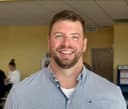
CBDO
I grew up in a small town Poprad in Slovakia, and used to swim and compete for the Slovak National Team. In 2011, I earned athletic and academic scholarships to attend a University in the US. Thats where my journey to chase my American dream began. In 2016, I graduated with an engineering degree and work variouse engineering and project management jobs. For the last six years, I have been pioneering the electrification construction industry in the US, and thats where the idea of Stag loaders came to life. In my free time, I enjoy working out, fishing, exploring new places, and spending time with family and friends.