Doctours: VC Funded Hair Transplants?!
About this episode
 Spotify
 Apple Podcasts
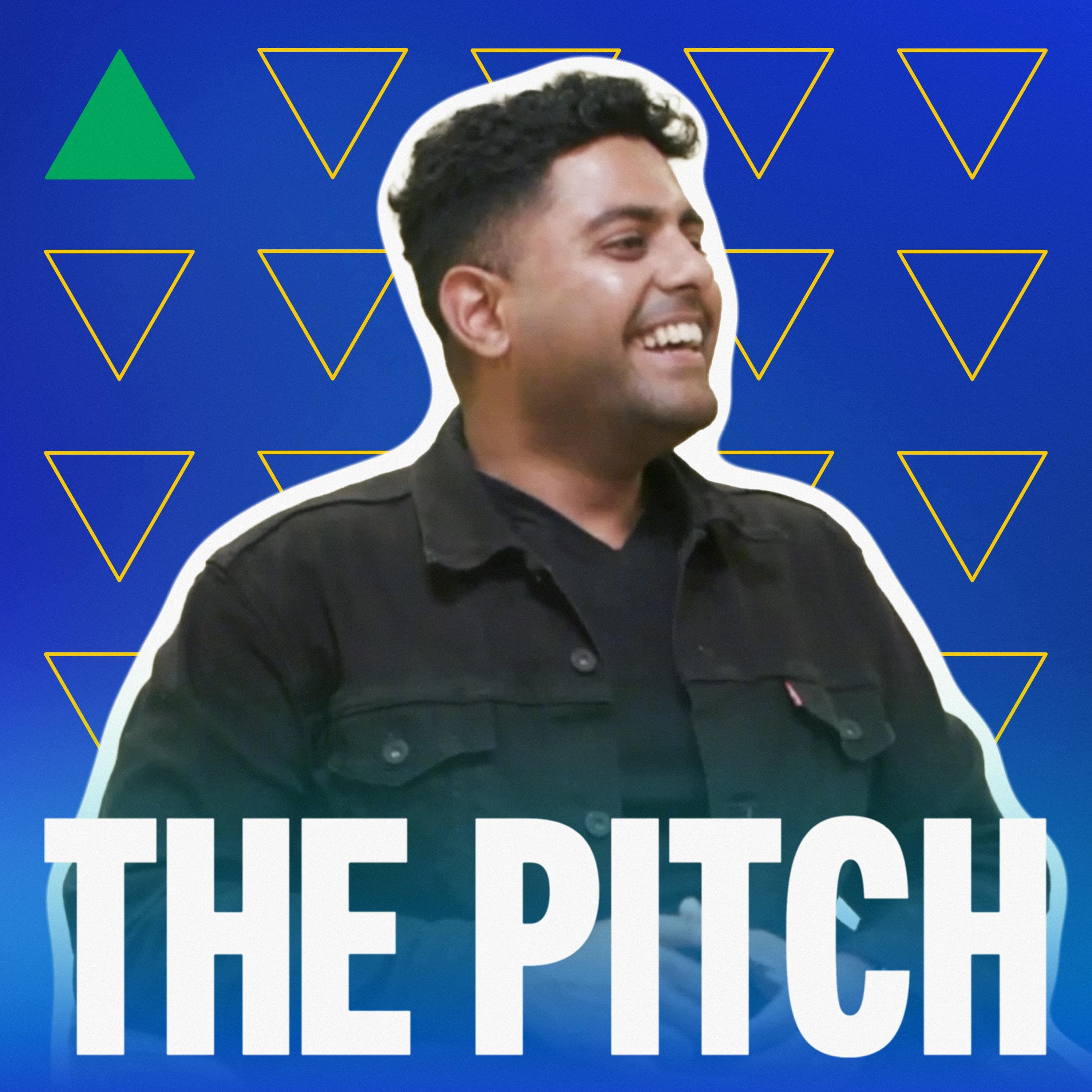
Medical tourism saved his brother's life. Now Girum wants to create a marketplace where every American can travel to find the care they need. Will the investors see his vision when his first market is... hair transplants?
This is The Pitch for Doctours. Featuring investors Cyan Banister, Charles Hudson, Immad Akhund, Monique Woodard, and Rohit Gupta.
The Panel



Mercury
“I've done a bunch of robotics investments. But they've always taken way, way longer than anyone anticipated and it's been much, much harder than anticipated.”

Cake Ventures
Future Communities Capital
Josh: Welcome to The Pitch, where startup founders raise millions and listeners can invest. I’m Josh Muccio
Lisa: And I’m Lisa Muccio. And on the show today we have Doctours, a marketplace for medical tourism, starting with hair transplants.
Josh: They’re raising one million follicles.
Lisa: Dollars.
Josh: Dollars. I love a marketplace.
Lisa: You like marketplaces?
Josh: Yeah, some of the biggest tech companies are marketplaces.
Lisa: I mean, yeah, but also they're really hard.
Josh: Lots of hard things are worth liking.
Lisa: I hear a pitch for a marketplace and I'm like, Ooh, scary.
Josh: Marketplaces are great. Franshares is a portfolio company. ChurchSpace is a portfolio company.
Lisa: I do all the check-in calls with the founders, so this is why I'm more scared. I am just kidding. They're doing fine. I just know the struggles that a marketplace goes through.
Josh: Anyway, so I love a good marketplace pitch, and this pitch today checks a lot of the boxes that I look for.
Lisa: So I love Girum and I love the mission of Doctours, but I have one issue with this company.
Josh: Do tell.
Lisa: Once you build out the hair transplant piece, how are you going to replicate that in a completely new industry?
Josh: How are you gonna stimulate growth in a new industry?
Lisa: Wow. And I thought the VCs would have the same problem in the pitch room. But I was very surprised by what they actually took issue with.
Josh: The Pitch for Doctours is coming up, after this.
Lisa: So Josh and I are going to be hitting up a few cities this fall. We’ll be in SF, New York, Austin, and we are looking to meet our LPs and potential LPs. Because we’re raising Fund II! So if you want to join us, you can RSVP at pitch.show/events
[break]
Welcome back to the pitch for Doctours. Let’s meet THE INVESTORS.
Cyan Banister with Long Journey Ventures
Someone of his caliber is taking this seriously? I’m just stoked about it
Charles Hudson with Precursor Ventures
Sometimes a business is what it is, not what you want it to be
And three new investors to the show - Immad Akhund, CEO of Mercury and prolific angel investor
I think with one day of coaching, this would be a 20 million valuation
Monique Woodard with Cake Ventures
I'm looking for a founder that excites me. And I like weird things.
And Rohit Gupta with Future Communities Capital
Maybe I'm not charming!
Rohit: Doctours [clap]
Cyan: It’s kinda nutty
Girum: How's it going guys?
[hellos]
Monique: Hi
Cyan: How are you?
Girum: I'm doing well. Nice to meet everyone.
Charles: Likewise.
Girum: My name is Girum, and today I'm going to share a memory that I have. It's November 2016, a regular high school day. I wake up expecting to fight my brother for the bathroom, but he wasn't there. So I rushed to his room to find him unresponsive on the bed. I go get my mom and we rush him to the hospital. They take him in, they stabilize him. It takes them a couple hours. They wake him up and the doctor pulls me and my mom into the room and says, Hey guys, we have two options. We can do comprehensive testing to figure out what's going on, or we can rush into surgery and put a defibrillator inside his heart. Both options would cost us 60k or 150k, respectively. It would completely bankrupt my family. So we decided to wait. After my brother was stable, we went back home. And for the next couple of months I was searching on Reddit for solutions.
Luckily for me, I found that a lot of people were talking about this hospital in India that Americans were going to with a great cardiovascular facility. They flew us out. They picked us up in a limo, took us to the hotel. We went to the hospital. No wait times. Not only was the full trip, hotel, flights, everything included, 1/10th of the cost of what we were expected to pay in the US. But we also found out that surgery was not the answer and that my brother could survive with just medication.
He's happily living today, super healthy. He goes back to India once a decade to make sure everything's all right. We're just one family. Today there are a hundred million Americans that are forced to pick between medical debt and forgoing the care that they need. At Doctours, we want to give them a third option through medical tourism so people can live through the same solutions that we did. I would love to tell you how it works.
Monique: Yeah. Tell us how it works.
Charles: Yeah. Sounds awesome.
Girum: So a patient comes in, they answer a bunch of questions, they upload any information that they have to the platform. They're matched with clinics that can deliver on the specific need that the patient wants. They can read reviews from other Americans, which is extremely important. And lastly, they can pay directly on the platform. No need to carry cash abroad like we did. They can even finance their procedure if they want to.
Monique: What kinds of procedures are people coming to you for?
Girum: There's a hundred different verticals that we can go after. We made a choice to pick one and really win in that niche before scaling up other verticals. And for us that beachhead market is actually hair transplants.
Charles: Turkey
Cyan: Turkey.
Girum: Turkey. Yeah.
Rohit: I knew it.
Immad: Is it your main focus to do things that insurance won't cover? Like I think that's why hair transplants are a big one.
Girum: We're focusing on elective procedures. If you don't have insurance coverage for, let's say orthopedics, which is traditionally covered by insurance, we would support that as well.
Immad: Mm-hmm.
Girum: But we don't want to touch any verticals where the payer isn't the patient. So no insurance pay, no government sponsored health care.
Immad: What are the top three or four like outside hair transplant?
Girum: We're looking to go after IVF next, as our second market. It's five times bigger in terms of dollars spent. Gen Z's turning 30. They're expected to be the biggest user of the procedure. and there's a huge price difference between what's available in the US and what's available abroad.
Monique: And then what is after you, IVF, you said you have three verticals
Girum: Yeah, so we’re looking at dental, orthopedics, vision treatments, and general cosmetic surgery.
Monique: And explain the business model a little bit.
Girum: Yeah, so we're a marketplace model. We take 30% of each booking that we drive. We sit in the middle of the payment flow, so we accept payments. We keep our cut and we remit the rest to our partner clinics.
Rohit: Do clinics find you or do you go find clinics?
Girum: We go find clinics. We have a team in Turkey that onboards clinics. We're doing about 10 clinics a month.
Cyan: How many are there there?
Girum: Say that again.
Cyan: How many are there there?
Girum: There's 450 in Istanbul only.
Cyan: Wow.
Charles: Geez.
Girum: There's so many.
Monique: Yeah.
Charles: How do you figure out like, quality assessment on the clinics abroad? Like are there-
Rohit: Yeah, that seems like the hardest part.
Charles: Are there ways to identify the top providers?
Girum: So the first, yeah. So the first step would be to look at their local and international certifications.
Charles: Mm-hmm.
Girum: So today we have a team in Turkey, three people who go to the clinics, they collect the certifications, they go to the government offices, they verify them, before we list it on our platform. So that's step one. Step two would be to look at verifiable reviews. Today we're looking at videos of other Americans who have recorded their journeys and put it on social media. And then there are, you know, clinics that are popular on platforms like Reddit that we look at but you know, ultimately the choice is the patients. They come in and they say, hey, I wanna go to that clinic. As long as the clinic that they want to go to is on our platform, I think we should be good.
Rohit: But you won't just let any clinic on your platform?
Girum: No.
Rohit: If there's some-
Girum: Yeah. We reject more than half of the clinics that wanna work with us. Typically they don't have the right certifications or they borrow their friend’s certifications, or maybe they use an expired certification. We, we've seen all of this and today the American consumer just isn't protected. Right? They, they see a piece of paper. If they know to ask, you know, they just see it. It's in a different language. They just say, okay, I'm good to go. But we do all of the hard work for you. So you don't have to.
Rohit: So you're building a marketplace for medical tourism, starting with non-elective procedures.
Girum: Yeah. Starting specifically with hair transplants. But going after elective procedures.
Rohit: Yeah.
Rohit: I get what you're trying to do and I, I, there's definitely a gap, but like, your story is about how medical tourism saved not only your brother's life, gave him better treatment than he would've received here, and also it was just financially possible for your family. But then like, I don't know, man, no one's dying from hair transplants, you know?
Girum: That's true. But you've gotta find a market to start in as a startup
Rohit: Look at your first five! Dental, most of that's gonna be cosmetic dental, right? You have to go all the way to like maybe some orthopedics and then vision
Immad: I don't know if I agree with you on dental. Like in America you can have like a life threatening dental thing and you still have to pay $10,000 to get it fixed.
Rohit: I'm just saying like, what percentage of that, 'cause most dental, like if you're talking about that, is emergency dental?
Girum: So I can give you examples, right? Um. For example, if there is a rare cancer that you're experiencing, there isn't enough-
Rohit: But that's not on your roadmap.
Girum: Well, five is like the next five years, right? If we're building for the next decade, it'll definitely be in there.
Charles: Just ask the question maybe slightly differently. Are there other maybe like, higher value in quotes, higher sensitivity procedures where even without insurance, it's like, I gotta imagine cancer, It's expensive in the United States with insurance coverage, it’s also expensive if you go somewhere else. Are there other things where if you remove insurance and they're kind of severe or life threatening, that would be attractive for this model in the future?
Girum: Yeah, so. I want to take us away from this life-threatening aspect, right? There's still so many procedures out there that aren't life-threatening
Charles: Or it could be chronic.
Girum: That are very, very important, right? I would put IVF into that bucket. Couples want have kids. There's a huge fertility crisis happening in the US right now, and your average, you know, high school teacher or bakery shop owner, auto shop owner can't afford to do it in the US.
Charles: Yeah
Girum: So I, I don't want to ignore that, that, that segment.
Charles: Yeah.
Monique: How do you get most people, most Americans to understand that this is a choice for something that is not a BBL, some veneers or a hair transplant?
Girum: Yeah. So when I started the pitch, I said seeing reviews from other Americans was very important and something that we focus a lot on. People need to see that there are other Americans that experienced the same condition that has successfully received treatment abroad and came back. So we try our best to get all these testimonials from people. In fact, our go-to market is on TikTok and a lot of people share their stories of traveling abroad. You guys might have seen videos of people doing that as well. But we also are trying to go after press and see if maybe even word of mouth could be a great driver. When we were looking for hospitals, you know, the first thing that we did was we asked our friends and family who they knew. So the more patients we have using our platform, the better of a word of mouth engine we can create.
Monique: Why not just lean into the obvious story, which is that you can go abroad, you can go to Mexico for an inexpensive facelift. Like -
Girum: Yeah so…
Monique: I, I think like, that's probably the more likely path
Girum: Mm-hmm.
Monique: For this company. So like, why not just embrace that?
Girum: So we have three check boxes that we want to hit when picking which verticals that we want to go after. The first one is, Americans are already traveling for it, right? When I said hair transplants, all of you guys automatically said Turkey.
Charles: Yeah.
Girum: The second check box is the price abroad versus suppliers locally has to be a huge difference. and third one is the price difference has to be large. . And if you look at like, facelift as a procedure, I don't think it fulfills these. And the market just isn't big enough. If you look at IVF, it's a $25 billion a year market. There is no player in the space and it's not very obvious for people to think to travel abroad for it. So we think we can come in, and build an interesting business there.
Immad: I feel like people have been talking about medical tourism in the startup world for like a decade plus.
Girum: Mm-hmm.
Immad: I'm sure I've heard this pitch before, so like what's different now? What's different about your company? Why hasn't it worked before?
Girum: So, we benefit from both changes in distribution and changes in technology. TikTok is really a huge driver for us. Before TikTok, unless you knew someone who had a hair transplant it's impossible for you to have known about hair transplants or any of these procedures abroad. TikTok though, if they know you're interested in, let's say fertility, it automatically shows you people who have traveled abroad for it, and you become aware because of that. And then on the technological side, so today medical tourism is a $150 billion industry. There's about 4,000 small agencies that support this industry. Can't really scale an agency model 'cause medical tourism is a high touch business until AI came around. Now we can take whatever this human is doing for you and be able to scale it to every single American.
Immad: What's the traction so far?
Girum: So we incorporated in March. We've had 2,800 booking requests on our platform so far. About 500 completed consultations and 50 paid bookings.
Immad: How much did you make?
Girum: $20,000 in revenue. 200,000 in GMV
Immad: You said you were taking 30%, but that's only 10% right?
Girum: Yeah. So in reality we have, we're, we have tiered contract with our partner clinics. The first 10 patients we send each month we take 10%. From 11th to 20th we take 20%. From 20 onwards, we take 30%. So at scale it would be 30 percent. Right now we're at 10%.
Rohit: I mean, it seems like, I'm sorry, I'm just pushing on this thing, but like you could figure out where you could get oncology treatments for cheap pretty quick
Girum: So hair transplants weren't into our first market by the way.
Rohit: Okay.
Girum: We tried full body physicals. We tried to validate it, didn't work. We tried IVF, actually. We might have given up on that too early 'cause now we have signal that says we should have stuck with that. But as soon as we launched hair transplants, we automatically started getting bookings. So we're like, okay, this is where we need to stay. We're doubling down. We're figuring out what the primitive of a medical tourist is, making sure we understand, finding, paying, transportation, hotel situation, everything. Medication, even, at the very end. Before we get the cookie cutter model into the other procedures. So maybe we find out in next six months that IVF isn't the next market. Maybe it's, uh, oncology or something else. But, you know, hair transplants are just a, it's just a great place to run all the experiments and figure out what we need to build.
Monique: What about IVF didn't work the first time?
Girum: So we gave up before we learned that TikTok was the right go to market. So we were trying to get patients through Reddit. We were trying to get patients through Facebook groups, you know, the mods would automatically kick us out, all that stuff. And, um, we've been seeing all these videos on social media, which I'm sure like many of you guys have seen. so when we decided to do hair transplants, we automatically said we should do it on TikTok. And we saw some traction. If we did IVF on TikTok, maybe we would've seen something similar.
Charles: Also like, hair transplants, like it's a, like you get it in the like aftercare, post, I had, obviously haven't had one, but like I have many friends who have
Immad: Are you in the market then?
Charles: Yeah, the, the aftercare. I, I just wonder, like I would love it if this was like oncology, brain surgery, like, critical care. It, it sounds like that's not what it is today. So I'm gonna move past that and just say like, it sounds like part of hair transplant is like, you get it and you, you go home, you don't, there's not a lot of follow up ongoing. And I wonder with some of these other procedures, like how do you deal with issues that come up, ongoing care, like part of IVF is there are visits, it's a little bit more complicated than hair, just the care delivery piece of it.
Girum: Mm-hmm.
Immad: That's, that's a good point. IVF does take like 45 days. Are you expecting them to like stay in the place?
Girum: Yes. We're expecting them to stay for 45 days.
Immad: And people are willing to do that?
Girum: Well, people are doing that. The reason why we queued it up next is because Americans are wanting to travel for it
Cyan: What's the number one IVF destination?
Girum: Spain and France is where people are going. So. Yeah.
Cyan: It's a nice place to go.
Girum: It's a nice place to go. It's sunny outside.
Immad: You can have a little holiday there
Girum: Yeah. And it's much, much cheaper. You can get it done for $5,000 or less.
Immad: I'm not quite sure I get your guys' points that they should do oncology or whatever
Charles: I'm not saying, I’m not saying he should-
Immad: Because that's all covered by insurance. So why would people-
Charles: I, I wasn't really saying, like I hear Rohit’s, the desire for it to maybe be-
Rohit: Impact!
Immad: But it makes sense to do elective. Right?
Charles: Totally. Totally.
Immad: How are you gonna do non elective?
Charles: Yeah.
Rohit: I don’t know. I just don't want people to die.
Immad: I mean that's, that's nice. No one does, but that's covered in America to some extent.
Rohit: It's not, man
Monique: I think we have to-
Rohit: Most people in this country do not have health insurance.
Girum: We'll, we’ll get to it. Right. It's just, is it the best initial market? I think the answer is no.
Rohit: Sure, I get that, but-
Immad: People who don't have health insurance, can they afford to travel to Spain to get it dealt with? Like that's probably not gonna…
Rohit: I mean, maybe
[crosstalk]
Monique: I don’t know if I’m sure that that oncology-
Charles: Will ever
Monique: should actually be or will ever be on your roadmap. I think-
Rohit: It is a sad state of affairs that I even think this, right?
Monique: I think it is most likely that this is the platform for hair transplants, facelifts, BBLs, liposuction, maybe perhaps IVF.
Will Girum embrace the BBL? We’ll find out after this.
Monique: I think it is most likely that this is the platform for hair transplants, facelifts, BBLs, liposuction, maybe perhaps IVF.
Girum: Let me push back on that. So if you look at what the primitive of a medical tourist is, it's finding a clinic, it's paying for it, it's traveling. It's making sure that you're getting to your appointments on time and it's making sure that you're returned home safely. Maybe if there's medication afterwards, that that's covered as well. What about IVF, or what about dental, what about oncology do you think is outside of these primitives that makes you think that we can't get to them?
Monique: I think that the consumer is much more unlikely to leave the United States for those procedures. So I think you have to take into account the natural consumer behavior for those types of categories versus the natural consumer behavior that you're leaning into is the fact that people are already going abroad for all these things.
Girum: I mean, “Americans aren't gonna travel” is the biggest pushback we get from investors. We want to define this behavior. We want to prove that it could work in the markets that you mentioned, and then see if we can jump towards the markets that you don't think it would work in. And I think we have a pretty good shot.
Immad: I would say my main two concerns are, number one, this is like a big one off high cost thing that people will do. I just feel like there'll be one or two Turkish clinics that like, figure out how to do a US website and make it 50% cheaper than going through you, and get enough reviews out there that like, people will bypass. And then the second problem I have with this is most of the time when there's a hack on consumer distribution, it doesn't last forever. And this has happened with tons of consumer companies. They find like, you know, they get Google SEO working, Sometimes they build a big enough company doing it, but generally speaking it runs out. So the fact that one of your why nows is like TikTok is working doesn't feel like a defensible long-term distribution channel for me.
Girum: Yeah. So when you look into the hair transplant space, the biggest names that you know in Turkey, they're not actual clinics. They rent doctors, they bring 'em to the facility. They're just excellent at marketing. They don't have the best surgeons. The consumer doesn't know this 'cause they don't know to ask the certifications. And to your second point, for me, if I look at brands like Hims, they were able to figure out Meta marketing pretty early, and they were able to scale it in a way, until they got to become a public company. Many other consumer brands did this as well. Why wouldn't that work for Doctours? Or maybe you can gimme an example of a consumer company that, didn't rely on these channels to scale.
Immad: I mean, this is why investors don't do consumer!
Girum: Yeah.
Immad: But, I'd say the explicit bit that worries me is that it's like very singular. Like, you know, Hims does advertising and does lots of different things. You're relying on like a free and singular channel, but, so I'm not saying that can't work, it's, it's just like a, a risk part of your pitch.
Girum: Yeah. So the way I see it, someone finds a distribution channel that no one else is using. Right now, you know, micro influencers in niche markets, I believe is one. They figure out how to scale it up and then they own that category, and make it too expensive for any other entrant to come. If I start a company wanting to market on Instagram today, it would be way too expensive for me, but Hims does it every single day today. So that's kind of how I see it. I think we can get the influencer model, the TikTok partnership model to scale. I think we can get our patients to submit videos and we use AI to turn it to short form content that they can then post. we wanna be the first, you know, review site with video only reviews. and I think all of these could work.
Charles: The one thing I always say is like, when you find a channel that works, oftentimes longevity is a function of, your company's lifetime value for the customer. So if you're Hims and you acquire a customer on Instagram, but that person's gonna buy GLP1 or Minoxidil, whatever, they're gonna buy something for you for a long time. That channel can actually become much less performant for you and still make sense to invest in. And the people I've found who've gotten into trouble are people where it's either a one-time transaction or it's a very low ACV and any fluctuation whatsoever. And the cost of customer acquisition actually like, breaks the channel for you.
Girum: Yeah. So, um, there, there's two concerns there and I can address both of them. The first one is, we acquire users today for $200. When we make the connection, we're earning 500 to 1500 per user. We're already above water on the first transaction. But as we add on more verticals, someone who's been a medical tourist is likely to become one again. So I think we can get them over and over and over again. Another way to look at it is, any given year, 97 million Americans travel internationally. Every single one of those could get treatment when they're abroad, every single year. So, there could be recurring nature in our business. But also another thing that I'll add is, medications, that one aspect of this whole lifecycle that I mentioned. Today, our customers, this is something we're surprised about. They get their hair transplant done in Turkey. They come back and they say, the doctor told me to be on Finasteride and Minoxidil.
Charles: Mm-hmm.
Girum: 75% of our users have never heard of Hims before, which really surprised us 'cause we thought people would use Hims first and then do the surgical step, but that's not the case. So now we're partnering with companies like Honeybee Health and MDI to be able to prescribe and deliver these drugs to our users. So not only are we profitable on the first transaction, but we can get this recurring motion going as well.
Monique: And you're doing that today?
Girum: We're, one of the primary reasons we're fundraising is so we can meet the insurance minimums in order to get into medication.
Monique: Got it. Okay.
Charles: Can you talk a little bit about the fundraising plan?
Girum: We're raising a million pre-seed, we have 850k committed already. We're willing to oversubscribe for you guys.
Monique: What terms are, is the 850k committed on?
Girum: So we have two different safes. One on a 10 million post and one on 8 million post.
Immad: And of course you're offering us 8 million. Rohit’s only gonna do 8.
Monique: Where does that 1 million take you?
Girum: We can launch medication, get some early signs on that and see if we can scale that. That's one. And two, we're preparing to be able to jump to our next vertical in the next 18 months. and we need that cookie cutter model that'll get us there. Once we do that, we could hire, you know, market launchers and replicate that playbook over and over and over again, so all the founders' attention with this $1 million will be to figure out what that cookie cutter model is so we can jump into the next market.
Rohit: I feel like there's this thing that's, localization is becoming easier because of AI and LLMs, right? So the idea that like native feeling websites, that don't appeal to Americans, is gonna evaporate. Right? But I think what's still gonna be missing is somebody that actually validates clinics. Because I can make a beautiful looking website and then my hospital could be filled with rats. Right. Like it's just so uncorrelated you know. And that's everybody's fear, is like, I don't trust medical tourism because who knows what they do. Right. And so maybe like it's having a third party there saying like, these are the only clinics we work with. You can see the reviews. That sort of transparency is your real product.
Has the pitch finally started to turn around for Girum? Find out after this
Cyan: How do you verify the reviews? So like I went on real RealSelf, I'm sure you're familiar with RealSelf. And I found out that a lot of those reviews are manipulated.
Girum: They're paid for.
Cyan: Or put up by the actual surgeons themselves. So how do you navigate that?
Girum: So the problem with these review sites is they don't have a means to capture payment. So they can't verify who's a real patient and who's a fake one. We're in the payment flow. So we know who's an actual paying customer. Uh, so all of the reviews that are on our platform are from actual customers who use Doctours. We've asked clinics to submit before and after images, and there's a lot of like, open source reviews on Reddit that, that we try to take. so it's a combination of all those to seed the reviews and then using our own patients for the future.
Monique: You mentioned that you're also providing financing are you also taking a revenue cut? Based on financing or-
Girum: So-
Monique: Tell me how the financing works.
Girum: Yeah. Today we, um, outsource the lending, the underwriting to third parties. So we, were not holding any of the debt on our balance sheet or anything like that. we don't take any fees on, in fact, we're charged fees on, on the lending part. The consumer pays interest on whatever loans that they take out as well.
Monique: Hmm. It seems that you should be getting a fee on the loans, not paying a fee on the loans.
Girum: Yeah. Um, I think once we have enough volume, we'll be able to do that. Our volume today is just way too small to make that work.
Immad: Yeah. For me, I think it's cool. Uh, I'm probably not the right investor. It just doesn't feel like something that like, is gonna be a big enough company from my perspective. Uh, so I’m out. I do think it'll be a successful company though.
Cyan: I also think it's gonna be a successful company and the business model is just not appealing to me. I think it's a great business for you and for the people that are using it, but I have to get excited about something and it has to be something I wake up in the morning and I'm like, yeah, let's go. and I'm just not the right investor for this, so
Girum: That makes sense.
Cyan: For that reason, I'm out.
Girum: Thanks.
Rohit: Yeah, I'm torn, man. I like what you're doing. I think you're probably the right guy to do it. But there's just too many gaps for me, I'm happy to talk further, but I don't think I could do it.
Girum: Makes sense. Got it.
Monique: Um, I'm not opposed to this being the plastic surgery place. I think you, are conflicted about which direction this platform is most likely to go in. It's almost as if you're not really as confident as you need to be in what you are exactly building. And for that reason, I'm out.
Charles: I, I, I'm out for a slightly different reason. I think you're really in the trust business. I think Rohit's point is spot on. Like the more successful you are, the more the in-market people will start to think like, hey, he's sending me 50 clients a month. I'm paying him 50 cents on the dollar. Maybe we should stand, like they're gonna try at some point, as you're more successful. and trust is like hard and slow to build. And I don't know that the trust you build in cosmetic will translate to some of the other non-cosmetic. So if you had said like, Hey, we're all in on cosmetic surgery. That's like, not for everybody, but like we think it's important. It makes people feel better. There are like valid medical reasons for it and like, we might end up being in there, I would've said okay, like. There's some clarity, I just worry about like, the trust you build with the hair transplant people translating into sort of other arenas.
Monique: Mm-hmm.
Charles: But I, I think you could become like the king of Turkish hair transplants and related things, and that's like a, that will be a meaningful business.
Monique: That’s a huge market. Yeah.
Charles: Yeah.
Girum: Awesome. Well, thank you guys.
Charles: Thank you so much.
Girum: That was great.
Cyan: Congrats on your progress so far.
Girum: Thank you.
Cyan: This was fantastic.
[applause]
Josh: So, the fact that he started with this life or death condition. And then went to hair transplants. Did that like forever derail this pitch?
Cyan: It didn't help.
Monique: Yeah.
Cyan: Because we got excited, about that vision that he might have a solution for something that is actually a real pain point for people in life or death situations. That part got me and then I was like, wait, what?
Josh: Yeah.
Cyan: But even then, the business model for me is just not gonna work.
Rohit: Yeah
Cyan: I've just never really made an interesting amount of money on referral type businesses
Monique: I only see a world in which this is the plastic surgery place. And I think that's okay. And yes, I also think talking about this like, lifesaving procedure that his brother had. And then flipping it to hair transplants. I think that's a very difficult jump.
Charles: I think the opener, it just like, it primes you for what to expect. So if you like, prime the audience that like, I'm gonna tell you this very like, heart wrenching story about like, a life that was saved. It's reasonable to expect that that's what you're going to hear next.
Josh: Well, you know, this show teaches me something every event…
Cyan: Did you coach that?
Immad: Yeah, it’s your fault
Charles: Josh is like, well.
Josh: This sucks to admit on mic.
Cyan: Like I'm taking accountability for this.
Josh: So here's my theory. I think that like, especially at the pre-seed stage, VCs need to justify every investment with the numbers and the market and the things that make them sound smart to LPs. But really they're making gut conviction based decisions based on people that they then find the evidence to back up over time. Generally people are nodding. I just wanna make sure that's on record. Somebody can disagree though. The idea here is, if we coach our founders to like, tell a personal story, connect in some way. You're connecting and getting to know the human a little bit. And even though this story is tangentially a little off base from what he's building today, it felt like, wow, it's at least gonna help. Like I've just, I'm, what version of a story where he told hair transplants would've reeled you in in any meaningful way?
Monique: I think if he had been all in on making Doctours the plastic surgery place and stood 10 toes down, so to speak, on that model. I would've given that way more respect than like, wait a minute, it's hair transplants today, but IVF tomorrow and maybe some other world in which it's cardio and, and cancer and all these other things. Because I can't really see that world. Realistically.
Charles: Josh, there was a moment of connection when he said hair transplant, we all said Turkey. Everybody here knew exactly like, so I think
Cyan: Those videos are going around.
Charles: Those videos are going around and all of us like, have seen the back of the head.
Immad: I think a lot of us probably also know men that, men have dealt with hair issues. That's like, I don't think that's like not a story you can say. I mean
Josh: Yeah.
Immad: It is more compelling when it's a childhood story.
Josh: Yeah. We always, we always go for the, the childhood story piece.
Charles: Connection and rapport is a hard thing. I just wrote down sometimes the business is what it is, not what you want it to be.
Monqiue: Yeah.
Charles: And I think like when Monique said that, I was like, oh yeah. Like some of us want this to be something that it isn't. And to your point, I wasn't, the longer you talked, the more I started to think what you did, which is like, if this is really a plastic surgery business, just own it. Just own it.
Josh: Yeah. But it sounds like his plan is to go into oncology, or his hope is to, to build that business someday.
Rohit: 5, 10 years, probably sold it by then.
Charles: Love it.
Monique: I do think he can print cash with this business-
Charles: Yeah, totally.
Monique: With this company.
Rohit: Totally.
Cyan: It just seems like such a great lifestyle business if he wanted it to be
Monique: Yeah
Rohit: Yeah, I have so many friends who've gone abroad for procedures and like… But I mean, I look, I, I guess there's a certain thing where it's like, as a man, like I can say like, oh, we're gonna offer IVF without having any idea what that's like for a woman.
Monique: Yeah.
Rohit: And like that just, to, I don't know, man, equating IVF to a hair transplant. I'm like, I just don't, It's such a different level of involvement, not even just the time, but like geez
Cyan: Psychological.
Rohit: Yeah, man. Totally.
Cyan: The women that I know that have gone through it, it's really brutal.
Rohit: Brutal.
Charles: Yeah.
Monique: And then being in another country for 40 plus days
Cyan: 45 days
Monique: And it's mentally brutal.
Cyan: Yeah. I mean, one of the things about Hims, he brought up Hims, is that it hyper-focused on one category. And so I think like if you're starting with hair implants mostly for men. Maybe go into other verticals that have to do with men.
Immad: That would make more sense, yeah.
Cyan: Or women, you, you know, we would rather, I, I mean, I think I would rather be on a site if I was doing IVF with other procedures that cater more to females. Or people who like those sorts of things. But like, I just think, I think a little bit of that might help.
Monique: And then there aren't that many cosmetic categories where men are the primary consumer.
Cyan: Right.
Monique: The only other one is like veneers. Okay.
Cyan: Yeah.
Monique: Right. So really you should probably start with women and then you can do, you can do the lipo, and the mommy makeover, and the BBL, and the facelift, and the like, you could go down the list.
Cyan: Mm-hmm.
Monique: Right. And I think that is a much better direction to come at this from, than starting with the hair transplants.
Rohit: I thought he was gonna talk about leg lengthening.
Charles: Me too. I was gonna say, yeah. That's an intense one.
Immad: Is that a real thing?
Charles: That's a thing. Oh yeah.
Monique: It's a thing.
Rohit: Femur.
Monique: It's a thing.
Cyan: Oof. Aaahhh
Rohit: The dude from Weezer did it.
Charles: Yeah. It's a real thing.
Cyan: What?
Immad: How many inches can you get?
Rohit: Four to six maybe.
Immad: Whoa.
Rohit: Something like that, it's pretty absurd.
Immad: But you could go from being like a non NBA basketball player to…
Rohit: I mean, look. Yeah. Well, I'm never gonna be Steph Curry, so it doesn't matter.
Cyan: Tom Cruise has hope.
Immad: I think he's pretty good now.
Rohit: He's, he's just gotta live with it.
Charles: Short kings.
Josh: Short kings. There it is.
Josh: Okay. Well.. not awesome, but-
Immad: Four to six inches?
Rohit: I don't know, maybe I’m making that up
Cyan: That's insane.
Charles: But I think it’s gotta be something, I don't know, I've never, but you're like not doing it for two inches.
Immad: Maybe you pay per inch
Rohit: Probably
Josh: Well, I learned a lot from this pitch.
Lisa: Yeah?
Josh: I learned what a BBL is. Don’t Google that.
Lisa: Sarah from Mappa, who is Brazilian, was watching this pitch, and when BBLs came up, she was like, Brazil does not claim the BBL.
Josh: That’s a new acronym for the show
Lisa: Mhm
Josh: Not business related, but, always learning new things on The Pitch.
Lisa: So, I have a question for you.
Josh: Oh no.
Lisa: I hear you coach every founder before they come on the show, and I think you do an excellent job of it.
Josh: Mm-hmm.
Lisa: Like I love your coaching calls with founders
Josh: Uhhuh. I know where you're heading with this
Lisa: But do you think that it's always the best approach to start with that personal story, or do you think that there are pitches that could have gone better if they hadn't started with a personal story?
Josh: Oh, a hundred percent. Every VC has a different story they're looking to hear from a founder. They have a different ideal story. Mm. But I think on our show you have to start with the story, otherwise people listening won't care. And that's what's so challenging about pitching on our show, is you have to find a central story that you're gonna stake, you know, stake your claim on and say like, this is what we're going with. So we spend our time working with, what are they gonna say upfront to tell a narrative that really compels people to care Yeah. About what they're doing, not just like, think it's a good business. Care enough to listen to the end of the episode, let alone invest, like, care.
Lisa: But it backfired in Girum’s case. I think it’s unfortunate that he couldn’t start with IVF. That’s where I saw the mission connecting, because IVF is a life changing procedure, rather than a cosmetic one.
Josh: Right. The VCs wanted him to build a different business. At least the VCs in the pitch room. But not all VCs felt the same way. Jason Calacanis’ firm Launch actually led Girum’s round
Lisa: Yeah
Josh: He raised 850k so far and last I heard from Girum, they’re going to end up oversubscribing his million dollar round. I’m just always for like, founders should pitch the way they want to pitch, whatever they feel compelled by, and the right VCs are going to find them. I don’t know. I just don’t think you can listen to all the VC’s feedback all the time.
No offer to invest in Doctours is being made to the listening audience on today’s show. But you can become an LP in our fund. Fund I is closed, but in Q1 of next year, we’re doing our first close on Fund II. To learn more, check out our brand new website for the fund at thepitch.fund.
Next week on The Pitch…an elected official campaigns for a check.
Nichole: We see an opportunity for a seismic shift in how local government operates. Can I show you what it looks like?
Dawn: With that intro, let's go.
That’s next week! Subscribe to season 14 on your favorite podcast player so you don’t miss future episodes. You can watch full length versions of every pitch over on our Patreon at The Pitch Uncut.
And if you’re a founder and you want to be on season 15 of the show, applications are open! Go to pitch.show/apply. The deadline to apply is November 15th.
We’ll see you next Wednesday, in the PITCH ROOM.
–
This episode was made by me, Josh Muccio, Lisa Muccio, Anna Ladd, and Enoch Kim. With deal sourcing by Peter Liu, John Alvarez, and Phoebe Sun.
Music in this episode is by The Muse Maker, Breakmaster Cylinder, The Firmware Rebels, Theory Hazit, Boxwood Orchestra, Joey Kantor, Land of Legs,and Peter Jean and The Runaway Queen.
Thanks to Mike Tadasco for sharing this deal.
The Pitch is made in partnership with the Vox Media Podcast Network.
The Founder

CEO at Doctours
Girum is the founder and CEO of Doctours, the medical tourism company. He's an engineer by training who spent years building international payment systems at Meta (previously Facebook) before kicking off his startup journey. After a few failed endeavors, Girum taped in to his past to inspire Doctours. In 2016, his family was saved from bankruptcy thanks to medical tourism. Now, he wants use his experience to help 100 million Americans who are currently forced to pick between medical debt and forgoing the care that they need.
Related
Related Episodes
Also Featuring
More with Cyan Banister
 Season Finale
Season 14 Finale: The Mad Scientist, The Foxhole, and a 48M Power Move
Brad Kent · Original Sunshine
S14