Is the ICO Gold Rush Over?
About this episode
 Spotify
 Apple Podcasts
After a frustrating round of fundraising for her company PopCom, Dawn Dickson decided that VC was broken. She opted to take a different route: an initial coin offering, or ICO. But then her best-laid plans got all mucked up ... by Uncle Sam.
Today's investors are Jillian Manus, Phil Nadel, Daniel Gulati and Michael Hyatt.
The Panel

Forefront Venture Fund
“When I'm investing, I'm looking at it strictly as a return on investment.”


“Necessity is the mother of all invention. You've invented this because you want to solve a problem that you had. That's exactly where great businesses all start.”

Treble Capital
“The only way to make money in VC is to take a non-consensus view that turns out to be right.”
I'm Josh Muccio, and from Gimlet Media, this is The Pitch.
To kick off the new year, we decided to go back and revisit one of our favorite episodes from 2018, one where the entrepreneur did a complete 180 in the months following her pitch. The company was PopCom, and the founder, Dawn Dickson, eventually decided that VC was totally broken.
But when she went a different direction, when she did that 180, Dawn ran into a whole host of other problems, which we'll find out about today. So we're gonna play you the original pitch for PopCom, and then we'll check in with Dawn to see where she is now.
Okay, here's the original pitch.
Michael: Hi.
Jillian: All right. Hi.
Dawn: How you guys doing today?
Jillian: Good.
Michael: You stopped us from singing. We were just about to do a karaoke.
Dawn: I know. I was wondering what was going on before –
Before the investors do something they'll regret, Dawn Dickson enters the room. She's here to raise $500,000 for her startup, PopCom.
Dawn thinks her company can do for retail what online shopping did in the '90s: totally revolutionize it. And she's got some pretty smart technology behind her plan, like facial-recognition-smart. But is the world ready to embrace this change?
Today's investors include...
Daniel: I'm Daniel Gulati.
Daniel is a serial entrepreneur turned VC with Comcast Ventures.
Phil: I'm Phil Nadel.
Phil is managing partner of Forefront Venture Partners, with over two decades of investment experience.
Jillian: I'm Jillian Manus.
Jillian is a partner at Structure Capital and an angel investor on the side.
Michael: I'm Michael Hyatt, and I invest my own money.
Michael is a Canadian investor who sold two software companies for over $500 million.
Okay, on with The Pitch.
Phil: What's your name?
Dawn: My name is Dawn Dickson. And I'm the founder and CEO of PopCom.
Jillian: Of - what is it called?
Dawn: PopCom.
PopCom isn't Dawn's first time starting a company. She used to run an online shoe company that sold cheap women's flats for on-the-go, designed for when you break a heel or your shoes are giving you a blister. They were sort of like in case of emergency shoes. The problem was when that emergency arose, it was too late to order shoes online and then wait for them to be delivered. So Dawn started thinking, "What's the best way for women to buy them right when they need them?"
Dawn: I was looking for a direct-to-customer distribution, so I looked at vending machines as a way to sell a retail product.
Vending machines. You're probably thinking about a simple snack machine with chips and soda, but they've actually gotten a lot more advanced.
Dawn: Smart kiosks are popping up everywhere. Right now, there's eight million vending machines in the United States. One million of those are considered smart, which means they have a touch screen and they can accept credit cards. That number of smart machines is growing 30% year over year as retailers continue to bring new concepts into vending machines. So we’re targeting -
To Dawn, this seemed like an obvious way to sell her emergency shoes. Whenever someone broke a heel, a nearby kiosk could give them quick access to a replacement pair of shoes. But then she realized that even though this made her shoes more accessible, she lost out on knowing who exactly was buying them.
Dawn: From my experience in e-commerce, I got all of my information about my customer from tracking the IP address. I could tell the conversion rate from the IP, where they're located. I could re-market them, I could re-target them, I could send them an email thank you or say, "Hey, you abandoned your cart." But on the vending machines, there's no way to do that.
As smart as these new machines are, they still lack the sophistication of the internet. We've all had a similar experience when you're shopping for something online and then you get on Facebook and, lo and behold, there's an ad for the exact thing you were looking at just a minute before. And privacy concerns aside, all of this is possible because of the technology that's baked into your web browser, technology that lets online retailers know more about you as a consumer. And Dawn thought there must be a way to get that data on the customers buying from one of her vending machines.
Dawn: I went out looking for a hardware solution and a software solution to sell products to customers on the spot, and it didn't exist. So we've developed a software solution that makes self-service retail smart. I said, "What is closest thing to a IP address in physical form?" And that's the human. That's the person. So we use anonymized –
Daniel: The customer.
Dawn: The customer. We use anonymized facial recognition at the point of sale to identify that customer.
Sound crazy? It actually isn't. In fact, there's an article in the April issue of The Atlantic about what companies in China are doing with facial recognition software, and it's a lot. For example, there's a smart KFC that scans your face and gives you menu suggestions based on your age, sex, and facial expression. Looking sad? Fried chicken is definitely the answer. And to make it all possible, all the customer has to do is make an account and link it to their face.
Dawn: With the customer's permission, we can verify your face against your ID to dispense a product that's regulated. So think Sudafed, think cannabis, think -
Daniel: Alcohol.
Dawn: - alcohol. That you need an ID to verify. We have that ability.
Jillian: That's cool.
Dawn: So ultimately, the big vision is to be the data company that provides data about consumer retail purchases, demographic information, and the best place to put the next kiosk or vending machine based on the traffic. So we're purely data analytic software for self-service retail.
So how exactly does it work?
Dawn: Imagine this is a vending machine and you're walking up to it and shopping. So I'm gonna open up my camera because we’re gonna need the camera. I'm gonna stand in front of it so you can see that it's me, because it's looking, it's gonna look at my face. And this is... I'm gonna pick a pair of shoes. Again, very similar to the e-commerce experience.
Jillian: So you're assuming the pair of shoes is in the vending machine?
Dawn: This is what it sells. Customers, our customers can customize their interface to look like their website. So you're already comfortable, familiar, because this is what you're used to.
Daniel: Through your platform?
Dawn: Through my platform. I pick a size. I'm gonna add it to my cart. So I already entered my email. I have a discount, and there's my email, so I'm checking out.
Daniel: Yep.
Dawn: So I can pay. Let's say I'm gonna pay with face. I've already created an account. Let's say I've already created an account and pay with my face. And we're gonna pay with my face. Uh-oh. Pull it up again. Demo glitch. Okay.
Yeah, I'm sure we can all relate to this. The moment finally arrives to give the big presentation, and the damn thing doesn't work. You're trying to play it cool, but on the inside you're falling apart. But this could be bad news blues for Dawn, since the product she's trying to demo is her entire business.
Dawn: So the true functionality here, which I think I've turned my camera off somehow, this is the dashboard. So I'm the business. I just sold a pair of shoes. My camera was off. I have to do it again. I do this all the time, so let me just go to the analytics and show you that it actually does work.
Daniel: Do you... So your customer is the end retailer as opposed to the hardware owner?
Dawn: My customer, we have the vending machine and kiosk manufacturers, which we have - we have a partnership with the number one kiosk manufacturer in the country called Kiosk Information Systems, kiosk.com.
Jillian: You're only working with them right now?
Dawn: Currently, because I mean, we're –
Jillian: Because they're the biggest one and you figure -
Dawn: They're the biggest one. We wanna go to market with them.
Jillian: Yeah.
Dawn: We have a great relationship, and it's a great case study. If we're working with the number one in the country, who else is gonna tell us no?
Daniel: What is their market share?
Dawn: They're number one. They're number one manufacturer in the country.
Jillian: So what does that represent? Does that represent 50%? 60%?
Dawn: I actually don't have the numbers.
Daniel: The reason I'm asking is, is it - is this business predicated on, you know, one deal with that one –
Dawn: No, not at all.
Daniel: with kiosk.com? I think that actually could be a really good thing where, like, if you've locked up kiosk.com and they've got 90% market share, that's actually a great thing for you.
Jillian: Right.
Daniel: If they've got 5% market share and it's a completely fragmented market, you know, you're probably gonna have to do a bunch of these deals.
Dawn: You know, I don't know the number by heart. You know, I just…
This question, how much of the market kiosk.com owns, is actually really material to Dawn's pitch. Because she's creating software that kiosk.com is selling in its vending machines, if they own 90% of the market, that means Dawn can reach a ton of customers. But if it's just a small sliver of a fragmented market, this partnership doesn't mean much.
Michael: And how do you charge for this?
Dawn: So we consider each vending machine to be its own store, because it is. And so we charge it - each base price is $200 per machine per month. We're also working to integrate with companies like Shopify so that we can actually, if you have a vending machine and a website, you can omnichannel manage your inventory, your messaging, your CRM all together.
Daniel: My biggest question here is, I think this only works if it generates value for the - for the brand. Like, for the end retailer.
Dawn: Definitely.
Daniel: Right? At the end of the day, like, that, that is your... Even though they're not paying you directly, that is the customer.
Dawn: That's who it's for.
Daniel: It's all about the retailer. It's all about the brand, the value.
Dawn: It's all about the retailer and the brand.
Daniel: So, so if... So let's start there, which is: what percent of sales, like, do these brands sell through this channel? And where I'm going with that is, you know, e-commerce analytics and physical retail analytics are valuable because that's where 99% of their sales are.
Dawn: Now. But think about in the '90s.
Daniel: So what, so what does that look like today for this channel? And are retailers kind of fine with not knowing that much about this channel just 'cause it's so immaterial?
Dawn: No, they're not fine. That's why we don't see as many machines in the United States selling physical products as we do in other countries like China and Japan -
Daniel: But just today.
Dawn: - where there's one machine for 20, every 23 people selling a product.
Daniel: I get that, but just today. So I get the what you need to believe story and I get that this is kind of an under-penetrated channel, but just today, if you take, um, that shoe brand, right, like what percent of their sales are done through this channel today?
Dawn: Not a lot because they don't have enough data to scale that business. So -
Daniel: Like 1%? 5%? .1%?
Dawn: Um, I honestly don't know that information.
Daniel: Cause that's really the critical question for me.
Dawn: So what I did to -
Daniel: Just to, just to make my point clear, I totally get, I get the value. I think it makes all the sense in the world. My, my hypothesis is there aren't a ton of retailers and brands that derive more than 1% of their revenue via this channel today –
Dawn: Because they don't have the opportunity.
Daniel: Hang on. Just today.
Dawn: Today.
Daniel: And so, um, if that's true, then I don't think that if - I don't think that if penetration just kind of stayed the same, that there'd be a business here because it's -
Dawn: It’s absolutely not gonna stay the same. It's growing 30% year over year.
Daniel: Okay, so that's, so, so that's the bet. So the bet is - we're betting on the fact that, you know, this channel will be 5, 10, 20% of these retailers' and brands' sales in 5, 10, 15 years from now.
Dawn: Yeah. We're betting on the fact that the $10 billion pop-up industry is going to continue to grow.
Daniel: Okay. I do think that the customer is... Like, you've obviously got, like, two customers, obviously. One, the, the manufacturer, and secondly, the end brand. And I, I do think - I think of the end brands and retailers as the most, obviously the most important part in this whole story because -
Dawn: It is the most important part.
Daniel: - they're the ones that are ultimately gonna determine your success.
Dawn: Absolutely.
Daniel: And so I still... And where I get caught up is I just don't know how important this channel is to them.
Dawn: So, like, in 1990, how important was e-commerce as a channel?
Daniel: Yeah. Yeah, it was zero.
Dawn: This is the future of retail.
Dawn's like, "Look, we don't know how big this will be yet because it's too early.
Just like in the '90s when the internet was just starting out and people had no idea that things like Amazon were gonna come along and completely change how people buy stuff." But this is a bold-ass statement to make. She's comparing what's happening with smart vending machines in places like China to the dawn of the internet, a thing that has fundamentally changed life as we know it.
Daniel: What makes you think that now is the time that this channel kind of inflects? Like, what are the forces that are coming together? E-commerce, you had - I mean, you used the example of e-commerce in the '90s and there was one big force, which is the internet.
Dawn: Yeah.
Daniel: Like, what is the force here?
Dawn: The force here is that, you know, brick and mortar's changing, but it's not going away. 82% of customer decisions are still made in stores. Customers just want more interactive experiences with brands like they're used to getting online. With the boom of the pop-up shops, it shows me that retailers online want a physical presence. They wanna connect with their customer in front of their customer and be selling products in real time, and the way to drive that would be through vending. I've watched the trends in other countries like Japan, like China, and like Europe, and seeing how automated retailing and self-service retail is growing.
We can look at even simple things like checking in your bag at the airport. It went from checking in to get a boarding pass, to now you're tagging your own bags. This - we're getting taught to check out our own groceries. We're getting taught to order our own food. So it's a matter of time before we're buying everything out of self-service machines
So Dawn has made some pretty bold statements about the future of retail. There's only one question left in the investors' minds: Why is Dawn the right person to help make this future a reality?
Phil: Can you go - tell us your background?
Dawn: Yes. I've been an entrepreneur 16 years. I started my first tech company in 2001. I've never failed. None of my businesses ever failed. Got an acquisition offer, 50/50 partnership, didn't wanna sell. He kept it. I walked away. Started another venture -
Jillian: Wait, back up.
Dawn: - a consulting company.
Phil: Yeah.
Jillian: Back up. Back up. Back up.
Dawn: It's long. It's 16 years' worth. You want me -
Jillian: Well, you can just tell. Um, so 2001, you built a company. That was what type of company?
Dawn: A media company. So we were streaming video before YouTube, streaming music platform.
Daniel: Cool.
Dawn: It was a website for entertainment and events in central Ohio. We had the first of its kind website. We had the first email list in the city. We were getting over 100,000 unique visits and hits every month locally. And -
Phil: And how did you exit that?
Dawn: I just walked away from it and let my partner keep it. He didn't wanna sell it, and he's still doing it. So -
Phil: You - Why did you walk away?
Dawn: I wanted to do something else.
Jillian: So didn't you sell percentage of, didn't you sell your -
Dawn: No, I still have - I still have my same ownership. He just –
Jillian: Oh, okay.
Phil: You still own half of it?
Dawn: Yeah.
Jillian: Oh, okay.
Dawn: He just does his thing with it, and he's turning it into a app now. And -
Phil: Okay, so what'd you do after that?
Dawn: Started a consulting company in 2005 to then help businesses do what I did and grow their online following. So I did that for five years, and then I gave my book of business to another consultant. Just exited that one, too. So, um, small little buyout. It wasn't, like, an official exit. And then I started a consumer product company.
Phil: And?
Dawn: And grew that business. Um, started that 2011. That is the business that I showed you with the shoes. I started selling shoes in vending machines in Atlanta Airport, in Club Liv and the Fontainebleau Hotel, MGM Grand in Las Vegas. I wanted to scale that business. I couldn't scale it without data. And then I got the idea for this business.
Phil: So did you shut that business down?
Dawn: I did not shut that business down. I hired a COO to run it, and I stepped down from the business, but I'm still -
Jillian: It's one of your customers.
Dawn: It's one of my customers.
Jillian: Right.
Dawn: My first customer. My first paying customer.
Jillian: What's it called? Flat? Flat?
Dawn: Flat Out Of Heels. So my business is my first paying customer.
Daniel: Oh, that's cool.
It's decision time Daniel goes first.
Daniel: So, um, here's where I stand. I think, um... So I guess where we agree is I think this solution makes a ton of sense for the brands and retailers. Like, it just seems like they should get the same level of data inside analytics as they do in all the other channels that they're in. So I get the pain, I guess, and I get the solution. Like, that all checks off. I think where I might disagree with you is I just think, you know, like retail, US retail is, like, this big elephant, and I feel like this channel is, like, an ant. So I just feel like the easy way out for these brands and for most brands and retailers is to kinda say, "Hey, this is, like, less than 1%, less than half a percent of our sales, and so I don't really, like, care or need analytics on this channel." And so for that, for those reasons, I think you're building a great product, I just kinda can't get there on market size, so I'm gonna pass.
Dawn: Let me just give you a - real quick, before -
Daniel: Yeah.
Dawn: Let's just say, okay, you're right. You're right. Only 20,000 vending machines want this. At 200 a month, that's a good business.
Daniel: It's an okay business.
Dawn: It's a pretty good business.
Daniel: Yeah.
Dawn: I mean, 20,000 at 200 a month's base. But that's not the case. But I just wanna give you a perspective. And also, you remind me of, like, the people in the '90s who said, "We don't need a website to sell our products. We don't... We don't... We're not gonna sell online. We're doing good in the store."
Daniel: Yeah, but I just... I guess, um, not to belabor the point, I don't see the growth catalyst here for the channel. Whereas in e-commerce in the '90s, it was the internet. So, like, what is that now? Besides -
Dawn: It's the convenience. It's, you know, again, you see the airport kiosk, you see the movie theater, the restaurant kiosk. All these kiosks can use our software to understand who their customers are. The software can be used on those kiosks -
Daniel: Yeah
Dawn: - same as they can to buy a product. Doesn't have to be just to buy a product. It could be to transact.
Daniel: Yeah.
Dawn: So you're out, but when you walk out the door and go places, start to look at how many kiosks you see.
Daniel: Yeah.
Dawn: Everywhere. There's not a place without a kiosk. There's not a place.
Daniel: Yeah. You look torn, Jillian.
Jillian: I'm so torn, I can't stand it.
Daniel: What are you torn, what, what are you -
Jillian: You wanna know why I'm torn? Is because I don't really invest in areas I don't know anything about. But I'm not a big shopper, and so I don't have that experience of - I don't think I'd ever buy anything out of a kiosk because I don't know if I have that trust. I couldn't buy a pair of shoes out of a kiosk. What if it comes out? So there is a level of trust. The same thing with makeup. What if it's old and I, you know, I can't see it, and I can't open it, and I don't have that trust? So me, personally, I don't get, I don't understand the whole kiosk sell. I get it's an expanding business. I believe you, and the fact that I see pop-up shops, and I definitely see that this is going to be a very vital piece of the retail, this sort of hybrid, all right? I see these vending machines all over Europe, all over, right, Asia, and I agree with you. We're behind. We're behind. If I had this acumen, I would invest in this, but I don't, and so I add zero value and, in fact, I think would be one of the, like, the dumb investors that have all the stupid questions and would just use up a lot of your time. And for that reason, I'm gonna pass.
Jillian is out. Here's Phil.
Phil: Um, so I, I agree with Jillian that I feel like you're sort of riding a wave, and I think that I'm a little less concerned with sort of the percentage of sales that are currently done through this channel because I think it's just gonna grow very quickly. You know, I think that the younger generations, younger people in this country are becoming more and more accustomed to using facial - facial recognition for payment, for transactions. So I really like the product. I really do, and I like the market even though it's sort of at its nascent stage. Where I'm struggling is, well, I don't, I don't love the sort of the distribution channel. I'm a believer in having control of your own destiny and sort of selling it yourself as opposed to relying on a partner like the manufacturer to sell it. So that's a concern. I mean, it's tempting because I feel like, you know, you're at a - you're not raising much, but I really would like to see you make the first tweaks to the system, which you'll make after you get feedback. I'd like to get to that next stage. So I feel like for me, I would be extremely interested in the next round and –
Dawn: Awesome.
Phil: Or even if this round is open when you're still generating revenue, which it probably won't be, but if it is, I'd be interested in that.
So Phil's passing the buck to his future self. Next up, Michael.
Michael: So I would say that I thought you were a little, uh, the way you kind of talked about your history, about giving away this company here and there, and that, it threw me off a little bit as an investor. Cause my immediate gut, and I know it was theirs, was did you just give away money, and how are you gonna treat our money? So just be careful about your history.
Jillian: I agree with that.
Michael: You know? Right?
Jillian: I did agree with that.
Michael: And I, and I just wanna know that, we always wanna know that our money's treated like yours.
Jillian: That you're not gonna just
Phil: Michael, that, that was a red flag for me. Hearing about your history and the three ventures and -
Michael: It was dismissive.
Jillian: And that you just walked away.
Phil: That was a red flag.
Jillian: That’s a concern.
Michael: Yeah. So, so maybe frame that in a different way.
Dawn: I will. Yeah. Thank you.
Michael: But you are, you are really smart, and you got this thing nailed down. And actually, you were such a machine gun at the beginning of this pitch, I'm like, "What? We're gonna ask a question. We're not gonna stump this entrepreneur." And, and you did a great job. I have a tough time believing a few things. I have a tough time believing the 200 bucks cause that's a lot of money for a vending machine. I have a tough time believing that no one's done any of this kind of stuff in advanced places like Japan and Korea, and places that are 10 years ahead by your own admission, and Europe, who are much better at this stuff. In saying that, I do think vending machines will get a lot more advanced, and a lot more AI will come in, and yeah, let's throw it in there, maybe the blockchain will connect it all and make a ledger of what's being sold, and everything you're doing data, 'cause it's the -
Daniel: Wow, you went there.
Michael: Yeah, you have to. You gotta throw in AI and blockchain to everything if you want up your valuation. I'm kinda sitting where Phil is. I would like to pay a higher valuation for your company, and I'd like to put in more money when you have 500 or 1,000 vending machines, and I'd like to pay for that right. I'd like to pay a 10, 15, $20 million valuation when you have actual real revenue, and you're proving that the dogs are eating the dog food, the people are drinking the champagne. That's where this thing would be for me.
Dawn: Thank you. I really appreciate that.
Daniel: Thanks for coming in. That was great.
Dawn: I really, I mean, this was - this ended up great for me. So, thank you.
After the break, Dawn says to heck with VC, and decides to go a whole new route. But then her best laid plans get all mucked up by Uncle Sam.
Welcome back. When I originally spoke with Dawn after she came on The Pitch, she decided she'd had enough of VCs and that there had to be a better way. She planned to do an ICO, an initial coin offering, to allow the general public to invest in PopCom. She hoped to raise 30 million. At the time, she said she was making that move because VC was broken. So when I called her up again a few weeks ago, I asked her why.
Dawn: It became clear to me that although it's a model that has worked for many, the traditional VC model doesn't work for me personally. I don't wanna go back and have to raise more money every single year. I don't wanna have to be pushed to grow and scale when it, you know, it may not be the time, because sometimes it takes longer than you think.
And then also, I understand my network. My company's based in Columbus, Ohio, not San Francisco. So my network is what my network is. So there's, you know, those top three things, the network, the ability to raise what I know that I'm gonna need, being able to have the freedom to scale and grow at the pace that fits our business and not that fits a certain timeline that's like a standard cookie cutter model, and then being able to have control and ownership of my business and, you know, whatever the end goal is, me not exiting with less than 10% of my company that most founders do.
Josh: So it's a confluence of things.
Dawn: Yeah. You have to - you have to think things through as a CEO. You can't just, like, make emotional or gut choices all the time. You have to think things through.
Josh: So, you know, you obviously came on the show, and you were raising $500,000 at the time. You decided to not raise money from VCs. You felt like, you know, they're just - at every round they just, like, spoon feed you just enough money and then every –
Dawn: You gotta go back and raise every year.
Josh: - you get -
Dawn: Yes.
Josh: - you come back, and they're taking more and more of the company, and you felt like you had this other option where you didn't have to give away as much of the company, and you could raise more money, and you just didn't have to deal with VCs.
Dawn: Yes.
Josh: Now, the last time we spoke, you were, you were about to head to Dubai to kick off your $30 million ICO.
Dawn: Absolutely.
Josh: How is that going?
Dawn: So Dubai, went to Dubai, definitely ready to go all in with our ICO, and then our great friends at the SEC decide, "Hey, guess what, guys? This was the wild, wild west, and we're shutting this down."
Josh: What?
Dawn: So, um, I mean -
Josh: Like you specifically?
Dawn: Not me. No, no, no. Just the world. So, you know, ICOs are the Wild Wild West, and they're shutting them down. So we went over there. We pitched. I pitched, and people loved it. And the project got so much feedback. We had so many people ready to invest, but the whole time I'm watching the laws happen and the things change. And then a lot of things were going on where there were a lot, a lot of bad actors, so I totally understand- because there were a lot of projects that just were totally bogus. But it did affect my ability to raise as I planned because I wanna be compliant. I never wanna put my company at risk of doing anything illegal. So really, we decided to just put our fundraising plans on hold completely until we seen what the SEC was going to allow.
Josh: So then you go, the plan is to do this ICO, $30 million ICO. Then the SEC steps in and says, "No, hold on a second. We're gonna create some boundaries here to keep people safe," and you - and then you took a step back and said, "Okay, I'm gonna wait on that."
Dawn: Yes. Cause if I would've taken that, which I really definitely could have raised it, it would've been putting me at risk to have - to be fined and undergo a lot of issues later. So it was just better to, to pause.
It's important to note that when ICOs first arrived on the scene, almost anyone could offer one, and almost anyone could invest. But the Securities and Exchange Commission saw this as a potentially dangerous situation, you know, with scammers starting up ICOs just to steal people's cash. The SEC decided that some ICOs should be regulated like other securities, stocks, bonds, et cetera.
And then in 2018, there were some high-profile cases where the SEC cracked down on companies offering ICOs, not because they were scamming people, but for simply not registering their ICOs with the SEC. When the hammer came down, it came down hard.
Dawn: Now it's like so many more rules and regulations around it to the point where it feels almost identical to a traditional round, and I can speak from direct experience.
All these changes have had very real implications for PopCom.
Josh: How has not raising the money that you needed to grow this business affected how you grow this business?
Dawn: It's super hard. That's when you're like, you know, you go back to bootstrapping and being resourceful, but then you go back to saying, Hey, let's get customers to pay for this. If you're a real business, you need to be getting customers. So it really drives you there, and saying, all right, you guys. Instead of let's, you know, trying to put all our effort into pitching to investors that this can really work, let's get people to pay for it and put the money up and put a deposit down for us to build it. And that's exactly what we did.
Josh: So, um, I guess how have you actually been able to grow and scale the business without that capital?
Dawn: I mean, it wasn't time. We had, we've had the same team that we built last year. We're still very new. I brought the team on that we needed to get us to our next milestone, which was launch. So one of the biggest downfalls to startups is scaling too fast. Just because you have the money to hire a ton of people doesn't mean you actually need to. So I had never intended on bringing more people on as full time.
Josh: Really though? I mean, you said you're raising 30 million. I mean, I –
Dawn: Absolutely.
Josh: - assume that 30 million was gonna be used to hire a bunch of people and scale fast.
Dawn: No. That's what the VC would tell you to do. I wanna have enough runway for five to seven years. That's not burning that fast.
Josh: Yeah.
Dawn: That’s not –
Josh: So you were gonna –
Dawn: That's what you do when you raise a 30 million venture round. You better hire 100 people. But no, I wanna hold that money because if when you raise VC money, they make you burn it. You can't hold VC 30 million for seven years.
Josh: Well, the idea is that you're reinvesting it, and then that's the whole -
Dawn: Absolutely.
Josh: - reason why they give it to you. It does seem a little odd to me that you would raise 30 million and sit on it for five years.
Dawn: You don't sit on it, but you plan out to have, for me, five to seven years of runway to work with. Like for instance, someone that I know that raised actually 30 million, they ended up hiring like 30 more people. And, you know, you could work with contractors or you - but you don't have to have that huge, giant team. And, you know, a lot of, a lot of things look impossible until they're done, right? And I'm that - I'm that kind of thinker. That's why I'm - I think big. I'm gonna raise $30 million because, why not? Anything that's within my reach, I'm gonna reach for it, right?
Josh: Yeah.
Dawn: But this, I'm back on this show talking to you because I love to also be real and say, Hey, guys. Everybody that listened and heard my story, it didn't happen like that. And that's the entrepreneurship story. A lot of times it doesn't go how you think it's gonna go. And guess what? Keep going. Get a new plan.
Josh: It sounds like you view what you're doing a lot through the lens of, what kind of example am I setting for other people? And maybe that's just how our conversations go. Is that something that's intentional? Am I reading that correctly or not?
Dawn: I think you are. I think you are, and I think it's, you know - I've been an entrepreneur, this is my 18th year now. And you know, it's been a very long journey. And of course I speak, and I have my own podcast, and I feel like my personal mission, of course, I love my business, but it is to be an example and to tell my story and to be transparent and to let people learn from what I'm going through, through my unique experience as a Black female founder, non-technical, living in the Midwest. You know, like it's something that so many people can relate to. So I do, of course, live my life for me and make decisions what's best for me and the company, but I do want to be an example or let people use my mistakes, my failures, and my successes as a takeaway. So I do always consider, like, how am I helping others? You know, if I share, you know, my failures, can this help someone else win? And if I can, I will.
Don't be afraid to be embarrassed. Don't be afraid to fail. Don't be afraid to get on an international podcast and say you're gonna do one thing and then eight months later you didn't do it. You know, my jumping out the gate too soon, and then it didn't work out, people can now see the results of that and say, "Okay, well, you know, this is another lesson." And I'm proud of - that I tried. Just try. Like, go for it regardless. So what? What's the worst that can happen? It won't work out.
Josh: The worst thing that could happen is that you try it, and it fails, and then the host invites you back on to talk about it.
Dawn: Yeah. See? I'm back. Josh, we're back together again.
Despite all the ups and downs, Dawn is now launching something called an STO, or a security token offering, which is like an SEC-approved version of an ICO. It is officially live as of a few days ago, and this time around, instead of raising the 30 million originally intended, Dawn is raising a pennies-by-comparison 950k.
Anyways, interesting times we're living in.
If you have an ICO story, horror or otherwise, that you'd like to tell us about, send us an email at thepitch@gimletmedia.com or leave us a voicemail at 347-915-3123.
All right. We'll see you all next week with a brand-new pitch.
Our show is produced by me, Josh Muccio, Kareem Maddox, and Molly Donahue. We are edited by Blythe Terrell with additional help from Devon Taylor. We're mixed by Enoch Kim. Original music composed by The Muse Maker. Our theme music is by Breakmaster Cylinder.
Lisa Muccio planned the recording of this pitch.
And as a reminder, no offer to invest is being made to or solicited from the listening audience on today's show.
All right. You've been listening to The Pitch from Gimlet Media. We'll be back with a brand-new episode next Wednesday
The Founder
Founder at PopCom at PopCom
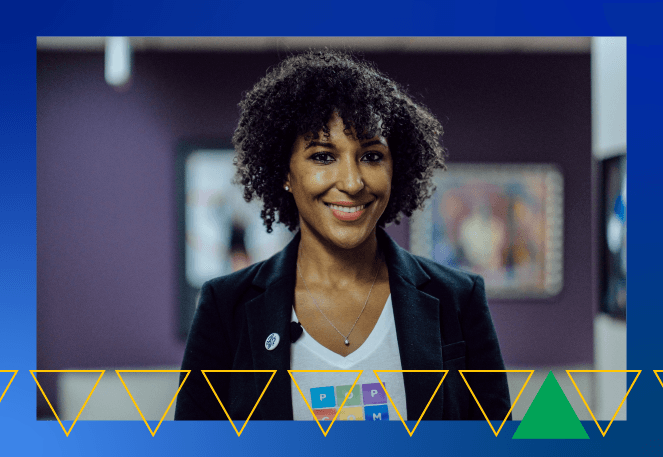
Dawn Dickson is the founder of PopCom, a smart vending machine technology startup that pitched on The Pitch. PopCom builds technology to turn standard vending machines into data-driven smart retail kiosks. Dickson pitched PopCom to investors Jillian Manus, Phil Nadel, Daniel Gulati, and Michael Hyatt on The Pitch. Dickson later returned to The Pitch after pursuing an initial coin offering (ICO) to fund PopCom.
Related
More After The Pitch
 After The Pitch
Nectir Part 2: From Flat Round to The Biggest AI Deal in Education
Kavitta Ghai · Nectir
S15
Also Featuring