Wonderade: Juice, Protein, or a Brand?
About this episode
 Spotify
 Apple Podcasts
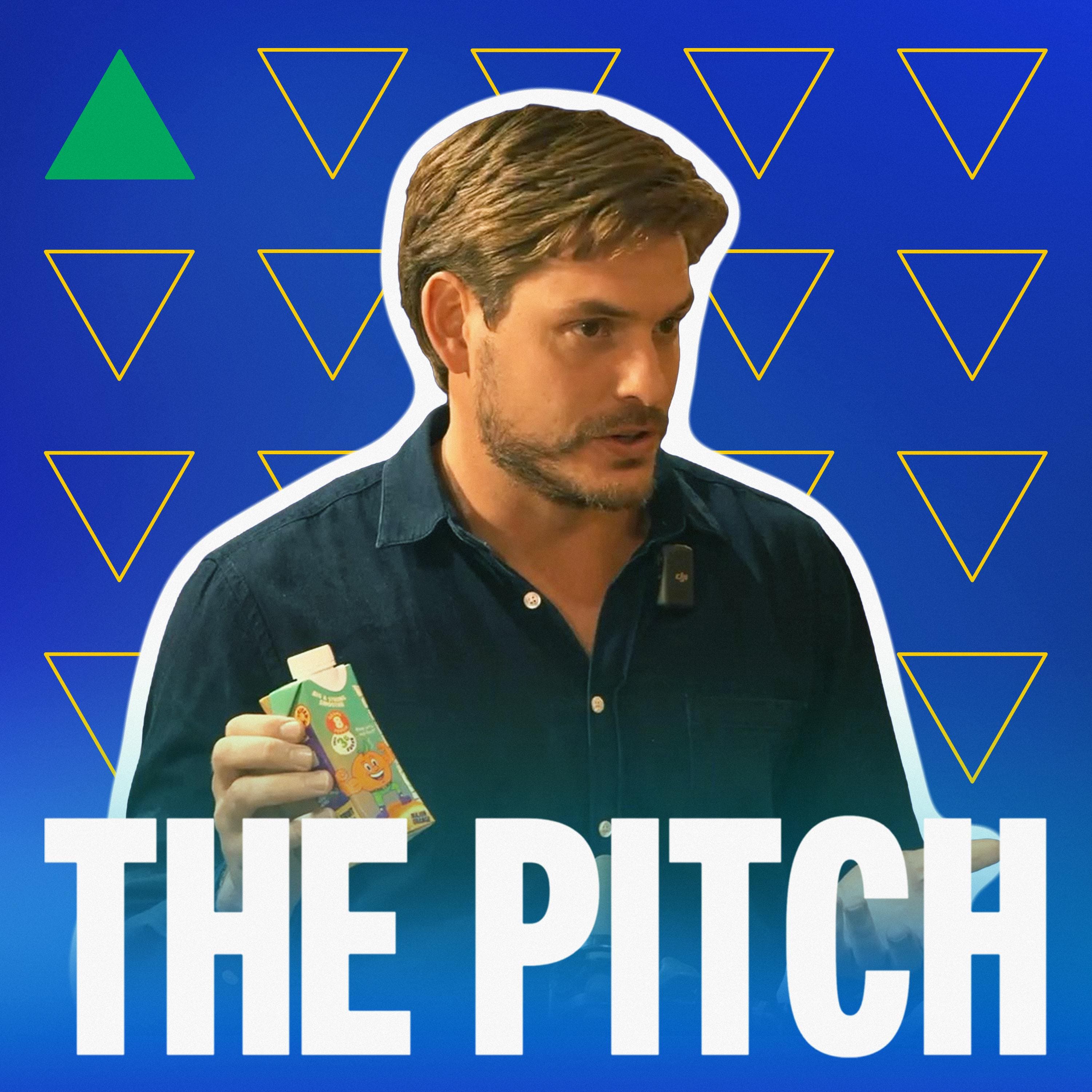
After founding two successful beverage companies, Soylent and Kin, Matt Cauble is ready for his toughest customer yet – kids. Will the VCs snap, crackle, invest in his protein packed juice?
This is The Pitch for Wonderade. Featuring investors Charles Hudson, Ellie Bahrmasel, Elizabeth Galbut, and Jeff Cantalupo.
Watch Matt’s pitch uncut on Patreon (@ThePitch)
Join us for our fall live shows and Season 17 taping: pitch.show/events
Subscribe to our email newsletter: insider.pitch.show
Learn more about The Pitch Fund: thepitch.fund
*Disclaimer: No offer to invest in Wonderade is being made to or solicited from the listening audience on today’s show. The information provided on this show is not intended to be investment advice and should not be relied upon as such. The investors on today’s episode are providing their opinions based on their own assessment of the business presented. Those opinions should not be considered professional investment advice.
The Panel




Josh: Welcome to The Pitch, where startup founders raise millions and listeners can invest. I’m Josh Muccio.
Lisa: And I’m Lisa Muccio. On the show today we have Matt with Wonderade. He’s raising one million dollars.
Josh: You know Gatorade?
Lisa: Yes, I do.
Josh: Capri Sun?
Lisa: Yes!
Josh: It’s 2026! WHY DON’T WE HAVE A HEALTHY VERSION OF THESE DRINKS.
Lisa: We do now thanks to Wonderade! It makes me think of a superhero.
Josh: Well, and that's excellent, 'cause that's actually their whole goal. Nostalgic, fun, superhero characters.
Lisa: Yes, like the good old days.
Josh: Like the good old days of-
Lisa: Tony the Tiger and the Trix Rabbit.
Josh: And that Kool-Aid guy. He was kind of superhero-esque ...
Lisa: I liked the Kool-Aid guy, but, like, looking back, he might be a little weird.
Josh: Well, he was. All he did was, like, knock down walls and be like, "Hey."
Lisa: But I loved Kool-Aid. I was drinking the Kool-Aid.
Josh: Drinking the Kool-Aid. Today's founder wants to make juice for children that’s as delicious and nostalgic as our childhood favorites.
Lisa: But with protein. And it’s actually good for you.
Josh: But can today’s third time founder turn Sunny D into Money D?? And get the VCs
to invest in juice?
Lisa: The Pitch for Wonderade is coming up after this.
Josh: But first… we are hosting two live events this season. One is SF, coming up at SF Tech Week. And another one in November in NYC.
Lisa: We’re also hosting our next taping of season 17 in San Francisco. Join us at any of these events. Go to pitch.show/events.
BREAK
Welcome back to the pitch for Wonderade. Let’s meet the investors.
Charles Hudson with Precursor Ventures
We have 500 companies, so, you pick it, we have it
And three new investors to the show!
Ellie Bahrmasel with Peranaut
Entrepreneurship is a dance between hubris and humility
Elizabeth Galbut with with SoGal Ventures
Not all exits are created the same
And Jeff Cantalupo with Listen Ventures
Do you want this to be a premium brand?
Ellie: Wonderade. [clap]
Josh: Oh, wow. You nailed it
Charles: She's a woman of many talents.
Matt: I'm gonna use your voice. Who did that?
Charles: She did it.
Matt: That was a perfect voice. I need to use that.
Ellie: Wonderade!
Matt: Yeah
Ellie: Hi, Matt. Great to meet you.
Matt: Good to meet you.
Elizabeth: Elizabeth
Matt: Nice to meet you Elizabeth
Charles: Charles.
Matt: Hi, Charles. Nice to meet you.
Matt: Hi
Jeff: Jeff.
Matt: Matt. Nice to meet you, Jeff.
Jeff: Nice to meet you.
Matt: Okay. Hi, everyone. My name is Matt Cauble, and I'm the founder of Wonderade, the juice that you wish you had when you were growing up. Let me take you back to my childhood. Baseball, I was drinking Gatorades. On the weekends, I was selling Country Crock lemonade out of a lemonade stand. At night, I was mixing up Kool-Aid before dinner, and at birthday parties, we were fighting over pouches and boxes, Capri Suns, Juicy Juice. Sometimes I wonder if my parents were reading these labels. Things are a bit different now. I have two kids of my own, and I don't give them that stuff. I looked, and in the last 20 years, there's been one innovation in juice. You may have heard of it. It's called Honest Kids.
Charles: Mm-hmm.
Matt: And their big innovation is just less sugar. At the end of the day, that's still sugar water, which honestly isn't good enough. So thanks to some pretty cool advancements in food tech, what's called hydrolyzed protein peptides or clear protein, we can now make something even better. This, it's Wonderade. It's a juice that tastes like OJ or fruit punch, but it has eight grams of protein, it has four grams of fiber, and only three grams of total sugar, all from juice. I didn't stop there. I went ahead and brought in as much potassium as a banana, as much calcium as milk, and then a bunch of other vitamins and minerals to boost immunity and brain health. My kids love it, and I'm excited to share it.
The juice market is a $25 billion a year market in the United States, mostly dominated by legacy brands. We've seen the story play out in soda over the past six years, and I see that story happening again now for juice. This isn't my first time starting a beverage company. This is my third. My first, Soylent, got to 35 million in ARR in 18 months. My second, Kin, did 5 million in its first year. Both times I saw the opportunity for taste and technology to serve a customer that had a health need. I see that same chance now thanks to my own kids. That's why I'm raising a million dollars to bring healthy, fun, and delicious nutrition to families everywhere. My only question now is, are you ready to try it?
Jeff: Yeah, let's try it.
Ellie: Yes.
Matt: Cool. All right. Let's do it. So these are my two staples that I found. They turn out to be the chocolate and vanilla of the juice world. Some people that love orange don't like fruit punch, and people that love fruit punch don't like orange. Isn't that so funny
Ellie: Yeah
Matt: How it's, like, tribal? "Oh, I'm a blue Gatorade or I'm an orange Gatorade."
Ellie: Those are the people you really have to watch out for.
Elizabeth: I was a blue, ice blue Gatorade.
Elizabeth: Oh, in your veins, Elizabeth.
Elizabeth: Ice in my veins.
Elizabeth: It's hard being cold sometimes.
Matt: Okay, it’s allergy free so there’s no dairy or anything like that
Ellie: Okay. Phew
[drinking sounds]
Matt: All right. Who has favorites or notes?
Charles: I'm Team Fruit Punch.
Matt: Fruit Punch.
Charles: I'm Team Fruit Punch
Elizabeth: Being honest, they both taste very sweet to me.
Matt: Very sweet?
Jeff: Yeah. They're, they're sweet. They're a little thicker than I had expected.
Matt: Mm-hmm.
Ellie: Yeah. There's a-
Charles: Viscosity
Ellie: a viscosity to it.
Matt: Yeah.
Ellie: It's definitely sweeter than I expected.
Matt: Yeah.
Ellie: If I had to pick, I'd say I'm Team Fruit Punch.
Matt: Nice.
Elizabeth: I'm usually Fruit Punch, but here, because the orange is a bit less sweet, I like that better.
Matt: Yeah.
Elizabeth: It tastes cleaner.
Matt: Yeah. It is less sweet.
Jeff: I think I'd be orange in this particular situation.
Matt: Yeah. I'm an orange person, so. I always go with orange.
Matt: And then I can give you guys packages.
Matt: One thing that I've found in the health food space for families is that there's not any strong brands. All of my kids refer to whatever food we give them as like meat sticks or pouches. They don't identify it as the brand. Whereas when I was a kid, it would be Lucky Charms, it would be Tang.
Elizabeth: Dunkaroos
Matt: Yeah, exactly. Right? And a lot of that was driven by this psychology around putting characters with familiar faces on packaging that motivated and drove kids to like, want to try it. Of course, those were for a little bit, now looking back, nefarious reasons 'cause selling sugar water maybe isn't the best idea. But I'm using some of those same ideas to bring a strong brand that kids actually love and want.
Charles: When do you envision your target customer ... Is this like a sports beverage replacement? Is this a like, "Hey, I want something other than water," or, "My parents approve it" replacement?
Matt: Yeah, totally. So as a parent, what I find I'm giving it to my kids is when they wanna eat snacks. They love snacks. There's the rushing out the door moment, like whether it's for, you know, school or for practice. There's post-practice, I think, hydration recovery since there's hydration in there. I think it's any moment when it's, instead of water, can we drink something that's fun, and then also knowing that it's getting nutrients.
Jeff: Can we talk about the formulation and the ingredients for a second?
Matt: Yeah.
Jeff: it's plant-based protein that you're using?
Matt: Yeah, I'm using, clear pea protein.
Jeff: Why'd you make that decision versus clear whey isolate?
Matt: Yeah, so I did a lot of testing across the different clear protein options, and the clear whey isolate that I found leaves this extremely astringent, dry aftertaste, and it, like, burns the throat even, and I, like, couldn't get past it. Whereas the pea protein had just a better flavor profile
Ellie: You've done two tours of duty in beverage already.
Matt: Yeah.
Ellie: You're entering your third mission. What scars and bruises do you have from beverage that you might be holding as you come into this?
Matt: Oh, do we have enough time for that?
Ellie: Let's get the therapy couch out.
Matt: Totally. It, you know, very humbling experience. I've probably made more mistakes than anyone possibly could.
Ellie: We all do.
Matt: People say beverage is really hard, which is a, you know, platitude or gross statement. The reality is, is that if you make a great product that tastes good and you have a brand that people identify with, a lot of your work is taken care of. And I think my first two brands, I learned so much from how to do that. Now, when you get into the actual operation of it and you're actually trying to sell through, the reality is, is that retailers are the landowners. And, while I believe in launching on D2C, getting sales and getting proof points through that, end of the day, you have to own the shelf. Owning that shelf is expensive, and there's all these gotcha costs that you don't even see coming. So the number one battle scar that I've learned is there's a lot more costs that you should be more conservative about building in. So when I think about gross margin, I'm not just looking at what my wholesale sell-through is to KHE or UNIFI. I'm looking at what is my trade spend gonna have to be? What is my loss rate gonna have to be? What is my sampling rate gonna have to be? I need to build all that in because the end of the day, you could be like, "Oh, I'm at a 50% gross margin," but you're only seeing 5%.
Ellie: Yeah.
Matt: So that's number one. Number two, customer always knows, they're your best advocates. So rather than spending too much money on trying to just sell them, I think it's trying to develop a relationship with them. So when I think about this and what's really exciting is, how do I create more value for families beyond just selling a beverage? How can I make their life easier or more fun? Because that is how you lower your acquisition costs. That's how you actually generate real brand value that allows you to save money ultimately, and to keep a customer.
Ellie: Can you tell us what the outcomes were from the previous two companies?
Matt: Yeah. So Soylent, we got that up to 70 million in revenue, but then we hired CEOs and we all stepped away as founders. Huge mistake. If you wanna talk about real lessons-
Charles: Yeah.
Ellie: Yeah ...
Matt: stick with the brand. We all stepped away, different CEOs came in. They didn't understand the brand. The revenue flat-lined, didn't grow. Eventually started growing again, but by the time that did, we weren't able to find a quality buyer. With Kin, I stepped away within two years of that, just a difference in how we should be positioning the product. We came out as a non-alcoholic alternative. But what our customers were telling us is that they were using it for almost like an energy drink. I thought we should've repositioned towards that and targeted towards that, but we just disagreed, and we didn't do that.
Ellie: Thanks for sharing.
Matt: Yeah, for sure.
Jeff: I love that you've been in beverage. Like you said, beverage is hard. but it's really a unit economic game
Matt: Yeah
Jeff: And it's a channel diversification game.
Matt: Totally.
Jeff: So walk me through the unit economics out of the gate, where you're at when you launch, and then how do you get gross margin to where you want it to be, recognizing trade spend and the way that you'll think about go-to-market.
Matt: Yeah. Go-to-market for me is always start online. And in 2026, the thing that works super well is TikTok. It's amazing. You literally can just find your target ICP, get them product, get them on board, and build a community starting from there. That's my go-to-market strategy for this. And then getting into retail pretty quickly. I see this as actually a mass product, so I wanna certainly start in the regional retailers. but I actually think that this is a much better product for the Targets and Costcos and club channels of the world.
Elizabeth: What's your price point going to be?
Matt: So I'll be sitting at $2.50 to $3.50, depending on the channel. And I'll get into your gross margin in a second through this. Online, I'm gonna be pushing subscription. That gross margin landed after shipping is about 45%. I can bump that up to 55% over time through just efficiency on scale. On the retail side, the net contribution margin, if you take out the wholesale fee, the trade spend, the promo, We're looking at like a 23% contribution after all that.
Charles: Hmm.
Matt: That scales up to about a 35%.
Ellie: I'm curious to know more about this consumer, talk to us about your product development cycle. I love products for kids-
Matt: Yeah
Ellie: But you've got two buyers effectively, right?
Matt: Totally.
Ellie: Parent or adult in the house decides to buy, but if the kid doesn't consume
Matt: What's the point?
Ellie: They're not coming back.
Matt: Yeah, 100%.
Ellie: So tell us a little bit about how parent and child wove into your product discovery-
Matt: Yeah
Ellie: and how you might have adjusted along the way based on what you were learning.
Matt: Yeah. So I leaned on mom and dad groups in Austin where I live, showing the parents the packaging as well as the kids. The kids’ packaging resolved very quickly. I would show the kids the packaging, they'd be like, "That looks amazing. Can I have that?" The parents was much more of building that trust. So, working with them and then working with, you know, 10 to 20 kids at a time to like, try product. parents would be like, "This tastes great." And then the kid would try it and be like, "No, it doesn't." And then so like the sweetener level was going back and forth, and moving up and moving down. So it's been about a five-month process of doing that, I always say that when you're talking about flavor, that 30% is never gonna like it. It's just the way it is. it’s like, it's a weird thing that happens. So you're really aiming for that 70%, and you wanna probably capture like 70% of that. So out of like 10 people, I'm trying to get about five to like it, and then I believe that I can acquire more of that set through different flavor expansions.
Elizabeth: When are you launching?
Matt: In June.
Jeff: A lot of times when I look at brands that are really positioned towards this, call it lunchbox occasion or
Matt: Yeah
Jeff: Snack occasion, I always think about the brand elasticity as it relates to what somebody graduates to from this brand
Matt: Yeah
Jeff: And how long you can actually take a consumer.
Matt: Yeah.
Jeff: 'Cause in this world you might have them from what, 3 to 10, 10's probably pushing it.
Matt: Mm-hmm.
Jeff: I don't know if my 10-year-old would drink this. So how do you think about that? 'Cause you're gonna have to constantly replenish.
Matt: The way I think about this brand, and the reason why I'm doing animated characters, is because I think animated characters can adapt and change to new customer sets. I think Disney has proven this really well. I think Marvel proves this further. I'm starting in this age group because I see this as the biggest need right now, but I intend to grow the brand over time by expanding that character set and expanding that story that's being told. What Wonderade stands for is healthy, fun nutrition for families. So anywhere that I can make a delicious and healthy option available, I'm gonna do it. I've always wanted to build, like, a massive food company like a Nestle that's actually good for people, Nestle started with milk, so I'm gonna start with juice. Let's see what happens.
Ellie: I think at this stage of the game, every founder enters with known unknowns. And so I'm curious, what are the biggest known unknowns that you have to figure out with this infusion of capital to get us to the next milestone?
Matt: I mean, number one is gonna be that re-uptake rate on a subscription. Acquisition costs from the beginning of, like, how much does it take to get someone on subscription? And number three, how organic is the sharing happening of this brand? are kids taking it to school, telling their friends about it the way I've seen my kids tell other people about it, does that scale? And those are all gonna have cost levers to it that are gonna have massive influence on what the actual next round needs to look like.
Ellie: Yeah.
Matt: Because if acquisition cost is zero 'cause it's just organic, then all the money's gonna be spent on inventory so that we can go into Costco and do a massive year there. But if there's probably going to be an acquisition cost, I need to know what that is. It's gonna be learning from that and adapting to the brand and the, even the product. I mean, I'm all about changing product taste profile in order to meet what customers are saying at scale.
Elizabeth: When you talked about your previous companies, some interesting things came out. So your first company, you had co-founders, then you decided to hire an outside CEO that, I don't know if it was your board or if it was you guys or a combination of both.
Matt: Combination. Yeah.
Elizabeth: That didn't work out, and that often happens with that
Matt: Yeah
Elizabeth: -sort of thing. Your second one, you had co-founder issues, and I don't know what that breakup did or didn't look like, but these are really complex things that a lot of
Ellie: Yeah
Elizabeth: -startups go through.
Matt: Yeah, definitely.
Elizabeth: And it has huge impacts on us as investors. Does our investment, even if it has a great trajectory like Soylent did, does it still become a zero
Matt: Right
Elizabeth: at the end of the day? what are your, like, non-negotiables of how you will build this company?
Ellie: Yeah.
Elizabeth: And, like, what are you doing differently?
Matt: I have learned about myself... Well, first of all, I'm a solo founder this time.
Ellie: Mm-hmm.
Matt: I learned that I'm not a great co-founder.
I mean, Tony the Tiger doesn’t have a cofounder and he’s grrrrreat. We’ll be right back.
BREAK
Matt: I have learned about myself... Well, first of all, I'm a solo founder this time.
Ellie: Mm-hmm.
Matt: I learned that I'm not a great co-founder. The reality is, is there's really gonna be one founder. I think of startups much more as dictatorships than democracies. There's gotta be someone that's the CEO, that's holding the bag, that's gonna make that final call. And in my co-founder relationships, I have tried to acquiesce that decision-making power to someone else and it has always ended up in conflicts. going back to Soylent, it was do we focus on our e-commerce website that's doing 35 million a year, or do we cut that and go to Amazon? Well, for me, it was like, obviously we keep our website working 'cause it's working. But the CEO was like, "No, we should just focus 100% on Amazon." I've also been massively humbled. I have a completely different mindset than I did when I was 24. So I'm much more open and honest with who I am and what I can do. and I'm much more interested in building a great company with amazing people that can teach me things right now.
Ellie: So I'm curious for you, when you think about who you want to learn from and your biggest gaps, who are the people you need around the table with you, and who's around the table with you today?
Matt: So today, it's mostly just me. I have a pretty good sense of how to create a beverage and how to create the brand around a beverage just to get it out the door. When I think about what I want, I really want someone that's amazing at storytelling and content. And this is a big belief of mine in why this company will work. Number two, I'm looking for great salespeople .And then number three, as I scale, I'm gonna need a killer ops person that understands not only formulation, not only, you know, cogs and business stuff, but also understands distribution. All- you know, almost like a unicorn, I think.
Jeff: I'm, I'm curious, like, there's so much in better for you food.
Matt: Yeah.
Jeff: And I, I think the lane you're going after is an interesting one. My question for you is like, at the end of the day, how do you make decisions? Like, what brand are you? Are you a protein brand? Are you a juice brand? And the hierarchy of communication, what do you think is gonna work? 'Cause you got six seconds in the store to convince me.
Matt: Totally. Yeah. So, it's a juice brand with protein, and that's why when you look at the front, it has that protein right there. But everything else about it with the fruit, with the colors, everything screams juice.
Elizabeth: I have feedback on that.
Matt: Yeah, yeah.
Elizabeth: When I look at this box, the first ingredient's water, pea protein, organic white grape juice concentrate.
Matt: Mhmm.
Elizabeth: When I think of juice, I obviously think of more natural, real juice. And I see this, at least in its current form, yes, it's made with real fruit concentrate, but I don't see it as like, this is actually juice.
Matt: Mm-hmm.
Elizabeth: What do you think about that feedback?
Matt: If that's what you see, I don't know how I can convince you otherwise.
Charles: Do you, I guess to that point, Is the expectation that parents will substitute away from juice? Is that what they're substituting it from?
Matt: No, I don't think parents even give kids juice right now.
Charles: Yeah. I know.
Matt: I don't think that's an option.
Charles: Yeah.
Matt: I think it's more like, is there a way to add more nutrition into my kids' life that they want?
Ellie: But here's where I wanna drill into that with you, right?
Matt: Yeah.
Ellie: Because if parents aren't introducing juice to their kids today, and they're looking at the whole landscape of better for you, how do I introduce more protein, more fiber, more nutrients into my kids' diet, are they gonna be looking in the juice aisle or open to juice, how much convincing do you think you have to do to get them there?
Matt: Yeah, that's a great question. fortunately I'm not the first to try this. I think soda had that question seven years ago when Olipop launched, and it was like, but soda's bad for you, and no one's looking at soda as like a healthy option. But they proved that in fact, they will, and they'll pay a pretty large premium for it. So, I think that that is the work of the brand to create that awareness around what the product does for them to make their lives easier and better, so that they are asking for it and looking for it.
Ellie: How big do you think the distrust gap is for the parent right now on juice?
Matt: Oh my gosh, it's crazy. It's like worse than candy probably.
Ellie: Oof.
Matt: Yeah. It's insane. There are people that I say the word juice to and they're like, "Can you call it something else?"
Ellie: So if you're thinking about go-to-market spend then. If a lot of your go-to-market spend is gonna be focused on, I have to earn the trust in a way that isn't about, like, a little lockstep change, but I'm asking you to make a big leap that's gonna require a lot of education, What I wanna know is where do you need to reach with this million to unlock the next round of capital? And what's the time horizon that we're talking about? Because that influences, when I look at the million, and knowing the hurdle that you have ahead of you in educating the consumer, like, is this the right dollar amount?
Matt: So the major cost of the launch is gonna be inventory, that's about 400 to 500,000 of that million. and then I'm gonna spend an additional 200 in seeding the content out to creators, building up, like, a full creative library of videos that I need, and then running and testing those ads across different channels. and then I think I'll be able to get, like, 500 retail doors that I'll be testing velocities out of too.
Jeff: A question as it relates to, like, the brand and the content strategy. I'm a little bit torn. Right? Like, I really liked when you said, "I'm gonna go back to the world-building of kids brands of the past,"
Matt: Yeah.
Jeff: I used to work on Pop-Tarts and Frosted Flakes
Matt: No way
Jeff: so like, yeah. I, I
Matt: Oh my gosh
Jeff: I know a lot about kid request. And you said you wanna build this world, you have these characters and animation.
Matt: Yeah.
Jeff: And your go-to-market is very focused on mom approval.
Matt: Yes.
Jeff: And so I was excited when I was like, wow, maybe you're gonna go to market like the way the old brands did.
Matt: Yeah.
Jeff: And you'd maybe really start to world-build and actually have kids be the audience.
Matt: Yeah.
Jeff: But it sounds like that's not where you're going. So, like
Matt: It's starting
Jeff: as you think about that tension-
Matt: Yeah
Jeff: how do you make decisions on what the brand becomes? 'Cause if you go to market and it works with mom, the world-building for kids, right, where do you do that?
Matt: I think of the go-to-market there as just that top-of-funnel awareness, but the long-term brand-building is gonna be done through that content. it's expensive to make animated content. Fortunately, AI has made this a lot cheaper, there's more that you can do than just that content, though, too. You can create apps, right? I wanna make the Wonderade fitness app that's getting families having fun together doing fitness things with these characters involved in that. So I have to focus. This is a drink brand at the end of the day that's coming out of a startup, so I gotta get on shelf. I gotta get that velocity rate proven. And then as this brand is growing, I'm gonna shave off portions of my marketing budget to make that content that I think will be long-tail improvements in, building that brand awareness.
Jeff: Yeah.
Charles: You mentioned adding a storytelling and content person.
Matt: Yeah.
Charles: Can you tell me a little more about what you're looking for from that person?
Matt: Oh man, I would love someone that worked at Disney.
Charles: Yeah.
Matt: That knows how to tell great stories. I want that person who's going to embrace technology, who's gonna embrace all the tools that we have available to us to make this content.
Charles: Yeah
Elizabeth: You just don't really have a budget for any of this in your $1 million.
Matt: No, that's not happening out of the one million, for sure.
Ellie: And that's what I was trying to drive at, right?
Matt: Yeah.
Ellie: Like, what are we really able to accomplish with the million, knowing what's on the road in front of you? And so tell us how you arrived at a million as your raise number.
Matt: Yeah.
Ellie: And Is that what you really think you need?
Matt: Yeah.
Elizabeth: And is there a valuation yet?
Matt: Yeah.
Ellie: Yeah.
Matt: So I've raised 550 to date on a safe at an 8 million cap, And so to answer your question, yes, because what I believe is the simple gate to get to, to raise more money is velocity rate and repeat rate. That's, like, literally it. And you don't need a ton of data points for that. like, 500 stores and 5,000 customers is, like, more than enough data points to understand what that actually looks like. So reaching that is going to be my main asset that I'll take into a seed round
Elizabeth: I think I'm out. I don't feel yet that there's total clarity here. There's a lot of pieces, and I'm getting, like, conflicting signals from the different pieces of the business. Is it juice? Is it a healthy protein shake? Is it animation? Is it D2C to moms? I don't feel clarity yet.
Matt: Cool.
Ellie: I'm going to join in here and say it's a not now for me. I've got a lot of questions on the go-to-market that I wanna dig into with you. And I will name, I'm also a little price sensitive. I feel like the valuation is a little high. I trust you've got a great lead who knows and trusts that this is the right number. We just don't have that relationship, so it's hard for me to get to a yes just based on the information I have today.
Matt: Yeah. Cool.
Charles: I've just been thinking about juice, and it's funny. I've been sitting here thinking, like, as you said, like, nobody gives their kids juice. If you, like, pulled juice out at a kids party, the parents would think you pulled out a full sugar Coke. Um, and I'm out, but I think there's, like, a lot of surface area around positioning. I'm s- I... When, the way that Jeff put it is really, like, what I was wrestling with, which is I think there's like, an adversarial juice positioning, which is people come to the table with so many feelings about juice. And when you said Olipop, I was like, yeah, they did sort of manage to convince people that a category that they had a really strong set of beliefs about, that those beliefs were maybe not as informed. But it doesn't sound to me like that's really the marketing strategy here. And so I'd be very curious to see which of these two things wins out. Is it the, like, world-building bottoms-up child lead brand, or does it end up being the connection with the parent? And I think it's gonna, whatever wins out is gonna pull you in a really different direction, and I don't have a sense of which one's gonna win out.
Elizabeth: And I think the problem is you're spending half of the money on inventory with this packaging that you're not going to be able to get rid of-
Charles: Yeah.
Elizabeth: until you sell it all, and you're only raising a very certain amount of money, so the ability to even test a lot of these thesisis just isn't there.
Ellie: Yes. And you know what I call this? I call this often the Green Eggs and Ham effect. The Cat in the Hat would've spent a ton of his burn trying to get Sam-I-Am-
Charles: Yeah.
Matt: That’s a good way to look at it
Ellie: -to convince him. Even if you know you're ultimately right, that Sam-I-Am's like, "Actually, bro, you were right. I do love green eggs and ham."
Charles: That's right.
Ellie: But the Cat in the Hat, I don't know if we would've made it to the end of the book-
Charles: Yeah.
Ellie: cause the burn rate would've been so high.
Matt: Yeah.
Elizabeth: Yeah, and I think I might have had a different response if you came into here and you said, look, I had 10 different creatives. I tested them all. This one I ended up picking has a 10X difference factor of acquisition cost. But we don't have any of that information and data, and you're going to put the inventory first and spend $500,000 of your 1 million-
Matt: Mm-hmm ...
Elizabeth: but you're not going to be able to change the box.
Matt: Yeah. I'll just clarify something. I'm not changing any minds. The 500,000's a budget, so I'm not, like, blowing 500 grand tomorrow on inventory. I'm gonna spend 50 grand on inventory, and I'm gonna go out to market and I'm gonna test, and then I can make adjustments on that.
Jeff: Listen, I, for me, I think that you're gonna learn a lot in the next six months, and I think from those learnings, I think you'll probably come back with a revised, really crisp approach. For me, I think I'm out because I think there's just some tension, and that will be solved through the learning-
Matt: Yeah ...
Jeff: of learning from
Matt: Totally
Jeff: some of your early customers. is it healthy juice? Or is it make juice fun again for kids?
Charles: Yeah.
Jeff: And I think
Ellie: Yeah
Jeff: as you go to market, you'll be testing that stuff, and you'll learn. I mean, you're
Matt: For sure
Jeff: You're an experienced founder, so I, I love that about you doing this again, and I love that you're back in beverage. Like-
Matt: Yeah, who would’ve thought.
Jeff: Beverage is so as a parent, I hope it's wildly successful.
Matt: Yeah. Cool. Thank you
Jeff: Um, but- as of now, I'd, I'd like to watch the ride.
Matt: Awesome. Thanks, guys.
Charles: Thank you so much.
Matt: Great talking to you.
Charles: Thank you
Ellie: Thank you Matt
Josh: We have a couple listener questions, actually. One from Butch who asks, Taste is so subjective, but taste, I assume, is the number one factor. How can you separate your own. Um-
Elizabeth: Yeah. I thought that was very interesting how he said, you know, 30% are never gonna like it. I target five to seven and through flavor expansion. I'm curious on this panel how... what percentage do you think we all were?
Jeff: I, I'm not the customer. For me, I always try to remove my subjectivity out of this type of stuff, and, like, we don't invest in a company unless we talk to consumers that have tried the product.
Josh: Yeah
Elizabeth: And I think that's interesting, right? Like, I always try and taste my baby's baby food, and I actually never like how it tastes. But my baby seems to really, really like it.
Charles: When I taste things, I'm always trying to figure out based on what the person told me they were trying to achieve, do I see it in the product? And sometimes I'm just like, "Oh, you were trying to make a granola bar that had protein and all this fiber in it," and it- it's a little too fibery for me. But, like, I, I see what you were trying to achieve. I feel it. And here I was like, I kinda get what you were trying to do, whether I would drink it. I'm not the target customer, but I felt like I drank this and said, "Oh, I see what you're trying to achieve. You're trying to make something that's like, juice-like in color, in weight, but with some added benefits." It doesn't taste like, like Hawaiian Punch
Josh: No
Charles: But that wasn't the target. So for me it's always like, okay, how close can my brain get to, like, the ideal of what the person described to me, and do I see that reflected here? But maybe I won't like it.
Elizabeth: Yeah. And I think, like, my mind kept going to, like, there's the macros, right, of, like, what is the nutritional content? And then there's the actual ingredients.
Charles: Yes.
Elizabeth: And it just felt like a mismatch to me. And so then it goes to Jeff's point of, like, what is the branding and marketing around that?
Josh: So he set out to create a protein juice, but you don't feel like protein juice is the same thing as the Capri Suns and the other, like, nostalgic things he was trying to replicate. Like, you feel like those are two different...
Ellie: I think it's what's the leading value proposition, right? You can be both, but what's the hook? Is it the protein or is it the nostalgia and the world-building? Because those are two different hooks. And if we said world-building is the hook, but the retention is “and it's got protein,” I don't think that there was a clear answer to which is which there.
Charles: It's like, when I give my kid Honest Kids, I'm like, "It's juice. It's juice that's, like, less bad."
Josh: Yeah, yeah, yeah.
Ellie: Yeah.
Charles: It's not good, but, like, significantly less bad 'cause it has less added sugar. So I feel, I'm making a compromise, but I'm making a compromise I can live with.
Josh: Uh-huh.
Charles: I think that's a product that, to me, like, has a very clear lane that they're in. They're not pretending to be anything other than juice, but juice that is, like, has fewer of the things that give parents the ick.
Josh: and here you feel like it's not juice?
Charles: Here I feel like, well, it's kinda juice, but also kind of has these other benefits, I just wanted a stronger lane.
Elizabeth: So it says, "Big and strong smoothie. Made with real fruit. Wonderade," which I infer it's kind of like lemonade. "As much potassium as a banana. As much calcium of a glass of milk. As much protein as an egg. Real fruit, real fuel." The word juice isn't even... It's juiced up. But there's no branding on these front two labels that say it's juice. And it's just very confusing.
Jeff: To me, like in CPG, like the opportunity to be something net new is a huge opportunity. But trying to be something that exists with added stuff I think is a harder place to live. There's three types of innovation in consumer, right? There's product innovation, there's business model innovation, there's brand narrative innovation. And brand narrative innovation is table stakes. Liquid Death's the best example. Like, there's no product innovation, they put water in a can. But their brand narrative innovation crushed it. It's gotta be very clear what are you trying to do? Is this something net new? I've never seen this before. Cause parents have given juice to their kids for ages and they're not doing it anymore. So I think there's the opportunity to be something net new. But I think it's, there's a lot to communicate in the current proposition. I think he'll learn that through testing.
Josh: Yeah. So actually watching him, 'cause we've been talking to him for a long time, and we've tasted several versions of the formula, and it’s changed quite a bit. In the beginning I thought it was a very clear, oh, it's like Gatorade but with protein. And now it seems more like a smoothie fruit punch. So I think the product has changed to match children's palates. But the rebrand comes from the nostalgia. And the two maybe haven't met in the middle yet.
Ellie: Yeah. I think that's right. In our diligence process, we do our own discovery work. I co-lead my five-year-old niece Rihanna's Daisy troop. Here's how I would get to conviction, is I would bring it to the Daisy troop, see what the girls said, and then get the parent reaction too. And if there were at least 50% of the parents who were like, "I'm in," and they could tell me what the hook was-
Josh: Mm-hmm
Elizabeth: and I could watch the kids' faces as they tried it, that would get me to conviction.
Josh: Got it. Okay.
Ellie: Assuming also the numbers worked.
Josh: I'm at yes, yes, yes now. I understand. Great. Hopefully lunch is here. But that’s a wrap
Matt left the Pitch Room with no commitments. The VCs want data that he doesn’t have… yet. But once he launches it’ll be clear as juice. Will that data say that Wonderade is magically delicious? OR will the kids not taste the rainbow. We catch up with our beverage expert after this.
BREAK
Welcome back. A few weeks after his pitch, we caught up with Matt. And his first question came as no surprise
Matt: What are you drinking?
Josh: Of course you'd ask what I'm drinking.
Josh: Petrichor? Petrichor?
Matt: Petrichor, what a name. It's the smell that, is the smell that comes out of the ground when it rains.
Josh: Oh, I did not know what it was. I thought they-
Matt: There you go
Josh: Just made it up. Yeah, this is their lightning drink. Focus, energy, flow. Lemon blueberry seltzer.
Matt: Amazing.
Josh: Okay. So most important question to follow up on, Matt, how is it going?
Matt: Oh, man. That's such a nice question.
Josh: That's me, the king of nice questions.
Matt: It's going well. You can see I've shaved since the show because my kids demand a smooth face. They will give me spot checks. It's almost like I'm in the Army or something. They're like, “ is it smooth?" But yeah, it's going really great. I'm just so grateful to be working on something that I love, something that I know my kids love, and…
Matt: That is like the draw of being an entrepreneur, is like, for all the ups and downs and bads, it's like every day waking up and knowing I'm building something that I truly care about on my own.
Josh:. So like I'm curious, as a third time founder, how was your experience pitching on the show? Have you ever done anything like this before?
Matt: I'd never done anything like this. When everyone's on camera, everyone sort of becomes a character. The investor character is this very like, "Mm, yes. I see. Yes."
Josh: And VCs don't normally do this on calls?
Matt: Most of the time when you have just like a phone call or you're just chatting with them, they're- especially when you're talking about food and beverage, I think, because food and beverage is such like a fun thing for everyone. I, I remember talking to this one SaaS investor about Kin, and he was like, "Oh, I make all my money on SaaS, but the ones I talk about are my food and beverage investments." 'Cause when I go to Sundance, no one cares about the SaaS companies.
Josh: No.
Matt: They care about the popcorn company.
Josh: Yeah.
Matt: And so when they're talking to the food and beverage people, they're just like actually happy 'cause they're like turning off their business and turning up their home stocking fridge. Like they're, it's like they're going grocery shopping.
Josh: Well, it's very relatable. We all like to eat and drink
Matt: Totally.
Josh: The main feedback, if I were to give my analysis, the main feedback in the room seemed to be there's a lot going on here with Wonderade. It's a juice, it's a smoothie, it's protein, it's a kids brand. But they didn't really understand like which direction, which lane was the important one. Which one is gonna actually resonate with customers? What did you think about that feedback?
Matt: Yeah. I think pre-launch on a drink It's really hard to tell if it's gonna work. So I get that. And to be 100% honest, I don't know either. I can't control how the market responds. I have a strong belief they will respond, which is step one.
Josh: Mm-hmm.
Matt: No response, that means you did nothing. But as long as you get a response, there's a way to find the customer, there's a way to change the brand, there's a way to improve the product. There's all these ways once you get a response. What I enjoyed is they had a response.
Josh: They cared.
Matt: They cared. They could've just been like, "Oh, cool. Hope that works out for you."
Josh: Yeah. I guess they didn't have any critiques on the flavor, if I'm remembering correctly. They were just really focused on the brand. Like, they didn't understand what the brand was trying to communicate to the potential customer.
Matt: Yeah. And I think that's a big risk that I'm taking as a brand because typically the better for you, especially for children, but just better for you in general, the branding has followed for the past 15 years this very specific beige coloring pattern.
Josh: Very granola-
Matt: Yeah.
Josh: "I'm the healthy choice and you can tell cause I'm understated."
Matt: Yeah. Understated is a perfect way to say it. So coming to the table with investors and showing them something that does not look like that, but then telling them it's healthy, I think is a lot to ask in, like, a quick session. We all know that the classic marketing of the '80s, '70s, and '90s worked extremely well. I think what everyone says didn't work is the ingredients themselves.
Josh: You're talking about the SunnyDs, the Capri Suns.
Matt: Yeah. And, and any of the cereals, you know the Lucky Charms. Those companies just completely knocked it out of the ballpark with branding, messaging, marketing, getting someone to pick it up.
Josh: Right.
Matt: And in food and beverage, that is your biggest challenge. And the reason why the healthy granola worked, so well when it did was because the only thing that existed was those very loud brands that had become synonymous with poison. But times have shifted. We have a more sophisticated consumer now that we're back to the world of we need to get attention. We need to actually get people to pick this up and look at it.
Josh: Has anyone actually successfully marketed the healthy component to kids?
Matt: What's crazy is I've seen that actually working out. Like, my kids just straight up look at the characters, and they start flexing their muscles and doing punches and talking about how they're getting big and strong. Like, that's what they do. And I'm like, "That's crazy." You're just straight up brainwashed. I don't know what other way to say it, but like you, you like get the brand. Like the brand has worked on you to like associate physical activity. And then I've seen other parents where they tell their three, four-year-old, six-year-old, seven-year-old, "Oh, it has protein in it." And the kid is like, "Oh, it's good for me." Like there's been this crazy shift in parenting and so kids are like really aware now, I think more than ever about that.
Josh: Gen Alpha's gonna be so jacked.
Matt: I hope. Jacked and tall.
Josh: I can't wait for you to like get this packaging in the hands of influencers, get their kids trying it, and like get more feedback on what's resonating.
Matt: I know. I had a big party like I think a week after The Pitch with like these 10 kids that have been kind of drinking this throughout, and it was crazy. They were just like pounding it. It was actually really great 'cause we did this at like a big outdoor restaurant. And, the restaurant serves pink lemonade and watermelon juice and stuff, and so we had that, and then we also had the Wonderade samples I had. And they were just like picking Wonderade fruit punch and orange over that stuff, which was like huge validation for me 'cause like I thought the strawberry lemonade that the restaurant was serving was amazing.
Josh: Yeah.
Matt: And every parent that I've given it to, and they're just like shocked when they see their child just like chugging this fruit punch drink that has this fiber and protein and these vitamins- They're like, "What?"
Josh: Mm.
Matt: So I think that is not gonna come across in a 45-minute pitch with adults. I think that's something that only comes across through-
Josh: Yeah
Matt: you know, the actual in world, real world stuff.
Josh: Charles Hudson doesn't chug anything. He sips.
Matt: Mm, yes. Fruit punch. Ah. Sweet. Too sweet.
Josh: Yeah. Oh, gosh. So in the pitch room, there was some interesting conversation about your prior companies, Soylent and Kin Euphorics. And you previously had co-founders at both of your previous companies.
Matt: Yeah. That's right.
Josh: And you said, quote, "I learned that I'm not a great co-founder."
Matt: Yeah.
Josh: Say more.
Matt: There's two things about me. I'm very-- I have strong opinions. I'll say they're strong opinions loosely held, but sometimes they're not. If I'm being honest. Which I think would be fine on its own if that was all. The thing that hurts my relationships is I'm also very accommodating. So I'll have a strong opinion, and I'll maybe loosely hold it.
Josh: Mm-hmm.
Matt: But then I'll ultimately acquiesce to a partner. I'll say, "Well, you're on equal footing with me, so why is mine greater than yours?"
Josh: Yeah.
Matt: And I think what ends up happening is I don't end up developing a real honest relationship with my co-founders, that adds up into this like, well, who takes accountability? Who's taking ownership? And I think ownership is one of the most important things in all organizations, but especially in a startup. Where I'm at right now is I just feel more comfortable having that confidence to own something if it's just me. 'Cause I love working with other people.
Josh: Mm-hmm.
Matt: I really do. It's just there's a nuance when you're talking about the structure of a corporate partnership that I've just found myself struggling with so far.
Josh: Yeah. How's the fundraising been going?
Matt: Fundraising's good. I mean, I have enough right now to get to that next stage where everyone is sort of waiting for, like including the people at The Pitch, that let's get to market, let's see what people are saying, let's see how customers respond. Once I have that in market, that'll be the next unlock stage for raising more capital.
Josh: How much did you raise in this round? Remind me.
Matt: I raised 600.
Josh: Okay. I'm curious, as a third time founder, what's been different about raising money this time around?
Matt: Well the market has totally changed in the last five years, and it changed the second time too. The first time I raised money was Soylent. You know, no one cared about CPG. Back in 2013, '14, that wasn't a thing. We just happened to have interest because we came out of Y Combinator. We were in Silicon Valley. We were selling to Silicon Valley, and there was a bunch of like good VCs in tech that were like, "This is amazing. I don't know what it is, but it's awesome." That was like how we raised money.
Josh: Just the taste of it was what they liked?
Matt: No. It wasn't even the taste. Like some of them didn't even like the taste. Some of them didn't even like the brand. They just were like, "It's crazy that you guys are getting so much press. Whatever. We don't know what's going on here, but
Josh: Here’s some money
Matt: There's something happening. And we gotta be a part of it." Then the second time around, that was much more driven by my experience. "Oh, this is the Soylent guy. You know, he's coming in, he's raising money." Like, great, he did it with Soylent. He can do a big one again.
Josh: Yeah.
Matt: It was like 2018 time period. Then the CPG market just fell apart in like '21, '22, '23. So, suddenly e-com and CPG and everything just sort of fell out of favor. All these funds closed their doors. And then all those funds turned into AI funds. Now raising money is very different because there are these CPG investors now, but they're like really sophisticated. They really don't care about anything else than traction.
Josh: Sounds so sophisticated. We care about one thing, traction.
Matt: We just wanna see people actually buy your product. And like I've been fortunate to raise money from my experience, but I've raised just enough basically, whereas, you know, maybe in the past I could've raised significantly more to hire a team and do all this other stuff.
Josh: Mm-hmm.
Matt: I think like it'll all be fine because I can get traction with what I have, and then once I do, then I can raise more and, you know, I can go through the process.
Josh: Yeah. Well, you did raise from one more VC, The Pitch Fund.
Matt: That's right.
Josh: We were introduced before the show via Elizabeth Yin. And I don't know, I think our position is like all of the things that the VC's brought up in the pitch room are totally valid.
Matt: Yeah.
Josh: But I think you're gonna figure it out.
Matt: Thank you. [laughter]
Josh: So we're betting on you, what you're building. Actually, you are the last check out of fund one.
Matt: Wow.
Josh: Yeah.
Matt: Amazing. Let's see if I can return the whole thing on my own.
Josh: Do it.
Lisa: So Josh
Josh: Lisa
Lisa: I know that growing up, you didn't get all these fun foods like I did.
Josh: I sure saw all of their advertisements, though.
Lisa: So tell me why you're attracted to this deal.
Josh: To fill a void that was left empty by my childhood and my lack of sweets, 'cause my parents were so health conscious. So I guess they were the one parents of the prior generation who did look at labels.
Lisa: My parents definitely did not. We had, like, a fridge full of sodas, a drawer full of Little Debbies, all the sugary cereal, Lucky Charms, Captain Crunch. Also, at my dad's house, he once served us Cosmic Brownies for breakfast. No label reading was happening in our house.
Josh: Here I was, drinking carrot juice. Dad, I don't think you got that one right, sir. No one needs to drink that much carrot juice.
Lisa: Yeah. I think what we've learned about CPG is, like, the branding is what wins in this space. So I'm really interested to see how it goes when he launches this brand.
Josh: I think it really helps, the fact that we've been able to taste the product the last couple months.
Lisa: Yeah, definitely.
Josh: Not that we necessarily like the taste that much.
Lisa: No.
Josh: But seeing our son after a basketball game chug an entire Gatorade bottle full of Wonderade-
Lisa: Mm-hmm ...
Josh: and be, like, craving more after that was, I think a testament to, like, that Matt knows his shit. Even if he doesn't have the brand figured out yet, the kids love the drink. So for our final check out of Fund One, we invested 80K in Wonderade, alongside Elizabeth Yin and longtime friend of the show, Ryan Hoover with Weekend Fund.
No offer to invest in Wonderade is being made to the listening audience on today’s show. But you can invest in The Pitch Fund, where we invest alongside the VCs on the show. We’re currently deploying Fund II, and we’re open to new investors through the end of the year! To learn more, go to the thepitch.fund
Next week on The Pitch…
Ashley: Let's be clear.
Charles: Yeah, yeah.
Ashley: I am not getting off the train as soon as I reach $60 million in revenue.
Charles: Yeah
Ashley: and I am 1,000% someone who sets huge goals-
Charles: Yeah
Ashley: and, and achieves them.
Ellie: So why tell us a small story when it's not a small story?
That’s next week! Subscribe to The Pitch on your favorite podcast player so you don’t miss future episodes. You can watch full length versions of every pitch over on our Patreon at The Pitch Uncut.
And if you’re a founder raising a pre-seed or seed round, apply to pitch at our next event! It only takes a couple minutes to apply, just go to pitch.show/apply
We’ll see you next week, in the PITCH ROOM.
–
This episode was made by me, Josh Muccio, Lisa Muccio, Anna Ladd, and Enoch Kim. With deal sourcing by Peter Liu, John Alvarez, and Phoebe Sun.
Music in this episode is by The Firmware Rebels, The Muse Maker, Breakmaster Cylinder, Boxwood Orchestra, Cosette, Our Many Stars, Soul City, Peter Jean & The Runaway Queen.
The Pitch is made in partnership with the Vox Media Podcast Network.
The Founder

Founder, CEO at Wonderade
Founder and CEO of Wonderade where we make delicious juice that’s healthier than milk. I started two CPG brands before called Soylent and Kin Euphorics.
Related
Related Episodes
 Consumer Brands
Original Sunshine: The Best Bagel You've Never Heard Of
Brad Kent · Original Sunshine
S14
Also Featuring