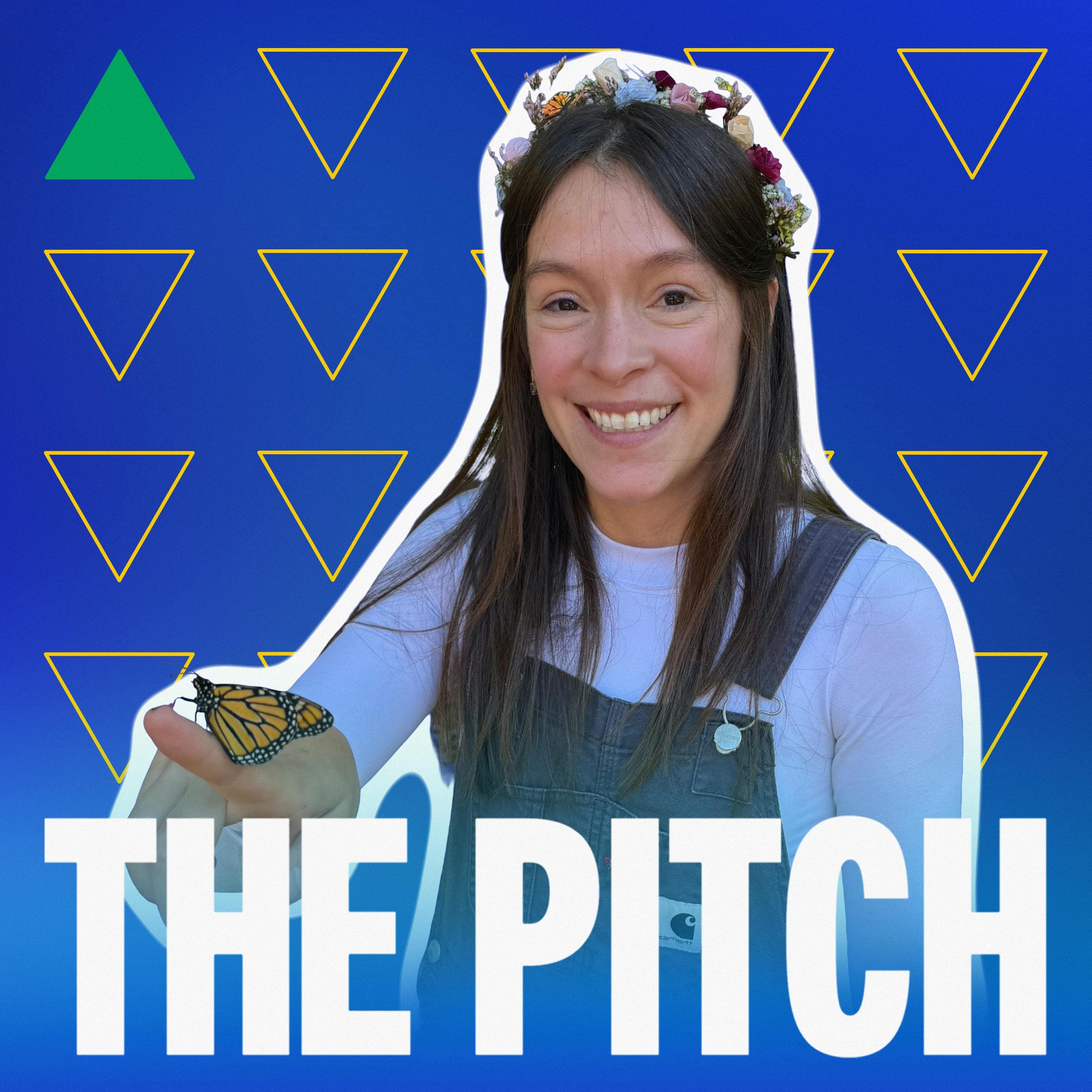
Pitz: Car Repair as Fast as an F1 Pit Stop
About this episode
 Spotify
 Apple Podcasts
Natalia Salcedo opens season 16 with a pitch for Pitz, her voice AI that helps mechanics repair cars in under 24 hours. She's proven the market in Mexico and Brazil. Can she convince VCs the same playbook will work in the US?
This is The Pitch for Pitz. Featuring investors Elizabeth Yin, Jesse Middleton, Mike Ma, Rohit Gupta, and Michelle Kwok.
Watch Natalia’s pitch uncut on Patreon (@ThePitch)
Join us for our fall live shows and Season 17 taping: pitch.show/events
Subscribe to our email newsletter: insider.pitch.show
Learn more about The Pitch Fund: thepitch.fund
*Disclaimer: No offer to invest in Pitz is being made to or solicited from the listening audience on today’s show. The information provided on this show is not intended to be investment advice and should not be relied upon as such. The investors on today’s episode are providing their opinions based on their own assessment of the business presented. Those opinions should not be considered professional investment advice.
The Panel





Josh: Welcome to The Pitch, where startup founders raise millions and listeners can invest. I’m Josh Muccio.
Lisa: And I’m Lisa Muccio. On the show today we have Natalia with Pitz. She’s raising 2 million dollars.
Lisa: This is my favorite type of founder. The type of founder that I wanna invite on as soon as I talk to them on my first call.
Josh: The type of founder where you're like, "I don't have any favorites, but you're my favorite."
Lisa: I have a lot of favorites.
Josh: Every season!
Lisa: Every season we have to have one instant Lisa yes. And this is my instant yes.
Josh: And so far you have a pretty unbroken record.
Lisa: I do!
Josh: Let's go through Lisa's immediate yeses.
Lisa: Gemist, 2023.
Josh: Nectir, 2024.
Lisa: Mappa.
Josh: 2025.
Lisa: Natalia, Pitz, 2026.
Josh: Don't give it away. Okay. We don't know yet.
Lisa: Okay. Pitz.
Josh: What are they doing?
Lisa: It's like a voice AI that can diagnose a car for a mechanic.
Josh: If you go to a repair shop that uses Pitz, they're gonna be better at diagnosing it the first time. And they're gonna get their parts delivered potentially within an hour and a half after diagnosis so that they could repair your car in 24 hours. So you're not without your car for, like, weeks.
Lisa: And it's basically a whole operating system for the mechanic as well.
Josh: Will Lisa's pick hold up for season 16? Will your untarnished record remain untarnished?
Lisa: We shall see, but I have faith in me.
The pitch for Pitz is coming up after this.
But first… we are hosting two live shows this season.
Josh: Not one but two!
Lisa: One at SF Tech Week in October. And another one in November in Brooklyn.
Josh: We’re also hosting our Big Pitch Event to record season 17 in San Francisco. You’ll get to hear all the pitches live and even ask questions that might get featured on the show. Like the one from Yev later on in this episode.
To learn more about any of these events go to pitch.show/events
BREAK
Welcome back to the pitch for Pitz. Let’s meet the investors.
Mike Ma with Sidecut Ventures
I got strings, I’m not an easy yes
Rohit Gupta with Future Communities Capital
Sloshing money around all over the place
Michelle Kwok with Draper Associates
we were deep in the cut for 3 hours my brain just like, lit up
Jesse Middleton with Flybridge
I am so sick of people that are building stuff for building stuff's sake.
And Elizabeth Yin with Hustle Fund
My best deals have been the ones that I've committed on the spot
Note that Elizabeth already invested in Pitz, in a previous round.
Mike: Pitz [clap]
Natalia: Hi everyone
Jesse: Hello.
Mike: Hello, how are you?
Rohit: Hey. Rohit. Good to meet you.
Jesse: Hi, nice to meet you
Michelle: Hi, Michelle
Mike: Hello.
Natalia: Okay. So my name is Natalia Salcedo. I'm the CEO and founder of Pitz. We enable 24 hour car repair across any type of car, across any market. We are an Alexa-like platform. Through voice, we enable diagnosis, quoting, credit, and a marketplace that basically can deliver different spare parts in 90 minutes. I'm a serial founder. This is my third time doing a company. I have scaled companies from zero to billion dollar valuations. I also have scaled companies from zero to thousand people. And at my previous company, I fell deeply in love with this issue, not just professionally, but also personally. Because after speaking with more than 3000 mechanics, I understood that the issue was not the mechanics, it was actually all the ecosystem that is around them.
So I'm 10 years old. I’m with my dad, my mom and my two older brothers, squeezed in the middle of the car and basically, And basically the car breaks down in the middle of nowhere. this is Armero Colombia, do you know where Armero Colombia is? Exactly. my dad is fully stressed because he's wondering three main points. One, who's gonna repair this car? Second, how much time is it gonna get to get the car back? And third, the cost that is what's gonna get for our family. Who's gonna take me to school? Who's gonna take my brothers to university? That's of course, cost that is not on the budget. You know?
you'll imagine that 25 years later, this issue should be solved. The reality is that it doesn't, it's not solved at all. after speaking with these 3000 mechanics, I understood that the issue persist across the globe. The industry has two main pain points. The first one, eight out of 10 diagnoses are missed or not fully correct. That's crazy. And I mean, imagine you asking a mechanic to memorize more than 360 billion different types of diagnosis. I mean, I cannot even remember what I have for breakfast today.
And then the second issue is the part sourcing. That can take you between two to 10 days to find them and two to 10 days just to receive them. So imagine you being an Uber driver without a car for 20 days. How much debt are you gonna get? Insane, right?
So something that I'm really proud today is that Pitz has been 10 months old. At this moment we are doing more than $1.7 million in ARR with more than 1400 customers. So we've been, as our name says, going pretty fast. And our main point as, for example, Shopify became the infrastructure for the e-commerce. We are becoming the infrastructure for car repair. By the end of this year, we're expecting to get to more than 8,000 repair shops. Opening also a third market that is gonna be the States. We operate now at Mexico and Brazil. That's why Pitz is at The Pitch today.
Michelle: Nice. Awesome.
Natalia: Thank you.
Rohit: Cool.
Jesse: Can you talk a little bit about the business model today and how it might evolve in the future? So the ARR you have that's paid for by the mechanics, and so what's the sort of mechanism there?
Natalia: Yeah, so we have different monetization models. The first one is of course, subscription to the mechanics, that it can go between $50 to $300. And then we have like this special or tailor-made solutions for example, if you have more than, I dunno, 50 repair shops or you're, for example, a OEM, they can pay around $5,000 or more. And then for the marketplace, where we deliver also in 90 minutes, we cover a take rate. And also, the sellers, they pay for ads monetization. And then we are opening also the credit part that, that's really small. By the moment we were just running some tests, trying to see, okay, how we can enable more, the NRR get to 100 more or less. So we're opening the credit at this moment.
Michelle: Can you speak a little bit to the diagnosis aspect? How are you able to support that?
Natalia: Yeah.
Michelle: Is there like hardtech involved?
Natalia: So one of the main things is that we have alliances across Mexico and across Brazil and across also some parts in India where basically we gather this information from mechanics, from a school of mechanics or universities. And we collect this data. we label them, we place also the sounds. and that's how we have all our proprietary data.
Michelle: And then how do you do the diagnosis itself?
Natalia: Yeah. So imagine you're a mechanic, you receive a Nissan Centra of 2013. I always use this example because it's my mom car and there is no power in the world that is gonna make her change her car. Why? I dunno. imagine you have a Nissan Centra, you arrive to the repair shop you as a final customer tell to the mechanic, Hey, it's throwing gray smoke. And then the mechanic is gonna talk to Pitz, and is gonna say, Hey, today I receive a Nissan Centra of 2013, is throwing gray smoke. Then we are gonna ask you, please send us the VIN number. So we run all this data and then we're gonna tell you just two different type of diagnosis. It's throwing gray smoke because the injectors are dirty, or perhaps because the chemical balances, they're not the correct ones. So here we reduce the diagnosis that is, that it can happen between in an hour or two to just five minutes or less. And then we break like the barrier of lack of trust from the final customer because we tell you today, you bring your car because it's throwing gray smoke, but your car also has these other issues that you need to be, taken care of in this amount of time or x amount of kilometers depending on the issue.
Mike: Can you tell me a little bit about, the go to market, Talk me through both increasing ACV and then how you want to expand different markets beyond Mexico, Brazil, et cetera.
Natalia: Amazing. So we have expanded it by, really nice go to market, and this is how we have scaled this fast. I don't fight with the industry, I work with the industry. So what we do is we talk to the sellers, the one that sell the auto parts, and basically we show them all the benefits. So they start cataloging all the SKUs, and then they receive benefits for all the mechanics that they actually manage to turn on on the platform.
Mike: you start with the parts distributors?
Natalia: Yes. Exactly.
Mike: Interesting
Natalia: But just to give you an example, the smallest distributor, they can bring 100 mechanics.
Elizabeth: And Natalia is really good at GTM. Actually, that was a big reason we invested.
Rohit: Can you walk me through the customer experience?
Natalia: Yeah. So our regular user uses Pitz around 4.2 times per day. I come from working in the industry and the average was four times per month. And the main part is that they start using the, um, assistant. Of course you're speaking with mechanics, you know, people that don't have much contact with technology, so they start just asking. What is the weather? It's gonna rain today. What is the hour? And they start like that the first week. And after they build that trust with us, saying, ah, it works. You're right. It's that time. Yeah. Then they start using it for the diagnosis, and that's week two. after using us for more than 3.5 weeks, they arrive to the 4.2 users per day.
Rohit: Got it. And what about the actual customer customer, like their customer?
Natalia: So actually we don't tackle the consumer, we're just for mechanics.
Rohit: Yeah. But I'm, I'm just trying to understand like you started with 80, 90% missed or partial diagnosis, right?
Natalia: Yeah.
Rohit: Is that number improving or, are repair times shorter?
Natalia: Oh yeah. Yeah. Yeah, yeah, yeah, of course. So we enable 24 hour car repair. So what we are doing basically is increasing their productivity by 3x I mean, there are so many stories that I can tell you. For example, there is one particular that I have in mind, just a regular mechanic in Latin America. a repair shop can give food or income to three different families, and the income that they receive is between $5,000 and $7,000 per month. and actually one mechanic call us like saying, this is amazing. This is the first time that a person in my family is coming to college. We are gonna be able to pay it because the productivity that we had increased by 3x. I guess he was having like around $6,000 per month, more or less. They were doing $18,000 in just one month.
Rohit: And so that's mainly through decreased diagnosis time as well as credit
Natalia: The diagnosis time, and the part sourcing. Because we also have a marketplace that is fully integrated with us. We have more than 1.7 million, SKUs being cataloged that we can deliver in 90 minutes.
Rohit: So does that mean cheaper and possibly faster
Natalia: And faster. Not necessarily cheaper because what happen is if you need the part right now you want to pay X amount for that part, but we also manage to have lower prices if you can wait for the piece.
Mike: I've looked at this space, like auto parts is the most inelastic market.
Elizabeth: Yeah 'cause you need it!
Mike: You need it. Like, and, and the opportunity cost when a car's up on the bay
Rohit: Yeah.
Mike: People do not care about the car part price. they care about just speed.
Elizabeth: And the consumer will pay it.
Mike: Because it's like, well, what else am I gonna do?
Elizabeth: I need my car
Mike: Yeah, I need my car. I need my car.
Elizabeth: So you just pass that cost to the consumer.
Natalia: Exactly. So we have repaired more than 9,000 cars, more or less. And one of the amazing part is this, how people are willing to pay more for just having the car faster.
Jesse: Yeah
Natalia: Because I mean, we kind of teach the mechanic saying, Hey, you show the final customer if they want this price that is gonna take 7 to 15 days, or if they want the car today. This is the other big price. At least 90% of the times they always pick for the highest one.
Michelle: When you say you don't, work on the consumer side you have the marketplace though, right? And the consumers go on the marketplace. What do you, what do you mean by-
Natalia: No, the marketplace is between the distributors or manufacturers
Michelle: And the parts
Natalia: of the parts to the mechanics
Mike: It’s a b2b marketplace
Michelle: It’s just a b2b marketplace
Natalia: Because what's happening is if I open the market to regular customers, it's like when you go to the doctor and you say, Hey, I already diagnosed myself. I need ibuprofen, so please tell me this.
Jesse: Yeah.
Jesse: Can you come back to go to market? I just wanted to double click on the, you start with the distributors. They may have hundreds of repair shops. Are they selling this for you to the mechanics? Are they saying, Hey, I have this new thing. This is how you should find parts for me?
Natalia: Exactly.
Jesse: Okay.
Natalia: Exactly.
Jesse: And how much work is that for you? I guess just convincing them to use it, to explain it. I mean, these are, you mentioned the sort of mechanics are not necessarily AI native. They're not super tech savvy. And so they get a distributor that calls 'em and says, call this number instead.
Natalia: Yeah. So when we begin, we begin like bible sellers of course, saying, Hey, this is Pitz. it takes around a week, two weeks to just get the mechanic. But then with the sellers, I thought, ah, okay, we're gonna go to people that tend to have negotiations and around, I don't know, 2-3 months. And actually we have been closing huge negotiations in just one week or less. Because what they see is okay, how can we sell parts faster? So our assistant also works on the other side and tells them, Hey, you have an opportunity here. To give you an example, we cataloged more than 3000 clutches from just one seller that was based on the south part of Mexico City. And he just collected these 3000 clutches by, I don't know, 8-10 years, more or less. He didn't have any idea what type of clutches he had. He puts on and like in 10 days they were all gone. By just one customer. And this was crazy because this customer was just 10 kilometers away. And then I was like, this might be fraud. I want to go and speak. You know? So I arrive and I spoke to the customer that purchased them, and he was like, this is crazy. I've been purchasing this clutches, bring them from China for the past 10 years, and they take around 40 days to arrive and we just delivered them in 90 minutes.
Mike: What geographies do you want to be in next? you've mentioned US, part of me asks why.
Natalia’s proven the market in Mexico and Brazil. But what makes her so sure the same playbook will work in the US? That’s coming up.
Mike: What geographies do you want to be in next? you've mentioned US, part of me asks why. I understand the, the playbook. I'm curious where… what theaters you wanna run this playbook in.
Michelle: And if the playbook works in other countries the same way.
Natalia: That's an amazing question because I actually make trips to different parts of the world and trying to understand if the issue that we were having at Mexico, I know that happen in Colombia because of course I'm Colombian, if they happen at Brazil. So I went to Brazil. If they happen in Argentina, happened the same. Then I was here at the States and I was like, I need to go to Silicon Valley. I'm gonna find the holy grail of this. The same. Then I travel to Spain, then I travel to Morocco, and the issue is consistent. And the go to market. It's the same. And in order to answer your question, why the States, is because we've been receiving so many organic leads, like around 200 per month since December. They are like, Hey, we love this, we need this. The only tweak that we have to do is just train our assistant with the different slangs that of course mechanics use in each type of country.
Michelle: Can you speak about your growth numbers, like when you started and then, just like in numbers, how that's increased over time?
Natalia: Yeah, so we started in May of last year. We're now 11 months old. We closed last month with more than $148,000 in MRR. I'm expecting to close this month with more than 170,000. So yeah, that's the growth basically.
Mike: Can I ask you what you're raising?
Natalia: So we are raising $2 million. We already have committed 1.6 million.
Mike: Do you have terms on that?
Natalia: Yeah. Yeah yeah.
Michelle: Can you share them?
Natalia: He just asked if I had terms
Jesse: That's fair
Michelle: That is what you asked
Mike: Fair, fair point!
Natalia: Exactly.
Mike: What are they?
Jesse: Would you be willing to share the terms?
Elizabeth: And the answer is yes. And that's it.
Jesse: Done.
Michelle: Yeah.
Natalia: Yeah. $20 million. Postmoney valuation.
Jesse: And what did you raise previously?
Natalia: So in total, we have raised around $4 million.
Michelle: And what was the last valuation?
Natalia: We did it in two different, timeframes. So the first one was around $10.5 million valuation. And then this one.
Rohit: And you're based in Columbia now, or?
Natalia: No, I'm based in Mexico City.
Rohit: Mexico City, okay.
Natalia: I'm Colombian, but I fall in love with Mexico 10 years ago. Yeah.
Rohit: Cool.
Michelle: Are you gonna stay there? What are you thinking as you continue to expand?
Natalia: I go where sales go. So if the States is running, I’ll move here. I mean, when I arrived to Mexico, I arrived because I was relaunching a company and I was supposed to be there for just two weeks, and I stayed there for 10 years, you know?
Michelle: How big is your sales team?
Natalia: per country is around five people.
Mike: If you had to break up the work of your sales team, how much is spent on distribution acquisition, and then how much is spent on repair shop acquisition?
Natalia: Yeah. So those are two separate teams. three of them actually, they work on just acquiring sellers, and then the other ones are just receiving inbound,
Jesse: The inbound and the onboarding for the mechanics, I would think that's fairly painless. And, Well, what's the onboarding look like, I guess for that?
Natalia: Yeah, so the onboarding is around 24 hours, more or less. It depends also on how big the repair shop is. And then for the sellers it is a little bit longer because of course you need to coordinate more people. It's an onboarding of more than 72 hours.
Jesse: Got it. These two things may be connected, but your previous business that you built, I think you mentioned you were selling into this same market or where, can you explain a little bit of that and then does that connect to your current team?
Natalia: the previous company that I was on, I didn't founded it. I was just the COO of that company. we were doing a marketplace for spare parts. So when I took it, it was around, $100,000 in, in ARR, and in 12 months we achieve around $50 million more or less.
Jesse: Got it. Are you working with that, any of that team again on this or
Natalia: Some of them.
Jesse: Okay.
Natalia: Yeah, some of them. I mean, the highest performers, they come with me.
Jesse: Smart.
Natalia: Yeah.
Jesse: Don't hire the low performers.
Natalia: Exactly. Exactly.
Michelle: That's the strategy. That's really good advice.
Natalia: Exactly.
Michelle: You should write a LinkedIn post on that.
Mike: Jesse Middleton. He’s [snap]
Jesse: Yeah, there you go. I'm on it.
Mike: What is, uh, what does the competitive landscape look like?
Natalia: Yeah, so our competitors are highly fragmented. Because we have high competitors on the marketplace. Then we have competitors that they can go on the CRM, competitors that they can go then on the diagnosis. That's not, um, many competitors on that part, but yes, it's like some are really focusing just small parts of the business.
Rohit: How large is your team and what's your burn?
Natalia: My team is around 36 people. So we have around 12 people on the product and tech side. Then each country has their own sale the burn that we're having, we closed last month on around $60,000 in burn.
Mike: So you're operating profitably?
Natalia: Yep.
Michelle: Why are you raising this round?
Natalia: So, I mean, if we wouldn't raise round at this moment, we can keep growing, but I mean, that will be like super flat growing I wanna go big or go home. we don't wanna lose the moat also on opening the states because we are receiving so many leads that they're getting lost. we -
Michelle: And then you wanna open an office in the States, build out a sales team in the states?
Natalia: Exactly, exactly.
Michelle: How are you thinking your burn will increase if you go to the States?
Natalia: Yeah, I mean, it's not gonna increase that much because Brazil was gonna do break even this month. So basically we're gonna transfer the burn that Brazil was doing, to the States. if we're gonna have an increase, it's gonna be around 10 to $15,000 additional that we're having.
Rohit: Where do you start in the US?
Natalia: We've been receiving a lot of inbound here in Florida. It's of course one of the biggest ones. Then we also have Texas, so we are like running the test on, which should be like the first city that we should open.
Mike: The distributors are nationwide.
Natalia: Yeah.
Mike: Why don't you just, go through the distributors, then go where the leads lead? Uh, uh, why do you have to decide at apriori?
Natalia: The way that I do the go to market in this part is we go first with brands and by going global with brands where we know, like who are the main distributors and then who are the minor players. We go first with the brands we know who are top tier. Then if this top tier actually make distribution, directly or not, to the mechanics,
Some distributors, they don't go directly to the mechanics. So there is a lot of intermediation. Just a fun fact, in the middle of this, when an SKU is being built, the cost is, let's say, $100. When it's placed on your car, the price increases by 4x. Due to all intermediation that you have. So we're trying to reduce all the parts. And just, Hey, this is where the opportunity is for you, brand. This is where you should be opening new repair shops. This is where you should be doing this, this, and this other things, instead of going directly to the consumer, that is not the one that is gonna be repairing the car.
Michelle: Does this still work with luxury cars? Because a lot of those have very specific parts that come from like that manufacturer.
Natalia: Yeah. There is actually one specific brand that it's the hardest. but there's just one particular brand. I t's top tier. I don't know if I can mention it, but
Jesse: It’s a small part of the market.
Natalia: Yeah, there is-
Michelle: So it doesn’t affect your market size?
Natalia: No. No.
Mike: I mean, is this the part where we're like, like, we're looking for commits?
Elizabeth: You should do it.
Mike: I, I look, I've built a lot in this space. I know a lot about this market. it is a massive market. your cap, I assume this is a note, is on the upper bound That being said, your traction’s impressive. The things that you solved are things that I failed to solve, when I took a run at this, So I, I would, I would love to have a, a conversation and, and dig in for sure.
Natalia: For sure.
Josh: The foxhole?
Mike: Well, that's the thing. I mean, our deal is that we work with all of our founders for 30 days, You like us, we like you. We're writing quarter million checks. This cap is tough for me. I've done one deal, at this level. but if you're down for figuring this out, particularly on the distributor end here in the States, I have some thoughts
Natalia: We can always talk about.
Mike: Yeah. I, I, For sure
Natalia: We can always um, talk about that part. If you're the correct person, that's always something that I'm looking for, you know?
Mike: Yeah. Figuring out parts and starting with the shops was a wedge that I never figured out, when I was thinking about this. And there's been a lot, I think no one's taken a good run at auto repair here. There've been a whole bunch of capital poured in, it's been super expensive and it's-
Elizabeth: This company's at an inflection point, I think.
Mike: Yeah.
Elizabeth: This insight about the parts is key.
Mike: Yeah. I, I built something called PartMazing, which, and I, I've spent time in shops being the auto parts manager, like ordering pads and struts and I understand how hard this problem is.
Natalia when I started in this industry, I didn't know how to change a tire. Now if you want, I can change the oil of any type of car, so I'm your girl here. Yeah, yeah, yeah. And I love being with the mechanics. I mean, I've been with them always on the street, so I actually know the pain.
Michelle: Well, I, I wish that I knew how to change the oil. I, I know how to change the windshield fluid. I thought that was pretty good. Um, yeah, I mean, I love your energy. It seems like you're a hustler. It seems like you're like out there really selling.
Natalia: Yes, right?
Michelle: I, I think that's pretty awesome. At Draper, we're definitely looking at industries that haven't changed or been disrupted in 20 plus years. Sounds like this could be one of those. I'll say I like know basically nothing about cars. Um.
Natalia: No worries. I, it took me three years to be at this point.
Michelle: Yeah. I, I, I watch F1, that's kind of, you know, and for, you know, for a lot of reasons.
Jesse: Those are the ones that she's not outsourcing.
Michelle: Okay. That's what I was wondering. I was like, does it work for those cars?
Natalia: I can tell you, I can tell you a fun fact about it. And it's, on our cap table, there is actually some Formula One drivers.
Michelle: What?
Elizabeth: I didn't know that
Michelle: What? And then if I join, I can meet them.
Elizabeth: Everyone's in now
Jesse: She's in. She's in.
Michelle: Is it Franco?
Natalia: Do you like Franco?
Michelle: I love him, he’s so cute
Mike: The wire has to clear first and then she’ll tell you
Elizabeth: Then she’ll tell you who
Natalia: Exactly.
Michelle: Same with Mike, I really want to dig in more because I don't really know the competitive space, and that's kind of where I'm lacking
Natalia: For sure.
Michelle: But I like that Mike really likes the business model
Mike: Usually that should be an anti signal.
Michelle: That sounds like, yeah. It sounds like he knows what he's talking about. I just met him an hour ago.
Natalia: You should trust him.
Jesse: And Elizabeth, you should trust Elizabeth too. It’s not-
Natalia: Yeah.
Michelle: but I think overall you have this really good energy and hustle and passion. And if it's true that your business model is able to be plug and play and copy paste everywhere, that's huge. Your growth is amazing.
Natalia: Thank you.
Michelle: And if there's a hardtech aspect to it and where the propriety moat there is. 'cause one of the moats is probably the data acquisition, the way that you're using the data.
Natalia: Yeah.
Michelle: So I think that's one of the more interesting parts of what I was thinking would be more Draper aligned
Jesse: I think it's really interesting. So I, I've invested in a few marketplace companies that sort of are the SMB B2B marketplaces, and so I think it's actually a really good go to market motion, a wedge that you've created here. I think you're in the right place now, but as you get bigger, consumers may start to recognize this as a value. And like there may be a moment where you do allow in the consumer to, you know-
Natalia: That’s in the roadmap.
Jesse: Yeah.
Natalia: Not now.
Jesse: Yeah.
Natalia: But for 2027, that's in our roadmap just because we don't want the, the final customer comes and say, Hey, this is my diagnose.
Jesse: Right.
Natalia: No. We just want to basically control the demand saying, Hey, you already placed this sound. So this is the repair shop that you need
Jesse: That you take it to
Natalia: To take your car.
Jesse: Yeah.
Natalia: that's, for 2027, first we need to correct the industry.
Jesse: Totally makes sense. So I'd like to start by committing, we do sort of $50,000 checks pretty early, through our Next Wave vehicle, but you're almost at the end of this raise. We're typically writing sort of at a seed stage, couple million dollars or larger. and whether it's in this round, which you're almost done raising, or the next round one in three months when you crush it on the launch. but I like to start with the, with the $50,000 commit into this deal
Natalia: For sure.
Jesse: And, and go from there.
Natalia: Amazing
Elizabeth: All right. I'm already in
Rohit: She's like, I'm doing good right now. Um, yeah. Super interesting. I'd love to learn more. Probably have some intros for you as well.
Natalia: Amazing. I mean that's something that I really appreciate. Intros are like gold for me or Diamond.
Michelle: Me too. To F1 drivers.
Jesse: This would be the second deal I would do with an F1 driver. So I'm just, you know, it's uh,
Michelle: You know one too? You should bring that up
Natalia: I know like five of them. But yes
Michelle: People gotta bring that up a little more.
Elizabeth: And you're definitely in, she’s in the network you want.
Natalia: Exactly. I mean that's why we're called Pitz. I mean, I'm super fan of Formula One. I was watching the documentary of Ayrton Senna
Rohit: I wasn’t even thinking about it
Michelle: Yeah, me too. So good.
Natalia: So basically this guy, it’s 1989 and this guy, just by listening the sounds of the car, he could diagnose and say, hey, this is what is wrong. And he'll go and repair with the mechanics. And I was like, if this guy can do this just by ear in 1989, there should be something in 2025 at that moment. That should be doing the same.
Jesse: Yeah.
Michelle: Yeah.
Natalia: And I started like doing the research and nothing, nothing came up and I was like, okay, we can do it.
Rohit: Do you think there's a world where at some point a mechanic that's, you know, powered by Pitz is a thing, right? Like if I'm a consumer, I can go to this mechanic or I can go to one where I know they're a little more-
Natalia: Yes, this is why we're preparing first the industry before we jump into the final customer. So then in 2027, All the customers should be asking, Hey, I want a mechanic that is powered by Pitz. when you go to Mexico, Brazil, now we're putting like the stoppers saying this is powered by Pitz.
Rohit: Cool
Natalia: So we are preparing for that.
Michelle: So you are going B2B2C.
Natalia: Yes. But in 2027.
Jesse: Yeah.
Michelle: I mean that’s pretty soon.
Elizabeth: Well, she moves fast.
Natalia: Yeah. I mean Pitz. we move like a pit stop,
Mike: I, I, believe it or not. I'm less excited about, and I'm a consumer person. consumers don't care. I mean, the prosumer market cares, but Sally suburb in her mini, they, they don't care.
Michelle: But if something is actively wrong with her car, wouldn't she like wanna just go on this marketplace and immediately find something?
Mike: Would you?
Michelle: Yeah, I totally would.
[car crosstalk]
Michelle: No, don't know how to even do the wheel, the tires.
Rohit: To your point, I don't think it's a consumer that cares. Right? It's B2B that cares.
Elizabeth: No, but it, it depends on the framing, right? 'cause I think we're now in a mode where consumers are self diagnosing everything.
Natalia: Mm-hmm.
Elizabeth: It's like, oh, I have a mole. What is it? Like, I'm not a doctor, but I'm gonna try to self diagnose. And same thing here. Like, my car is broken, this thing is happening.
Michelle: What's the fastest way I can get it fixed?
Elizabeth: How do I fix this? I may not fix it myself, but I wanna know where should I take it?
Jesse: Yeah
Michelle: I would love to use it. You know when a curb runs into my car
Natalia: For sure.
Rohit: Damn curb.
Elizabeth: But the thing that I'm thinking is like, oh, okay, so this actually happened recently. I needed new brake pads. But I think even before that, you know, it's like, oh, there's something wrong with my brakes.
Jesse: Yeah.
Elizabeth: Now what do I do? It's not even what brake pads do I order? It’s like, what should I do?
Mike: Yeah
Elizabeth: And then know where to take it. And then there's that credibility and trust.
Michelle: Yeah. Yeah.
Elizabeth: Because when I go to an auto repair shop, I know nothing about cars, so I don't know if they're telling me a lie. I don't know if they know what they're doing. I have no idea unless something else goes wrong
Michelle: Like, are they always upselling you for things that you don't need?
Natalia: Exactly. So basically when you receive the, you as a final customer, that's the only interaction that we have, is you receive the diagnose for all the transcription that the mechanic did with Pitz.
Michelle: So you would get the direct report of what act- your car actually.
Natalia: Exactly.
Michelle: I would love that.
Natalia: Exactly.
Michelle: I get upsold all the time.
Elizabeth: That's trust.
Mike: Look at all this. You can append Carfax, you can do a distributed ledger and do a token for every VIN. You can see the provenance of every single decision or thought about this car.
Michelle: That’d be awesome.
Jesse: I'm out.
Elizabeth: You, you don't wanna be in on Pitz token?
Jesse: I'm not, I'm alright right now. I'll just stick with the B2B product.
Elizabeth: Pitzcoin
Jesse: Pitchcoin
Josh: Michelle, how much would you be in for?
Michelle: probably like. 150 to 250, I would say
Josh: And Rohit, what are you in for?
Rohit: That's a good question. Uh, probably 50 to 100 based on her size.
Jesse: Awesome.
Mike: Clap. Good job. Good job.
Natalia: So, mic down, not out. Goodbye.
Rohit: Great to meet you.
Michelle: Wow.
Josh: Okay, so one listener question is from Yev. He was asking like, when you look at the current market mix of the business, in Columbia and Mexico how important is their current traction versus what you're looking at when they open in the US or India?
Jesse: I would've been not in if they were only going to be across Latin America. We've backed a lot of companies down there and it's really fragmented. You don't like win all of Latin America, typically. You kind of win like a country. And so I discount that a reasonable amount, but I think all of that gives her such a massive advantage to launching in larger markets, whether it be the US or India or somewhere else. So like, I think about this as like future potential. I, I think those two markets will look very tiny in 12 months. I mean, she's moving super fast, so I'm gonna say 12 months. They're gonna look tiny compared to what she does in the US.
Elizabeth: She'll be able to raise like quickly and easily if she has a US market.
Michelle: Yeah. I imagine it was also super hard to coordinate in those Latin American countries. And it'll be easy to coordinate in America. So if it's true that she's able to plug and play, that would be amazing.
Mike: the distribution is much more consolidated here. So if her, if her leverage point is the parts distributors, she's gonna have more scale per calorie spent, distribution salorie spent.
Rohit: So is, is this one of the few companies where the US is a monolith?
Mike: Uh, not, I wouldn't say monolith. but there are large regional distributors that, and their interfaces are terrible. Like, I use them to order parts. They're literally like play school, my first website. And it's, it was horrible to try. And that's probably why they're willing to do it because they're good at like, buying parts.
Jesse: Yeah.
Mike: Putting 'em on a shelf and making sure that this, this pad is different than this pad and, but the e-commerce end was horrible
Jesse: And this era makes it more possible. Like you could now take a video of everything in your shelf and let AI pull out everything that's there.
Elizabeth: Like what are these parts
Jesse: what are these, and so like there's a different moment in time,
Rohit: She's very impressive.
Josh: Are there any downsides to this business? It seems like the way you guys analyzed it, it was a very quick and easy Yes.
Mike: I'm not a huge fan of the cap. I mean just, and it is a selfish, there is a selfish aspect of it, there's a scenario where one of the large distributors the part they're bad at is software.
Jesse: Yeah.
Mike: There's an argument that they could become good at software and they will have, they'll own up the distribution and lower parked prices and, they could be margined out.
Jesse: Yeah. My biggest worry actually was I think selling to small and medium businesses can be tricky. And market to market can be very different, right? Like down there she speaks the language. She's native, she's hiring native team there. Like when you get here, there just may be some things that happen in the market where it's like they don't trust the outsider, they don't like, they, they're looking at another, competitor in the space that's kind of promising something similar. It's not as blue ocean, if you will. And so someone else out there is saying, we're also building a parts marketplace in this era, and we're gonna call all the suppliers. And like, how many of those will you upload your inventory into and, and send someone to? That's gonna be the question.
Elizabeth: I used to think that because when she started this business, obviously she wasn't, she didn't really have any market.
Jesse: Yeah.
Elizabeth: And and in fact when she told me that the US was on her roadmap, I was pretty against it in the beginning. Now I'm for it, but I think part of it is, I don't think she speaks Portuguese either, but she has like knocked the Brazilian market outta the park.
Jess: Yeah.
Elizabeth: So she hires well in the local markets and I think that's gonna be a big key
Jesse: Yeah.
Elizabeth: For the US market.
Josh: Well, Mike, I can't wait to see you in the foxhole underneath the car, changing the Volkswagen’s oil
Mike: Well, I, I'm okay doing it
Josh: That’s a wrap
Jesse: Awesome.Mike: Really impressive.
Natalia walked out of The Pitch Room with four commitments. The only person who didn’t commit was already invested. So Lisa’s pick is looking pretty good. Will it hold up in diligence? That’s coming up.
Break
Welcome back. A few months after her pitch, we caught up with Natalia, and her little doge dog Mija.
Lisa: Where are you right now?
Natalia: Mexico City at my house, finally.
Josh: You've been traveling a bunch?
Natalia: Yeah.
Lisa: And you take Mija everywhere with you.
Natalia: Yes, yes, I take mija.
Lisa: Does she do well on planes?
Natalia: She loves them I mean she just goes to sleep. I mean at the beginning she's just sitting down on my legs so she's seeing everyone and waiting for everyone to pet her. Even like in three flights the pilot has said like we know that in the seat blah blah blah there is a small and beautiful dog but please continue.
Josh: That’s so funny. Well, I'm so excited to catch up, Natalia.
Josh: What was your experience like pitching on the show?
Natalia: Oh, it was amazing. I mean, I thought it was gonna be like a stress moment, but I mean- the investors and you guys making it so easygoing, and of course the people also on the team. So I find it amazing.
Lisa: That's awesome. We heard Sarah from Mappa convinced you to come on the show.
Natalia: Yeah, she did. She was like, "I don't care what you're doing, but you have to be there."
Josh: That's amazing.
Lisa: Oh my gosh. Do you go to other pitch competitions, or that's not your thing?
Natalia: No, that's not my thing, actually.
Lisa: Well, you did really well for pitch competitions not being your thing.
Josh: Yeah.
Lisa: You got four commitments in the room. It was quite an amazing way to kick off our Tampa event. Let's start with Jesse. What happened with him?
Natalia: Yeah. So Jesse committed with $50,000, and that was amazing. It was an easy process. He's really excited about the company. He's like, "I want to then invest more depending on how the company is actually going." So- that's a really good outcome.
Josh: So he signed and wired?
Natalia: Yeah, already.
Josh: Oh.
Natalia: He was the first one.
Lisa: Oh.
Josh: Really?
Lisa: Jesse was the first one. Wow. Stepping it up.
Josh: So next up is Michelle Kwok with Draper. She was interested in investing, but I think mostly interested in meeting F1 drivers.
Lisa: As am I.
Josh: Yes.
Natalia: That’s everyone.
Lisa: Did you hook her up with Carlos Sainz?
Natalia: No, not yet, not yet. She was more into Franco Colapinto.
Lisa: Oh, okay, okay. Well then I'll take the connection to Carlos.
Josh: Yeah, I'll take that… piece of cake.
Natalia: No worries. We can do it
Josh: So then what happened after the show with Michelle?
Natalia: Yeah, so with Michelle and with Draper, I mean, we were doing follow-ups, but I think the company was not a fit for Tim because, he drives a Tesla, he's main investor there, and he still doesn't seems how electric vehicles can make a fit with Pitz. So in the end, the investment didn't happen over there, but we still have a really good connections and also pretty good feedback that I received, so that makes us just grow.
Josh: What was Tim's feedback?
Natalia: Well, it was most like EVs don't break. Also the context where he's based and the context where he lives around. I mean, if you haven't-
Josh: The San Francisco bubble.
Natalia: Exactly, the San Francisco bubble. Even in San Francisco, I was also speaking to an investor like a week ago, and he was like, "I have my Tesla on the repair shop since a month ago."
Lisa: Oh.
Josh: Hmm.
Natalia: And I was like, "Hmm, different experiences." But...
Josh: Yeah. Something that really surprised me in your response over email, you talked about how people now are actually holding onto their cars longer.
Natalia: Yeah.
Josh: It seems that the third-party parts and third-party repairs market was actually growing.
Natalia: It is. Not just growing for gas cars, but also growing for hybrid, growing for EVs. It's growing around 5.7% across the world.
Josh: Per year?
Natalia: Per year, yeah.
Josh: Huh. That's so interesting.
Natalia: Yeah.
Josh: So Draper Associates passed. Next up, Rohit Gupta. What happened with that guy?
Natalia: So with Rohit, he's doing a check of $50,000.
Josh: Cool.
Natalia: He helped so much then for some other investors to join the company. For example, he presented me to, to-
Josh: Mike McCombie.
Natalia: Mike McCombie.
Lisa: Oh, yeah.
Natalia: Also then his LPs invested at the company too.
Lisa: What?
Natalia: Directly. Yeah.
Josh: How much?
Lisa: How much?
Natalia: Around $600,000.
Josh: Get out.
Natalia: But then Mike McCombie is also investing 250,000.
Lisa: Oh my gosh.
Josh: So through that one intro from Rohit, you raised- 850 ...
Natalia: 850K. Yeah.
Josh: Okay. Now finally, we're in the foxhole with Mike Ma. So you had a pretty normal follow-up call with him where you pitched his partner Chad. And then you had a call where you extensively nerded out about auto parts.
Natalia: Yes.
Josh: The transcript of that call is 43 pages.
Natalia: I hope you learned a lot.
Josh: So tell us about that call. What was it like to talk to a VC who knows the car space so well?
Natalia: Yeah, he's really passionate about it, so it was actually so easy to speak about it. And also, it's really nice when someone understands the pain but also has tried to build it. That was amazing. We also met in San Francisco and we had another big meeting over there. He introduced me to Maria. Maria, that was the person that he wanted to make this company also with him like 10 years ago. Oh. So he has shown me his-
Lisa: Wow.
Josh: Oh, wow.
Natalia: His original deck. He showed me like-
Lisa: What?
Natalia: three or four times about how he wanted to build this. Yes.
Lisa: Was he jealous that you could figure it out and he didn't?
Natalia: He was like, "Ah, I'm so mad that this hasn't success, but now I'm happy that you actually managed it."
Josh: Okay. So I don't know how many meetings you had with him, but I'm curious, like what was your foxhole experience like?
Natalia: Well, I know that everyone, it's around 30 days doing the diligence. I was like for just two meetings.
Josh: You only did two meetings?
Natalia: Yeah. We just did two, maximum three meetings, and then Mike was like,
Mike: We're excited to just proceed with the investment in Pitz, and we don't need to do more than 30 days. I saw everything I needed to see from an operator perspective. This is out of thesis for us generally in terms of where we do. You know, we've only done a couple seed investments where we've had some sort of unique circumstance and extraordinary conditions, and we think Pitz and you are extraordinary founders, and extraordinary means extra ordinary in the most literal sense of, of the term. That's it.
Lisa: I didn't know the foxhole could be abbreviated.
Natalia: I was the first one ever-
Lisa: Wow
Natalia: to skip it.
Josh: How much did he invest?
Natalia: 200,000.
Josh: Awesome.
Lisa: Wow.
Josh: So on the show, you were raising a $2 million round.
Natalia: Yeah.
Josh: And you had 1.6 million committed when you pitched. Did you close out the round?
Natalia: I did close the round, and I oversubscribed the round.
Josh: How much did you raise in total?
Natalia: 3.1 million.
Josh: Whoa.
Lisa: Nice.
Natalia: Yeah. All oversubscribed due to The Pitch.
Lisa: I mean, you had something to do with it too.
Josh: Yeah.
Lisa: Also The Pitch Fund invested 300K.
Natala: Yes. Yes.
Lisa: So thank you very much for allowing us to be part of that round.
Natalia: No, no, no. Thanks to you. I mean, I couldn't be more happier to having you on board.
Lisa: Well, thank you. We're very excited to be a part of it.
Josh: You're the first check out of Fund Two!
Natalia: Oh, amazing.
Josh: So what's next? Moving to the US perhaps?
Natalia: Yeah, that's actually on the plans. In three more months, I'm just waiting for some documents to just be ready. But yes, In Q4, we're gonna do the launching of Pitz on the States. When I launch the States, of course, then I'm gonna be the most intense person in the world.
Lisa: Okay. Prepare myself.
Natalia: Exactly. Exactly.
Josh: After your pitch, I found you in the event space. What do we call that? We'll call it the pitch viewing area.
Lisa: Yeah.
Josh: And you told me your true ambitions for the company.
Natalia: Yeah.
Josh: Which you did not say in The Pitch Room. Are you open to sharing those here?
Natalia: Yeah. So my true intentions with the company is to be the first company led by a Latin American woman to ring the bell on Wall Street.
Natalia: This can open doors to so many Latin American people and so many women founders. I come from a city that is called Bucaramanga in Colombia, that basically people don't know how to pronounce it, and people don't know how to locate it on the map, you know? So, I mean, showing people like, "Hey, if a person from this small city can do this," because I don't come from a wealthy family, and showing everyone that this can be possible, that dreams can come true. Maybe this wasn't my dream when I was just a small kid, because I wanted to be a veterinarian. But after I understand that the animals can die on the table, I was like, "I don't wanna be a veterinarian anymore." But yes, I mean, things can come true. And I didn't find, like, my path even until I was around 30 years old, you know? So yeah.
Lisa: Yeah. That's awesome.
Josh: That's so cool.
Lisa: Yay. I did it again.
Josh: I'm happy for you. Your record remains untarnished.
Lisa: Thank you.
Josh: So what do you see in these founders where you're just like, "Yes, we have to invite them on the show"?
Lisa: So obviously I love a strong female founder, and I think that there are people who want to build a company, and then they go looking for some problem to solve or something to build.
And then there are people who experience a problem and, like, are innately motivated to go solve that problem.
Josh: Mission versus mercenary?
Lisa: Yes.
Lisa: Ultimately, I think what I see in her is, like, the motivation that she wants to, like, make a way for other female founders to do what she's doing. I'm looking for people that are, one, humble enough to be a good leader and people wanna follow, but also if she's pursuing something that's greater than herself, like, that makes her an excellent leader as well because people will want to join her in that mission and build that company with her.
Josh: You know what I see?
Lisa: What?
Josh: I think that you have to be insane to want to build a billion-dollar company.
Lisa: Oh, yeah.
Josh: Because once that first offer comes in and somebody wants to buy you for a couple hundred million dollars, that's gonna look pretty nice. So I think the founders who say no to that and go big, big, they have a reason other than money to go that big.
Lisa: Yeah.
Josh: Of course, every founder could just re- reverse engineer this and be like, "Yeah, I'm going for a billion-dollar company 'cause I wanna be the first person from-" "... you know, Wichita, Kansas to build a business that IPOs." But obviously with Natalia, it feels like this is genuine. This is her... I mean, she said that to me when the mic was off, right?
Yeah. Afterwards. Like, she's not flaunting that this is her desire.
Lisa: Yeah. It just feels like such an obvious yes, and you see that even with Mike and his foxhole here with Natalia. Yeah. It was such an obvious yes, he, like, nixed the whole foxhole. He would say he completed the foxhole. It did its duty, right?
Josh: Right. The foxhole confirms what Lisa's intuition always knew.
Lisa: Yes.
Josh: Glad you were right once again, Lisa.
Lisa: Thank you.
Josh: Congratulations. You're four for four.
Lisa: Yes.
Josh: Can't wait to see Season 17's pick.
Lisa: Yeah.
Josh: But first, we have all of Season 16 ahead of us, and I promise that these companies are amazing, too.
Lisa: I have some favorites in here, too.
Josh: You always do.
No offer to invest in Pitz is being made to the listening audience on today’s show. But did you know we have a venture fund where we invest alongside the VCs on the show?
When you invest in The Pitch Fund you get ownership in all the companies that we invest in on the show too.
We’re open to new investors through the end of the year! To learn more, go to thepitch.fund
Next week on The Pitch…
Sonny: We're building modular industrial gas plants starting with CO2.
Mike: Why do you guys care about that?
Sonny: Because we were really worried about climate technologies They're not deploying as fast as we want. Around $80 billion has gone into carbon capture and 80% of them actually fail.
That’s next week! Subscribe to The Pitch on your favorite podcast player so you don’t miss future episodes. You can watch full length versions of every pitch over on our Patreon at The Pitch Uncut.
And if you’re a founder raising a pre-seed or seed round, apply to pitch at our next event! It only takes a couple minutes to apply, just go to pitch.show/apply
We’ll see you next week, in the PITCH ROOM.
–
This episode was made by Josh Muccio, Lisa Muccio, Anna Ladd, and Enoch Kim. With deal sourcing by Peter Liu, John Alvarez, and Phoebe Sun.
Music in this episode is by The Muse Maker, Breakmaster Cylinder, The Firmware Rebels, Boxwood Orchestra, Imagined Nostalgia, Soul City, Memory Palace, and Peter Jean & The Runaway Queen.
The Pitch is made in partnership with the Vox Media Podcast Network.
The Outcome
$600,000 raised.
SAFE · $20M post-money cap
Raised
$600,000
Investors
4
The Deal
$600,000raised from 4 investors


$890,000 angel
The Founder

Founder & CEO at Pitz
Founder & CEO of PITZ. The brain behind the world's auto repair industry — AI diagnostics, parts ordering, inventory management, and embedded credit. Born in Latin America, scaling globally.
Related
Related Episodes

 After The Pitch
Nectir Part 2: From Flat Round to The Biggest AI Deal in Education
Kavitta Ghai · Nectir
S15
Also Featuring